




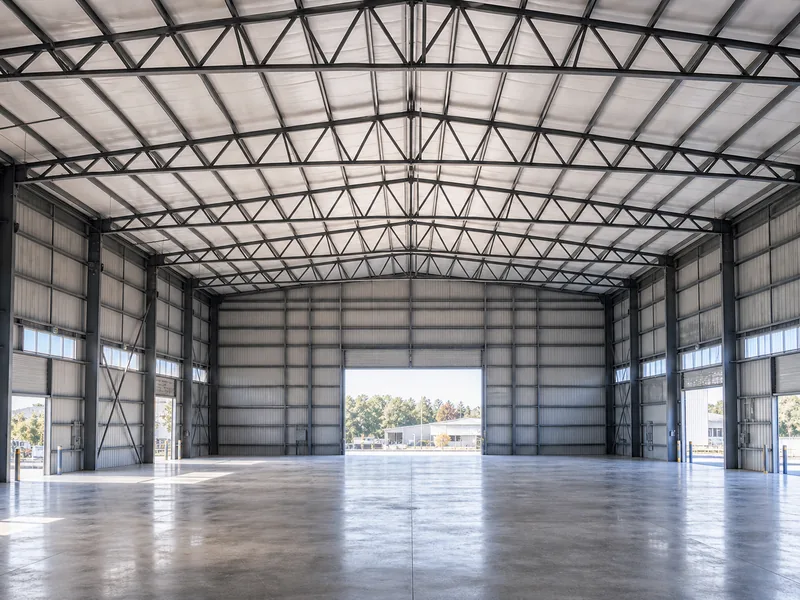
A steel web truss building spans its roof with an open-web truss rather than a solid beam, which is why these buildings clear wide interiors without a forest of internal columns. That single choice sets the column spacing, the steel weight, how services run overhead, and how the frame gets erected. This article covers what the open-web system is, how it carries load, the profiles and spans to expect, where it fits, and what to verify before you order. It does not cover foundation and slab design, full code load calculations, or erection sequencing, which belong with your structural engineer and erector.
What a Steel Web Truss Building Is
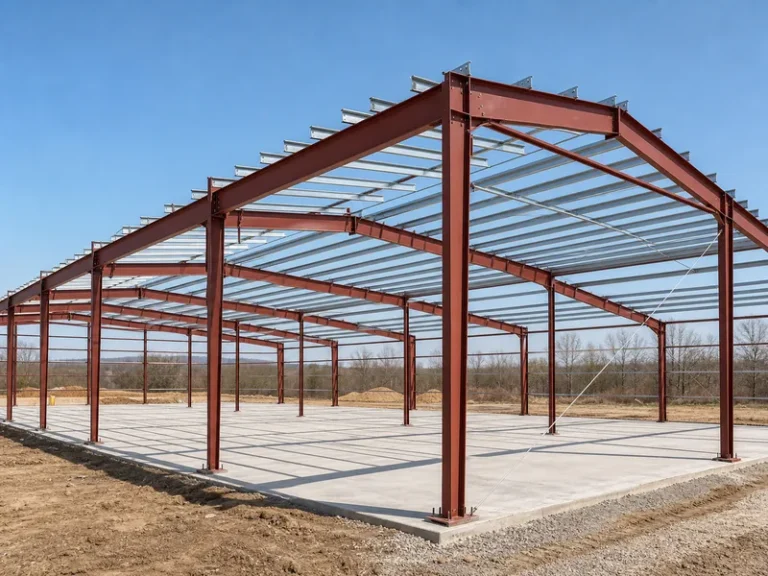
A steel web truss building uses an open-web truss as its main roof-spanning element, instead of a solid beam or a tapered rigid frame. The open-web truss is a top chord and a bottom chord tied together by a triangulated web of smaller members. The chords carry the bending as tension and compression, while the diagonal and vertical web members carry the shear between them. Because the web is mostly open space, the truss reaches a given span with far less steel than a solid member of the same depth.
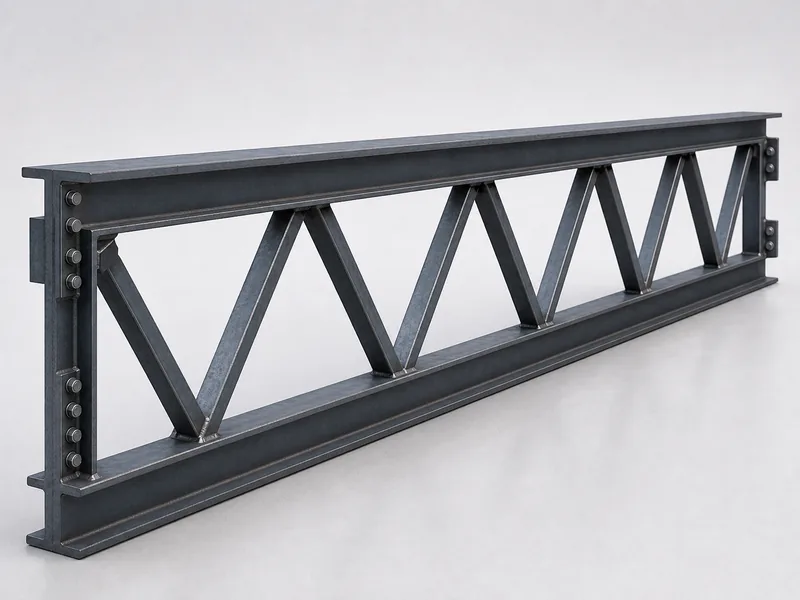
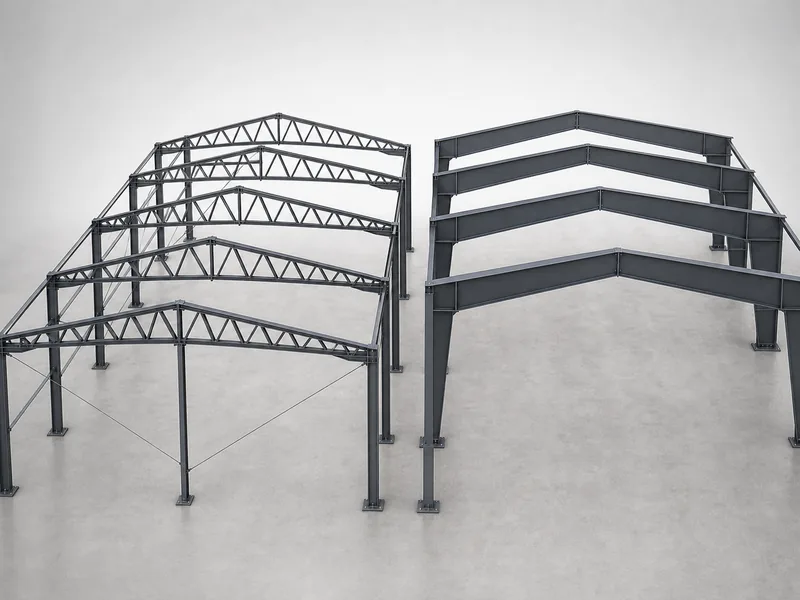
That open web is also where terminology gets confused. A steel web truss is the broad case: chords plus a triangulated web, fabricated to a project’s span and load. An open web steel joist, or OWSJ, is the standardized, lighter version of the same idea, selected from load tables rather than designed member by member. A rigid frame is a different system, a solid tapered column-and-rafter that bends as one piece. Reading “web truss,” “bar joist,” and “rigid frame” as interchangeable is the first mistake that derails a layout, because they clear different spans at different steel weights.
Truss depth, not the building width alone, decides how the system performs. A deeper truss carries the same span with lighter chords; a shallower one needs heavier chords or tighter spacing. Fix the depth your roof and ceiling clearance allow early, because it cascades into chord size, connection design, and cost.
Common Open-Web Truss Profiles for Steel Buildings
Open-web truss profiles differ mainly in chord shape and roof line, and the profile you pick follows the span, roof pitch, and interior clearance you need. Profile choice decides whether the bottom chord is flat enough to work from, how water sheds off the roof, and how much usable volume sits under the truss.
Parallel-chord and flat profiles
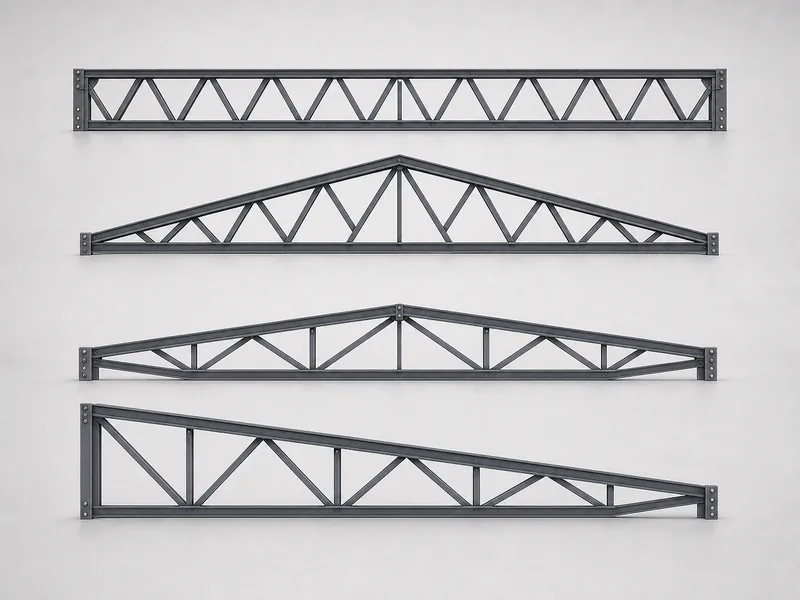
Parallel-chord trusses keep the top and bottom chords flat and parallel, which gives the most usable flat ceiling line and the easiest path for routing services. They suit low-slope industrial roofs and floors where headroom is uniform and predictable. The flat bottom chord is the reason planners reach for them when service supports or equipment loads have been designed into the truss package.
Pitched, scissor, and bowstring profiles
Pitched and shaped trusses raise the roof line for drainage, daylight, or vaulted clearance, trading some flat ceiling for height at the ridge. Scissor trusses lift the bottom chord toward the center for a vaulted interior; bowstring trusses curve the top chord and are efficient over long spans. The variable that decides among them is whether you need flat overhead routing or peak clearance, since you rarely get both at the same depth.
Single-slope and mono-pitch profiles
Single-slope trusses run one continuous pitch from a tall wall to a short wall, which simplifies drainage to one side and pairs well with lean-to and add-on bays. They show up where a building sheds water away from a neighbor or routes it to one line. Because the depth changes across the span, the chord forces are uneven, so the connection detailing deserves a closer look than a symmetric truss would need.
Why Builders Choose Open-Web Truss Framing
Builders move to open-web truss framing when a project needs a wide column-free interior without the steel weight of a solid-beam roof.
- Column-free span. Removing interior columns is the headline reason, and it is what links these buildings to broader clear span buildings where the whole floor plate stays open wall to wall.
- Lower steel weight for the span. The open web deletes material where stress is low, so the truss reaches mid-to-long spans lighter than a solid member, which is one driver behind the clearspan building cost advantage on larger footprints.
- Services through the web. Ducts, conduit, sprinkler mains, and cable trays run through the web openings instead of below the structure, which protects clear height. This works cleanly only when the truss depth was set with those penetrations in mind, so coordinate routing before the depth is frozen.
- Faster, bolt-together erection. Trusses fabricated and test-fit in the shop arrive as defined pieces that bolt up on site, which compresses field time compared with stick-built framing.
The honest trade-off is depth. An open-web truss needs more vertical room than a solid beam for the same span, so where ceiling height is tightly capped, the system that saves steel can cost you headroom. Weigh the depth against the clearance you actually need, not the maximum the catalog allows.
Open-Web Truss vs Rigid Frame: Choosing by Span and Load
Open-web trusses and rigid frames both clear interior columns, but they win at different spans, loads, and uses, so the choice is a sorting problem rather than a contest. The deciding variables are span width, the dominant load, how services route, and the building’s purpose.
| System | Span sweet spot | Steel use for the span | Overhead services | Best-fit use |
|---|---|---|---|---|
| Open-web steel truss | Mid to long spans (commonly tens of feet up to roughly 100 ft, depending on depth and load) | Lower; web removes low-stress material | Run through the web openings | Column-free warehouses, workshops, agricultural and light commercial roofs |
| Rigid (tapered) frame | Short through the widest single spans | Heavier at mid spans; efficient at the extreme wide ones | Below the frame, limited through-web | Widest clear spans, heavy or simple gable shells |
| Solid-web beam or joist | Short spans and floors | Heaviest per area as span grows | Below the member only | Short bays, heavy concentrated loads, floor framing |
Read the table as a starting filter, not a verdict. A high snow or seismic load can pull a project toward a rigid frame even at a span where a truss would otherwise be lighter, because the load path, not the headline width, sets the demand. Span alone never decides it; span paired with load and use does.
Spans, Heights, and Load Variables to Specify
Span capacity is set by the whole truss design, not by a single headline number, so the figures worth specifying are the ones that drive that design. Published spans vary widely between manufacturers because each assumes its own depth, spacing, and load case, which is why a catalog maximum tells you little about your building. The way to compare options apples to apples is to fix the same variables across quotes, the same variables that govern metal building sizes generally.
- Clear span and eave height define the envelope, and both work with truss depth, not in isolation.
- Truss depth and spacing trade against each other: deeper or closer trusses carry more, shallower or wider-spaced trusses carry less.
- Roof pitch follows drainage and profile choice, from near-flat industrial slopes to steeper vaulted lines.
- Design loads are the real driver: snow, wind, and seismic demand come from the building’s location and code, not from the truss catalog.
- Deflection limits cap how much the truss may sag under load, which often governs long spans more tightly than strength does.
On long spans, deflection and the bottom-chord connections, not the chord size alone, usually set the practical limit. A truss can be strong enough on paper and still bounce or crack finishes if the deflection criterion and the connections were not checked against the real load case. Specify the loads and the deflection limit up front, and treat any single published span number as provisional until the full design confirms it.
Where Steel Web Truss Buildings Fit
Steel web truss buildings fit projects where unobstructed floor area matters more than minimum roof depth. That is a wide band of real buildings, which is why this framing shows up across so many of the common types of metal buildings.
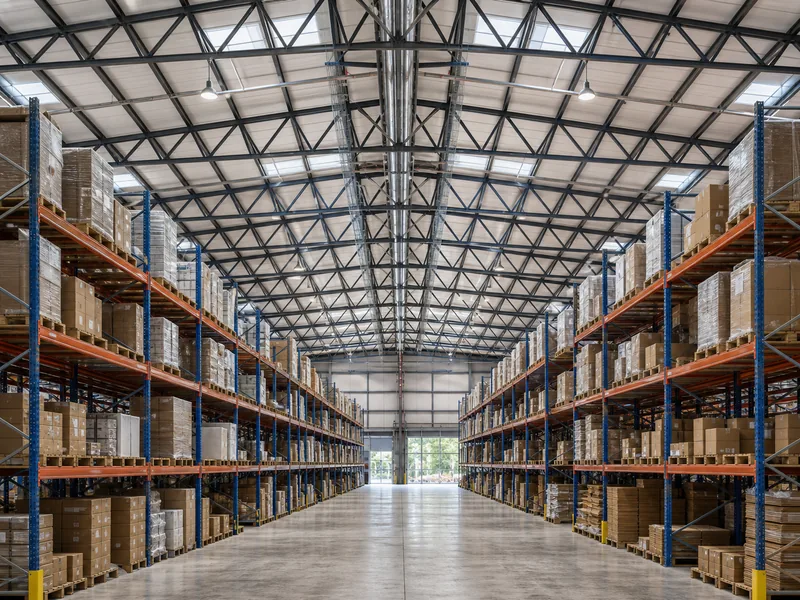
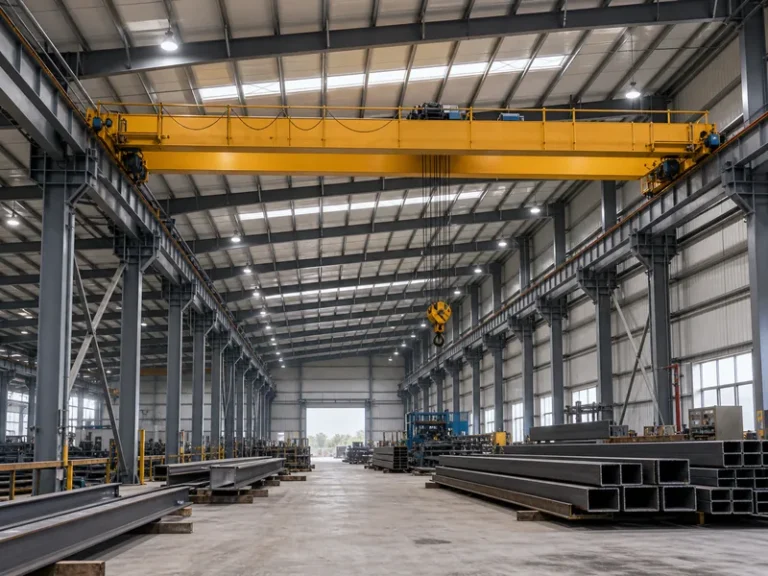
Warehouses and distribution centers use the column-free span to lay out racking and forklift aisles without designing around posts. Manufacturing workshops use it to keep production lines clear and to leave room to coordinate crane beams or services separately, with lighter routing running through the web. Agricultural and storage buildings use the wide span for equipment and bulk handling. Light commercial spaces, gyms, riding arenas, and hangars use it for the same column-free reason at varying spans and heights.
Where the system fits less well is just as useful to know. Buildings with a hard ceiling-height cap, very short spans where a simple beam is cheaper, or layouts that want interior columns to subdivide space gain little from an open-web truss. Match the framing to whether the open span earns its depth, and skip it where it does not.
What to Verify Before You Order
Verification before ordering separates a truss that fits the drawings from one that fits the site. Most truss problems are not fabrication defects; they are mismatches between what was assumed and what the project actually demanded, and a short checklist catches the expensive ones.
- Confirm the load case against local code. Snow, wind, and seismic demand come from the building’s location, not the catalog, so the design loads on the truss order must match the governing code for the site. Framing classifications and load provisions trace back to model codes such as the International Building Code, with open web steel joists typically referenced through industry joist specifications. The specific values remain the engineer’s to set.
- Check deflection and connections, not just span. A span that passes for strength can still fail a deflection or connection check, so verify both against the real load case before fabrication.
- Confirm the bracing and stability system. Permanent bracing, temporary erection bracing, and the bearing and connection details should match the engineer’s drawings. A truss that is adequate on its own still needs lateral restraint to stay stable in the finished frame.
- Match the installation method to truss length. Short trusses are commonly installed one at a time, while longer trusses are often lifted as pre-assembled modules with temporary bracing. Sizing a long truss without planning the lift is a frequent and avoidable source of field trouble.
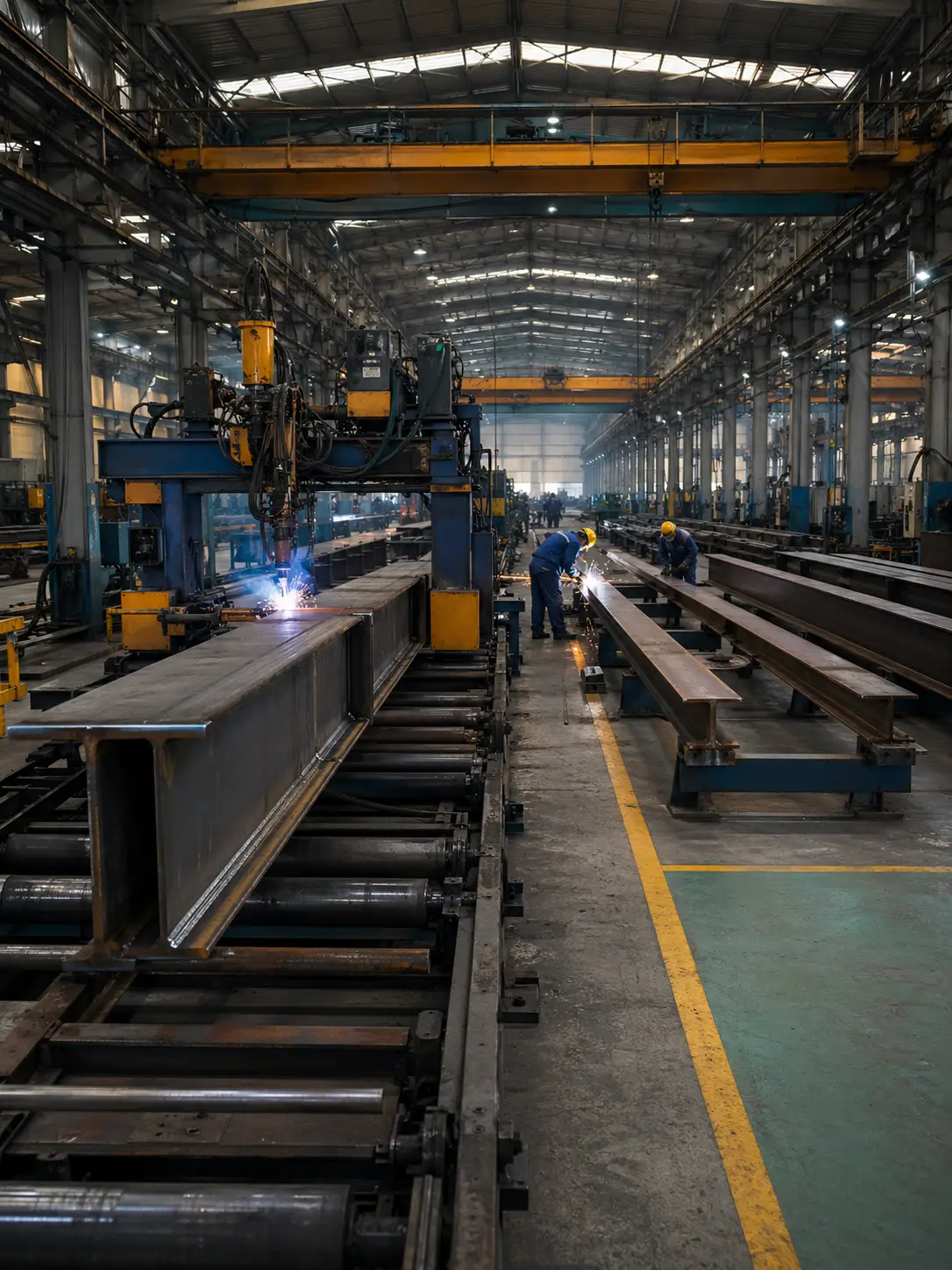
- Verify fabrication quality and tolerances. Chord straightness, weld quality, and connection fit decide whether bolt-together pieces actually line up on site, which is where shop discipline shows.
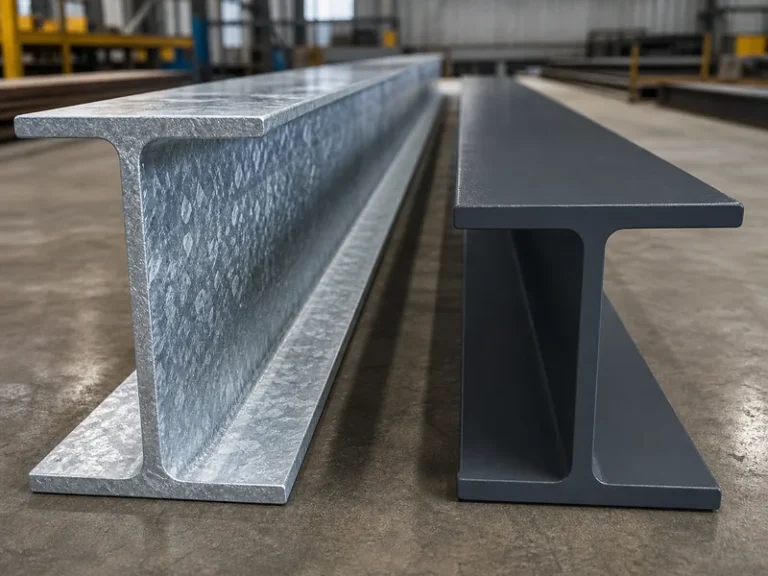
This last point is where the fabricator matters. KAFA holds light and heavy steel-structure design, fabrication, and installation qualifications. Its Qingdao facility runs dedicated lines for primary and secondary steel members, including H-beam sections, box sections, and C and Z purlins, under an ISO 9001:2015 quality system. Working with experienced metal building suppliers who design, fabricate, and install steel structures keeps the load case, the connections, and the tolerances tied together rather than handed off in pieces. Ask any supplier to confirm the design loads, deflection basis, bracing, and erection method in writing before the order is fixed.
Choosing and Verifying a Steel Web Truss Building
Choosing a steel web truss building comes down to fixing three things in order: the span and loads, the framing system, and the verification path. Lock the span, eave height, and the real design loads for your site first, because those decide whether an open-web truss, a rigid frame, or a simple beam is the lighter and cheaper answer. Then pick the profile that matches your clearance and drainage, and set the truss depth around your overhead services rather than the catalog maximum.
Verification is the step that gets skipped, and the one that causes the most rework. A truss is only as good as the load case, deflection limit, connections, bracing, and erection plan it was ordered against, so confirm those before fabrication rather than after delivery. Bring the loads and clearances to a supplier who can design, fabricate, and install to them as one chain. Treat any single span figure as the start of that work, not the end of it.
Frequently Asked Questions
How far can an open-web steel truss span?
Open-web steel trusses commonly span from tens of feet up to roughly 100 feet, with the practical limit set by truss depth, spacing, and the design loads rather than by any single catalog number. Spans beyond that range exist, but they depend heavily on depth and load case, so treat published maximums as a starting point to verify with an engineer.
Open-web truss or rigid frame, which is stronger?
Strength is not the deciding factor between the two, because both can be designed to carry the required load; the real difference is efficiency at a given span and load. Rigid frames tend to win at the widest single spans and heavy simple shells, while open-web trusses are lighter through mid-to-long spans and route services through the web.
What is the difference between a steel web truss and an open web steel joist?
A steel web truss is the general system of chords plus a triangulated web, fabricated to a project’s specific span and load. An open web steel joist, or OWSJ, is the standardized, lighter version of that idea, selected from industry load tables rather than designed member by member, and it suits repetitive, lighter roof and floor framing.
Are open-web steel trusses good for warehouses and workshops?
Open-web steel trusses suit warehouses and workshops well, because the column-free span keeps racking, aisles, and production lines clear while the open web carries ducts and conduit overhead. The fit weakens only where ceiling height is tightly capped, since the truss needs more depth than a solid beam for the same span.
Do steel web truss buildings need internal columns?
Steel web truss buildings are designed specifically to avoid internal columns across their span, which is the main reason builders choose them. Internal columns may appear when the building is wider than a single economical truss span, or when the layout intentionally uses intermediate supports for cost or functional reasons. The design then adds those supports or steps up to a longer-span profile.