




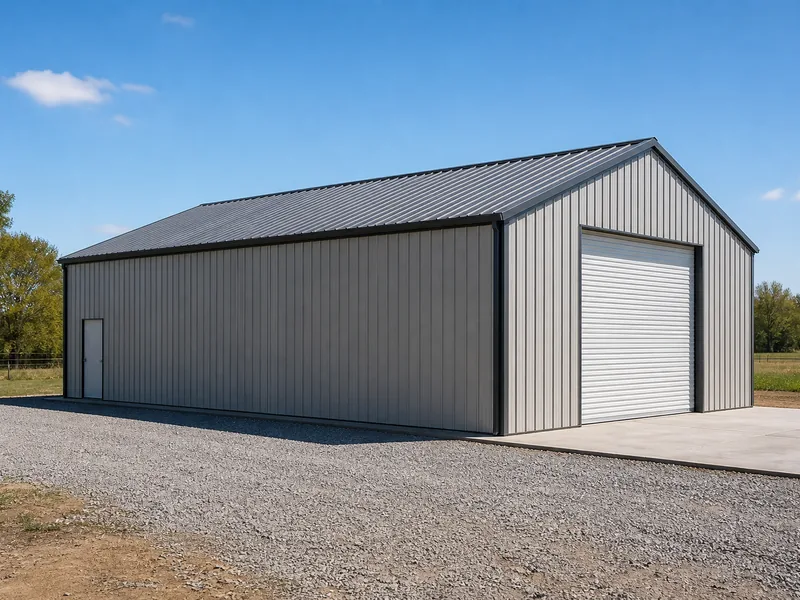
A turnkey 30×40 metal building with a concrete slab typically lands between roughly $28,000 and $48,000, or about $24–$43 per square foot installed. That single range, though, hides three quotes that look nothing alike: a bare steel kit, a finished shell on a slab, and a fully fitted-out building with electrical, insulation, and permits. Knowing which one you are reading is the difference between a budget that holds and one that drifts by tens of thousands.
Separate the metal building slab from the kit quote before comparing suppliers, because concrete assumptions can change the apparent cost fast.
Cost scope note: The estimates separate steel-package, installed-shell, and broader project costs. Unless stated, they do not include land, major site correction, utility service, interior fit-out, or unusual code upgrades. Use the ranges to screen quotes, then confirm each supplier’s exclusions in writing.
This guide breaks down how that cost is built up, how the slab choice moves the number, and what shifts a quote up or down before you call a supplier. It does not cover slab pour sequencing, rebar tying, or your local permit code line by line; those depend on your site and jurisdiction, and a local engineer or building department is the right source for them.
Quick cost snapshot (30×40 / 1,200 sq ft):
- Finished shell on a slab (turnkey): ~$28,000–$48,000
- Steel kit only: ~$15,000–$30,000
- Concrete slab, 4–6 in: ~$4,800–$12,000
- Erection labor: ~$8,400–$14,400 (about $7–$12/sq ft)
What a 30×40 Metal Building with Slab Costs (and Which Number You’re Reading)
The biggest reason two 30×40 quotes can differ by $30,000 is that they measure different things. A “30×40 price” can mean any of three scopes, and suppliers rarely label which one they are showing:
- Steel kit only: frame, sheeting, trim, and hardware, commonly $15,000–$30,000. No foundation, no labor.
- Finished shell on a slab: the kit plus a poured slab plus erection, the $28,000–$48,000 turnkey range most buyers want.
- Total project budget: the shell plus electrical, HVAC, insulation, interior finish, and permits, which can climb well past $50,000 once a building becomes a conditioned workspace rather than a dry storage box.
Most online kit prices quote the first scope, which is why so many buyers are surprised when the slab and erection arrive as separate, sizable line items. The same scoping question applies across most prefab metal buildings. But on a 1,200-square-foot footprint, the slab and labor are large enough relative to the kit that mislabeling the scope distorts the whole budget. Before comparing any two numbers, confirm which of the three each one represents.
Cost Breakdown: Building Shell, Concrete Slab, and Erection
Three line items carry most of a 30×40 project’s cost: the steel shell, the concrete slab, and erection labor. Treating them separately is the only way to see where a quote is light or padded.
| Line item | Typical range (30×40 / 1,200 sq ft) | What it depends on |
|---|---|---|
| Steel shell (kit) | $15,000–$30,000 | Gauge, eave height, roof style, wind/snow design loads |
| Concrete slab (4–6 in) | $4,800–$12,000 | Thickness, reinforcement, edge thickening, site prep |
| Erection labor | $8,400–$14,400 (≈$7–$12/sq ft) | Contractor rates, region, crew access |
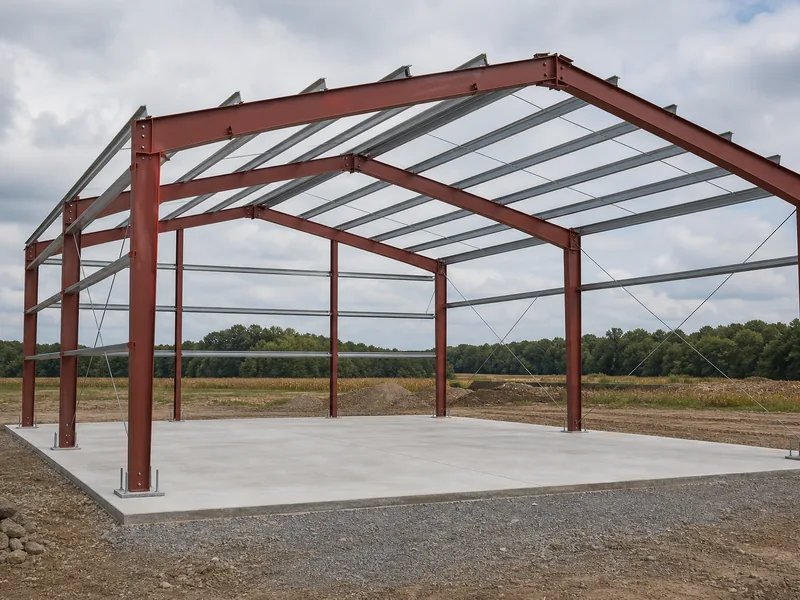
The steel shell is the part most sensitive to engineering. A frame priced for a calm inland site can be the wrong quote in a high-wind county, which may require a heavier primary frame and connection or fastening details to meet local wind requirements. Erection is its own decision. The labor cost for erecting a metal building swings with regional crew rates and how much site access the equipment has, so a rural pour-and-raise can cost less per square foot than a tight urban lot. Add these three, and a no-frills 30×40 shell on a slab usually settles in the high-$20,000s to high-$40,000s before any interior work.
How Slab Thickness and Reinforcement Change the Price
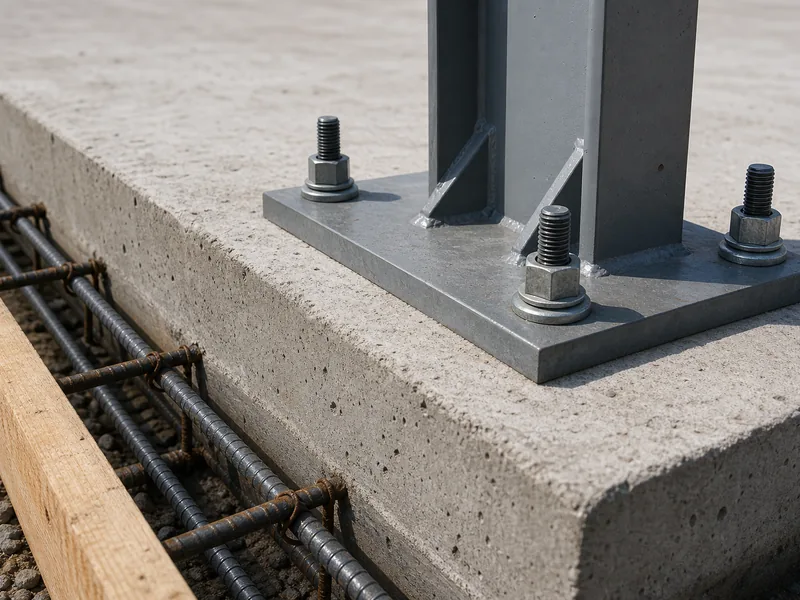
Slab thickness is a load decision before it is a price decision. A basic 4–6 inch slab runs about $4–$8 per square foot installed for a standard 4-to-6-inch slab, with heavy reinforcement or edge thickening sometimes pushing the slab line toward $10 per square foot for a standard 4-to-6-inch slab, with heavy reinforcement or edge thickening sometimes pushing the slab line toward $10 per square foot for a standard 4-to-6-inch slab, with heavy reinforcement or edge thickening sometimes pushing the slab line toward $10 per square foot for a standard 4-to-6-inch slab, with heavy reinforcement or edge thickening sometimes pushing the slab line toward $10 per square foot for a standard 4-to-6-inch slab, with heavy reinforcement or edge thickening sometimes pushing the slab line toward $10 per square foot. A 4-inch light-duty slab sits near the lower end and suits general storage and light vehicles, while a 6-inch reinforced slab, usually poured with rebar instead of wire mesh, sits near the upper end and supports heavy equipment, lifts, or commercial traffic.
On a 30×40, the slab is not just a floor; it anchors the column base plates, so the edge thickening and anchor-bolt layout matter as much as the middle of the pour. A 6-inch slab uses roughly 50% more concrete volume than a 4-inch slab before labor, reinforcement, and edge details are priced. Reinforcement tracks the same logic: wire mesh at roughly $0.40–$1 per square foot suits light duty, while rebar at about $1.50–$2.50 per square foot is usually specified once the building carries rolling loads. For heavy lifts or rolling loads, reinforcement, thickened pads, and soil-appropriate design are easier to specify before the pour than to retrofit afterward.
What Moves a 30×40 Quote Up or Down
Two 30×40 buildings on paper can carry very different price tags once local loads and finish levels are set. The variables that move a quote the most are predictable, which means you can estimate your own direction before a supplier does:
- Frame gauge and design loads: heavier gauge and higher wind, snow, or seismic requirements raise the shell price, and coastal or heavy-snow regions often cost more to engineer.
- Eave height and roof pitch: every couple of feet of added clearance, and a steeper vertical roof, adds steel and labor.
- Clear span vs. interior columns: a fully clear-span 30×40 typically costs more than one with an interior column line, since the frame has to carry the load without help.
- Openings and finish: roll-up doors, walk doors, windows, and insulation are each separate add-ons that accumulate quickly.
- Site and jurisdiction: grading, soil, utility connections, and permits (anywhere from a few hundred to a few thousand dollars) ride on top of the building itself.
None of these are optional surprises if you map them up front. The footprint is fixed at 1,200 square feet, so the quote moves almost entirely on specification and location, not on size. If a 30×40 starts feeling tight for the use, it is useful to compare nearby metal building sizes before locking the frame. The step up to a 30×50 metal building cost can also help, since the cost per square foot may improve when fixed engineering, delivery, and crew costs are spread over more square footage.
Real-World 30×40 Budgets by Use Case
What a 30×40 costs in practice tracks closely with how the space will be used. The footprint is constant; the fit-out is what separates a $30,000 project from a $60,000 one.
| Use case | Typical all-in range | Why |
|---|---|---|
| Dry storage / equipment barn | $28,000–$34,000 | Basic shell, standard slab, minimal openings, no climate control |
| Workshop or multi-bay garage | $38,000–$48,000 | Heavier slab, extra doors, partial insulation, some electrical |
| Small retail / office space | $50,000+ | Full insulation, HVAC, finished interior, more permits |
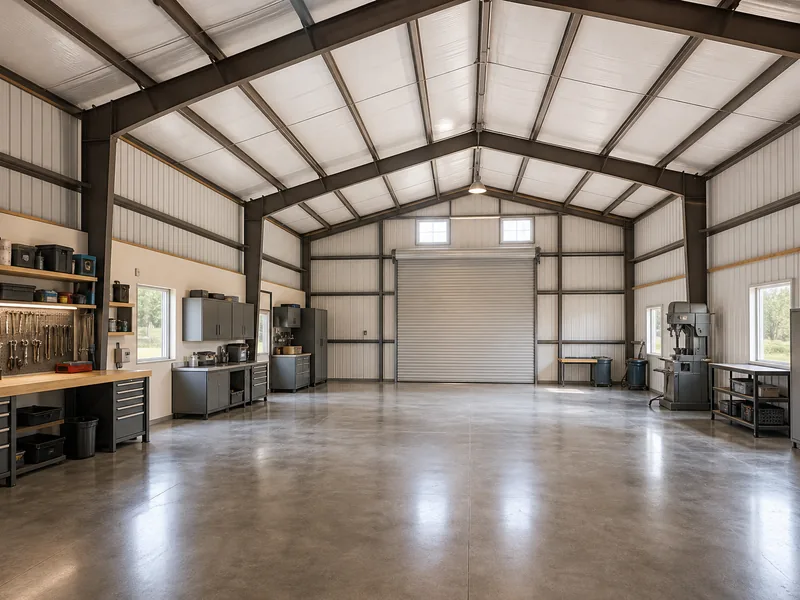
Many 30×40 builds are essentially garages or shops, so a general metal garage cost breakdown lines up closely with the storage and workshop tiers above. The retail and office tier is where the “total project budget” scope from earlier takes over. There, the building stops being a shell and becomes a conditioned space with its own mechanical and code requirements.
What to Lock Down Before You Request a Quote
A comparable quote depends on locking down a handful of specs before any supplier prices the job. Without them, you get back numbers that cannot be compared, because each supplier fills the gaps with different assumptions. Settle these first:
- Scope: kit, finished shell, or total project. State it explicitly so every quote covers the same thing.
- Slab spec: thickness (4 in vs. 6 in) and reinforcement, tied to the heaviest expected load.
- Design loads: your county’s wind, snow, and seismic requirements, which drive the frame.
- Eave height and openings: clearance and the count and size of doors and windows.
- Site conditions: whether the pad is graded, the soil is sound, and utilities are reachable.
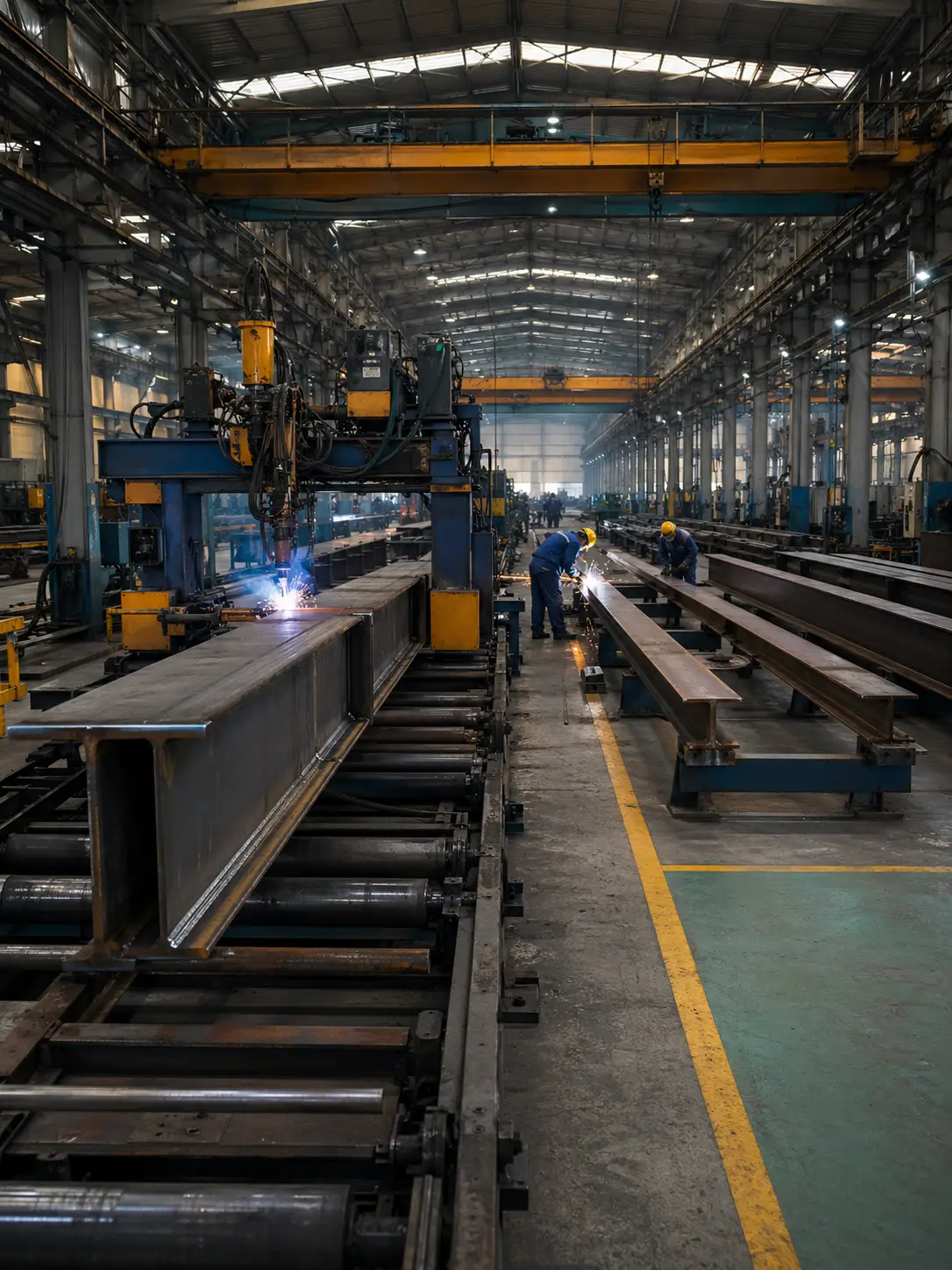
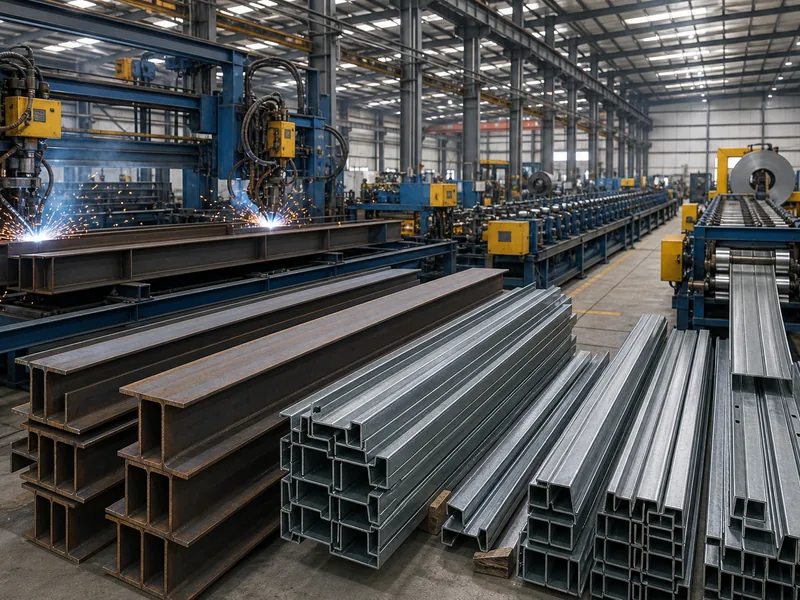
Qingdao KAFA Fabrication Co., Ltd. is a steel structure manufacturer with light and heavy steel design, fabrication, and installation qualifications. Its Qingdao facility runs dedicated H-beam, box-section, and C/Z purlin lines under documented quality procedures. For a 30×40, the practical step is to ask every supplier to price the same load case, slab spec, opening schedule, and site assumptions, so the numbers you compare describe the same building. If a supplier cannot say which scope and load case a quote assumes, that number is not yet a quote.
Conclusion
For a 30×40 metal building with a slab, three things drive most of the budget uncertainty: the slab spec you choose, the design loads your site demands, and which scope the quote actually covers. Lock the estimating scope first: decide whether you are budgeting a kit, a finished shell, or a total project, because that single choice explains most of the gap between a $28,000 number and a $60,000 one. From there, build a quote packet before you call suppliers, covering the scope type, the slab thickness and reinforcement, your county’s wind, snow, and seismic requirements, the door and opening schedule, and whether the site is graded and ready. Hand every supplier the same packet, and the 30×40 quotes that come back are finally comparable instead of a spread of different assumptions.
Frequently Asked Questions
Does a 30×40 metal building price include the concrete slab?
Most advertised 30×40 prices do not include the slab. Kit pricing usually covers the steel frame, sheeting, and hardware only, while the concrete slab and erection labor are quoted separately. Always confirm whether a number is kit-only or a finished shell on a slab before comparing it to another.
How much is just the concrete slab for a 30×40?
A standard slab for a 30×40 typically runs about $4,800–$12,000 installed, depending on thickness, reinforcement, and site preparation. A 4-inch slab with wire mesh sits at the lower end; a 6-inch reinforced slab for heavy equipment sits at the upper end, and difficult soil or grading pushes it higher.
What is the turnkey cost of a 30×40 metal building with a slab?
A turnkey 30×40 (finished shell plus slab plus erection) commonly falls between roughly $28,000 and $48,000. Adding full insulation, electrical, HVAC, and interior finish moves the project into a higher total-project budget that can exceed $50,000.
Is a 4-inch slab enough for a 30×40 shop?
A 4-inch slab is enough for general storage and light vehicle use, but a workshop with heavy equipment or a vehicle lift usually calls for a 6-inch reinforced slab. The slab should be sized to the heaviest load it will ever carry, since reinforcing after the pour is more involved than specifying it up front.
How much does a 30×40 metal building cost per square foot?
A 30×40 metal building generally runs about $24–$43 per square foot installed as a finished shell, or roughly $15–$25 per square foot for a kit only. The wide range reflects gauge, design loads, eave height, and region, so the per-square-foot figure is only comparable when the scope and specifications match.