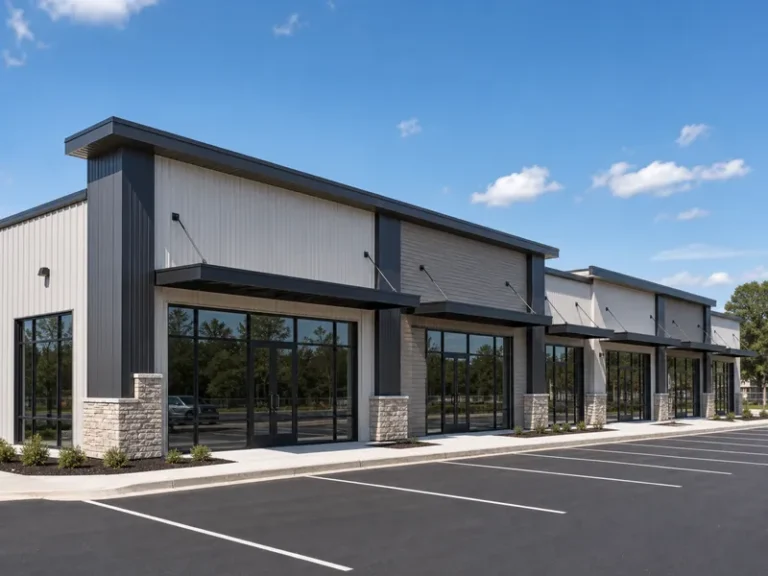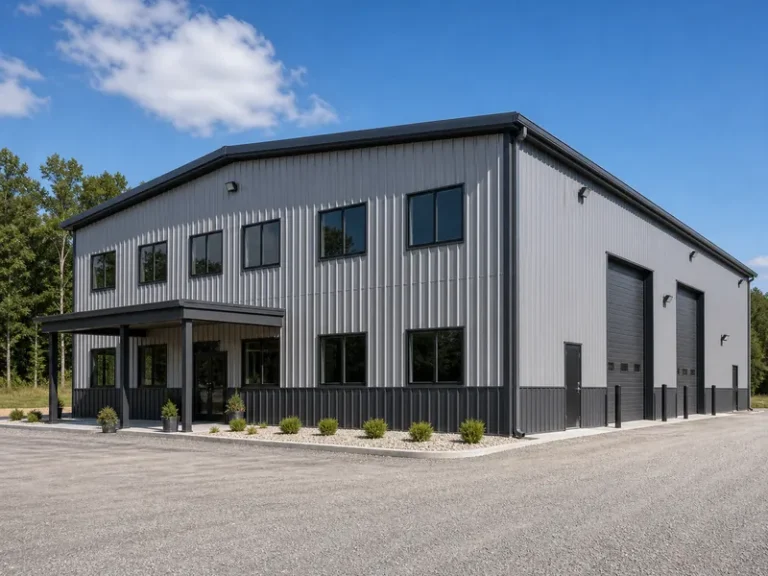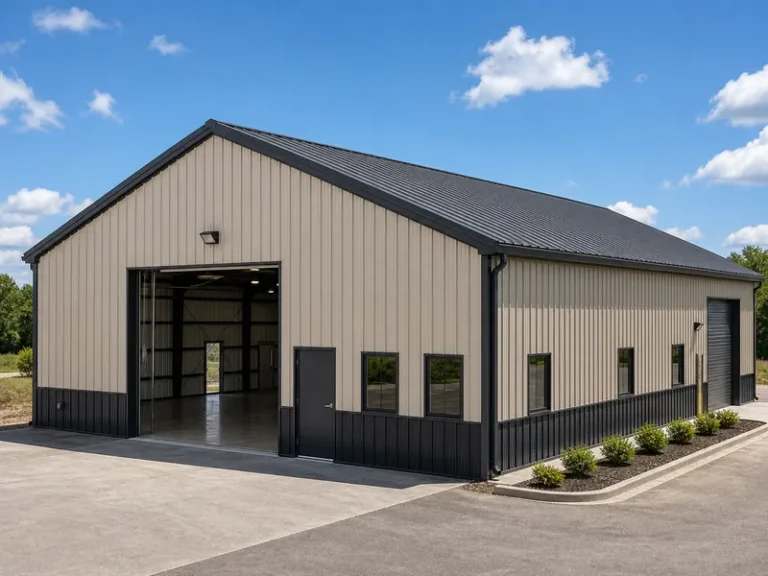





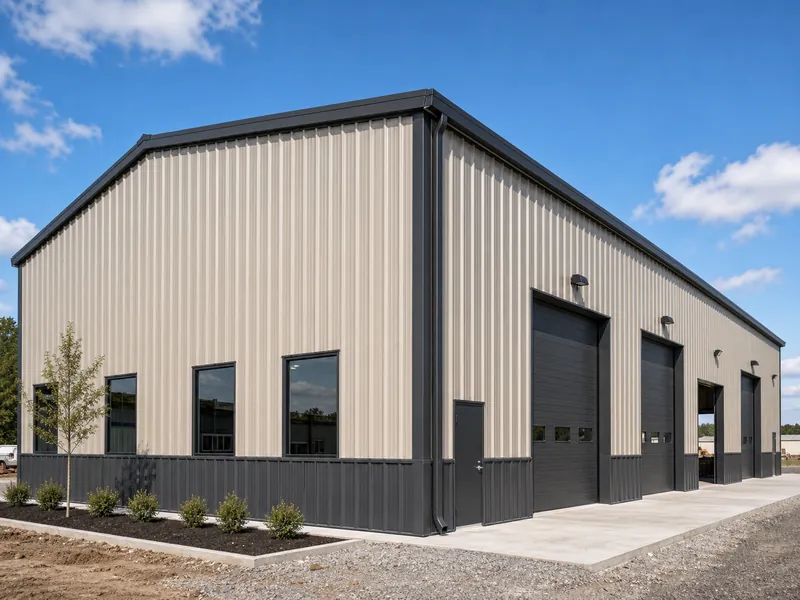
Metal siding runs about $4 to $16 per square foot installed — the panels plus the labor to hang them. The low end is bare Galvalume or corrugated steel; the high end is concealed-fastener standing seam in a premium coating. For a typical job — 2,000 square feet of exterior wall in painted steel — that works out to roughly $14,000 to $32,000 installed. Where you land inside that range is set by four things you choose: the metal, the panel profile, the steel gauge, and the coating, plus how much wall you have and who hangs it. This guide prices each driver and shows what a quote should spell out before you compare bids. It covers the cladding itself, not the wall framing, foundation, or interior finishes behind it.
What Metal Siding Costs per Square Foot
Installed metal siding costs roughly $4 to $16 per square foot because that single range bundles very different products, from a thin Galvalume corrugated panel screwed straight to the wall to a heavy standing-seam panel with hidden clips and a fluoropolymer finish. Economy steel in an exposed-fastener profile sits near $4 to $8. Painted steel in a mid-range profile lands around $7 to $12. Concealed-fastener and architectural panels push $10 to $16, and specialty metals climb well past that.
Total project cost tracks the wall area more than anything else. A 2,000-square-foot wall in painted steel runs about $14,000 to $32,000 installed; a small detached garage might use only 400 to 600 square feet. Small jobs are where the per-foot math breaks down: under roughly 500 square feet, fixed mobilization, delivery, and minimum-labor charges can double or triple the effective rate per square foot.
What a metal siding quote should include — and what it often leaves out:
- *Usually included:* panels, fasteners, basic trim, and the labor to hang them on a sound wall.
- *Usually excluded:* tearing off old siding, repairing the substrate behind it, new insulation or a weather-resistive barrier, permits, and freight on small orders.
- *Pushes the number up:* concealed-fastener profiles, heavier gauge, PVDF coatings, walls with many corners and openings, and any job small enough to trip order minimums.
Two bids only compare when both quote the same scope: a material-only price and a fully installed one for the same wall can differ by half.
Cost by Metal: Steel, Aluminum, Zinc, and Copper
Steel is the default metal for siding on a budget, while aluminum, zinc, and copper each buy something specific — corrosion resistance, longevity, or appearance — at a higher price. The figures below are installed ranges; they move with profile, gauge, and region rather than any single list price.
| Metal | Installed cost / sq ft | What the price buys |
|---|---|---|
| Steel (Galvalume or bare) | $4–$12 | Lowest cost; corrugated and exposed-fastener panels |
| Steel (coated / painted) | $7–$16 | Color, finish durability, concealed-fastener options |
| Aluminum | $6–$17 | Coastal corrosion resistance; roughly a third more than comparable steel |
| Zinc | $20–$45 | Self-healing patina and a very long service life |
| Copper | $30–$50 | Architectural appearance, with 100-plus-year potential |
Steel covers the large majority of projects and anchors every range in this article. Aluminum earns its higher price only in salt air, where it resists the pitting that attacks steel near the coast. Zinc and copper are architectural choices that run four to five times the cost of steel; they make sense on a feature wall or a heritage building, rarely on a full envelope where budget matters. Each of these figures still shifts with the profile, gauge, and coating covered below.
Cost by Panel Profile
Panel profile changes both the price and the look, and it divides along one clear line: exposed-fastener panels are cheaper to buy and faster to hang, while concealed-fastener panels cost more and hide their screws.
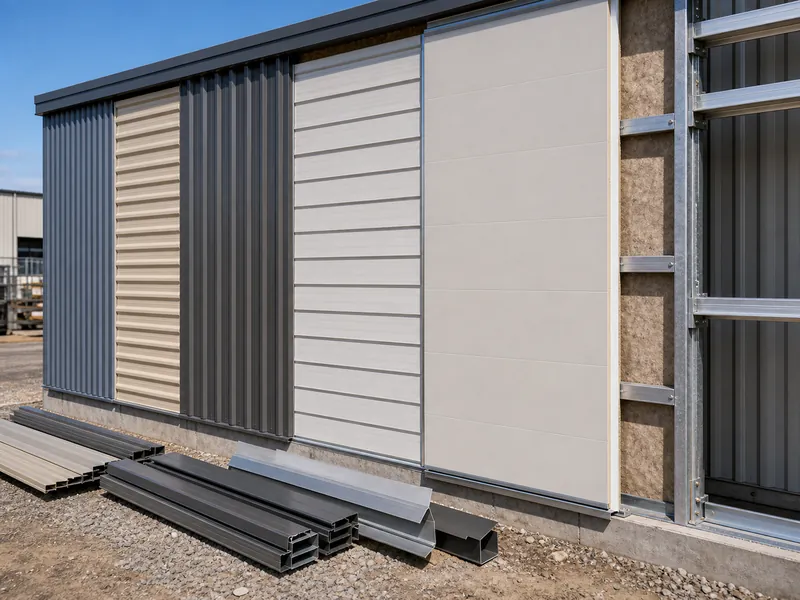
Corrugated and PBR / R-panel
Corrugated and PBR panels cost about $7 to $12 per square foot installed and are the fastest, most affordable way to clad a wall. With exposed fasteners and a simple ribbed profile, they are the workhorse cladding on agricultural barns and commercial steel buildings, where a clean, durable envelope matters more than a seamless face.
Board and batten
Board-and-batten steel runs about $9 to $14 per square foot installed and delivers a vertical, residential look that pairs well with mixed-material exteriors. The price step over corrugated pays for the profile and trim, not for heavier steel.
Standing seam
Standing seam costs about $10 to $16 per square foot installed and sits at the premium end of common siding. Its concealed clips and continuous ribs share panel technology with the standing-seam profiles used on metal roofs, which is part of why it costs more to fabricate and install than an exposed-fastener wall.
Insulated metal panels
Insulated metal panels (IMPs) cost about $8 to $17 per square foot installed because each panel combines cladding and a foam core in one piece. Material alone runs roughly $7 to $14, from 2-inch panels near R-15 up to 8-inch panels near R-48. They edge above plain siding precisely because the price includes the insulation for metal buildings that you would otherwise add as a separate layer. On commercial and cold-storage envelopes, that single-step assembly often offsets the higher panel price in labor and schedule.
How Gauge and Coating Change the Price
Two specs move the per-square-foot price more than the panel profile alone suggests: steel gauge and the coating on the panel. Both are easy to overlook on a bid and easy to under-specify to chase a lower number.
Gauge is panel thickness, and a lower gauge number means thicker, pricier steel. A 26-gauge panel costs about 10 to 15 percent more than a 29-gauge panel, and stepping up to 24 gauge adds another 30 to 40 percent. Homes commonly use 26 or 24 gauge; the right choice depends on wind exposure and how far apart the wall supports sit, not on looks alone. On a metal building, under-specifying gauge to save a few cents a foot can show up later as oil-canning between girts or fasteners working loose under wind load — a repair that costs far more than the gauge upgrade would have.
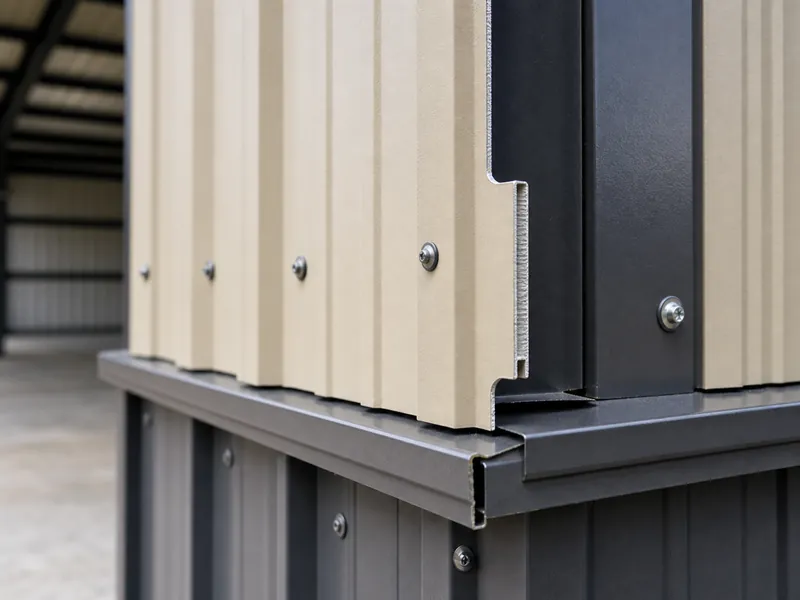
Coating sets both color life and price. Bare Galvalume (an aluminum-zinc alloy coating) is the cheapest finish, and SMP paint adds color in the mid range. PVDF, a fluoropolymer finish, runs roughly 15 to 35 percent more than SMP but holds its color far longer in sun and weather. If you are weighing a bare metallic finish against a painted one, the trade-off between galvanizing and painting steel decides both the upfront price and how the wall ages.
Installation Labor and the Costs Buyers Miss
Labor runs about $3 to $7 per square foot and makes up 30 to 60 percent of a finished metal siding bill, so the install is rarely the right place to cut. Concealed-fastener and architectural panels sit at the top of that labor range because they take longer to align and clip.
The line items buyers leave out of a budget are predictable:
- Tear-off and disposal of old siding: about $1 per square foot, or $1,000 to $2,500 for a full house.
- Substrate repair where the old wall is damaged: $2 to $5 per square foot.
- Permits: $150 to $1,500, and up to about $3,000 in strictly regulated areas.
- New insulation or a weather barrier, if the wall is opened up.
- Trim, flashing, and fasteners, which scale with how many openings and corners the wall has.
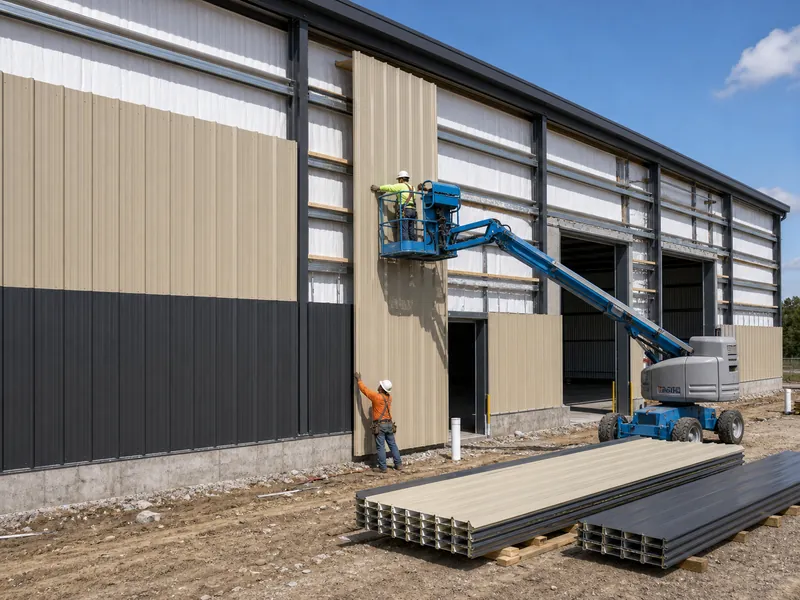
There is also a subtler trade-off in fastener choice. In coastal or high-humidity climates, the fasteners and panel seams are the first things to check on a bid, because cheap screws on a good panel is a false economy that streaks and loosens long before the steel fails. Spending a little more there protects the rest of the wall.
Matching Siding Cost to the Building
The cheapest panel that meets the building’s exposure and code usually wins, and that answer looks different for a house than for a metal building. On a home, the choice is mostly about appearance and budget — board and batten or standing seam in a painted 26-gauge steel. On an agricultural or commercial structure, the cladding is an exposed-fastener PBR panel or an IMP fastened to girts, priced as part of the envelope rather than as a standalone re-side.
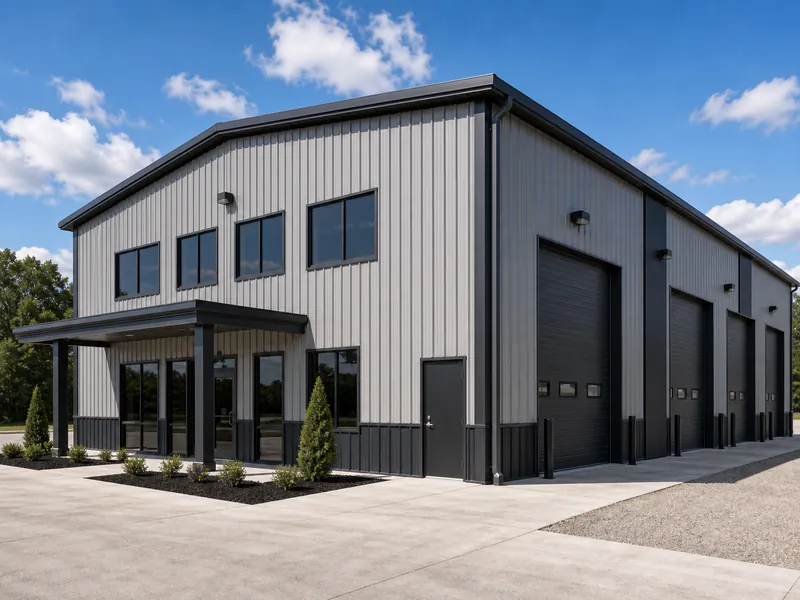
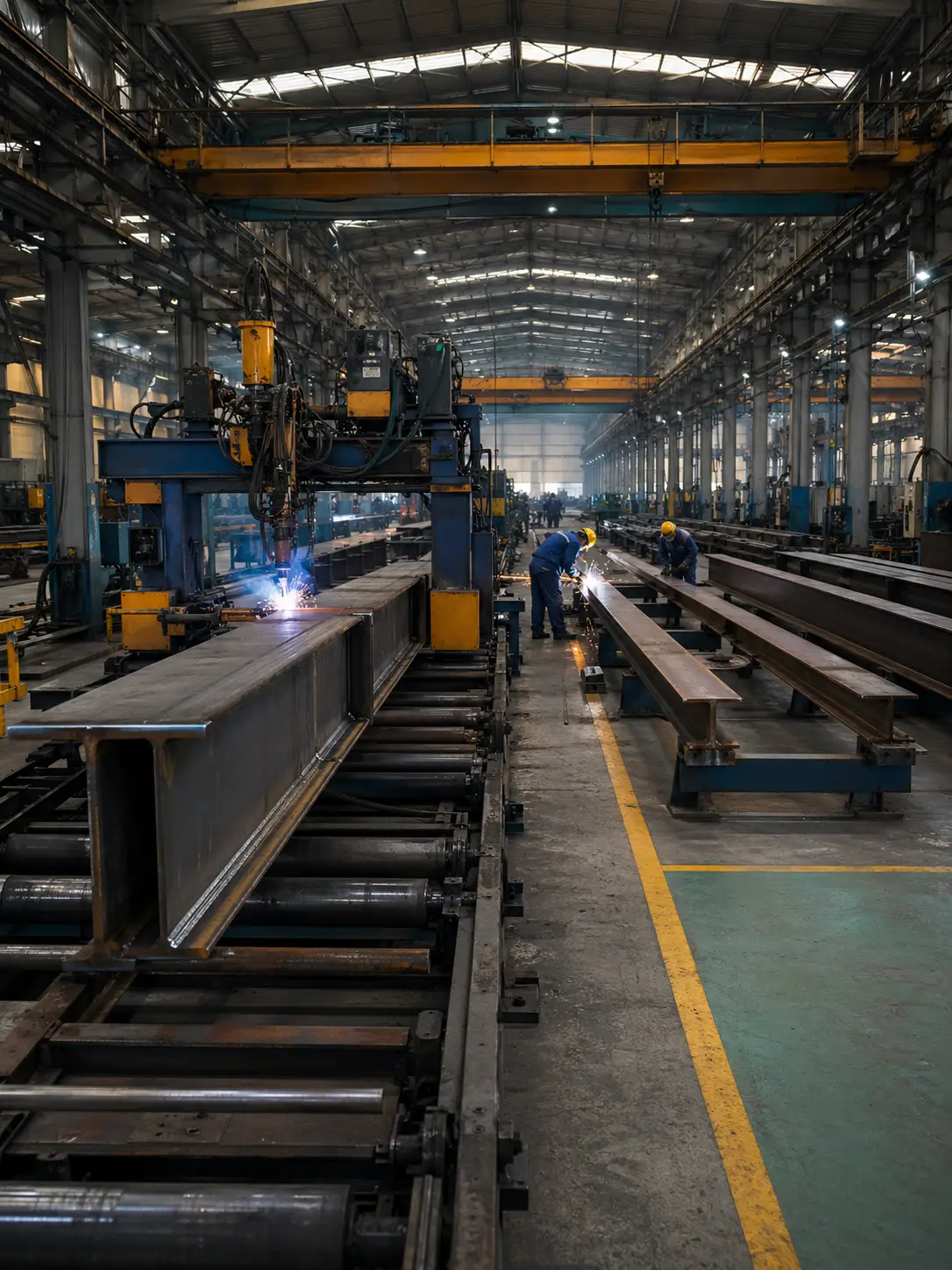
The house-versus-building split also changes how the siding is priced. On a new metal building, the siding is one of several metal building components specified alongside the frame, so gauge, coating, and trim get locked in with the structure instead of sourced separately. A steel fabricator that runs its own profile steel plate and C/Z purlin lines — Qingdao KAFA Fabrication, for example — sets siding gauge and trim against the frame and wind loads at once. That tightens the number compared with buying panels on their own. Lifecycle cost follows the same logic: factoring in routine steel building maintenance on the coating and fasteners keeps the cheaper panel from becoming the expensive one over 40 years. If you are comparing systems for a new build, it helps to request a quote that lists gauge, coating, and trim line by line.
Where Metal Siding Budgets Actually Move
Three numbers decide most of a metal siding budget — the panel profile, the gauge, and the coating — and once the metal is chosen, they matter in that order. Profile sets the base rate, gauge and coating move it 15 to 40 percent each way, and wall area sets the total.
Before you compare bids, settle which scope you are pricing: material-only, installed, or a full envelope that includes tear-off and insulation. Lining up an installed PBR price against a material-only standing-seam quote is the easiest way to misjudge cost, and on a small re-side the 500-square-foot order minimum can outweigh the panel choice itself. Settle the gauge and coating against your wind exposure first, then compare per-square-foot numbers, and the bids will finally describe the same wall.
FAQ
What is the cheapest metal siding?
Exposed-fastener corrugated steel in bare Galvalume is the cheapest, around $4 to $8 per square foot installed. The 29-to-26-gauge step and your order size move that floor more than the brand on the panel does. A small job in thin steel can still cost more per foot than a large one.
Is metal siding cheaper than vinyl?
Metal siding is usually more expensive upfront than vinyl, which runs about $3 to $7 per square foot installed, but it lasts far longer. Where vinyl may need replacing in 20 to 30 years, steel and aluminum panels last 40 to 70-plus years, which closes the gap over the life of the wall.
Does steel or aluminum siding cost more?
Aluminum costs more — roughly a third more than comparable steel for the same profile and gauge. That premium only pays off near the coast, where aluminum resists the salt-driven corrosion that pits and streaks steel.
How long does metal siding last, and how does that affect cost?
Metal siding lasts about 40 to 70-plus years depending on the coating and climate, with PVDF finishes holding color longest. Because the panel rarely needs replacing, most lifecycle cost is in the finish and fasteners, which is why a slightly better coating often costs less over time than a cheaper one repainted twice.
What does metal siding cost for a 2,000-square-foot house?
A 2,000-square-foot wall in painted steel runs about $14,000 to $32,000 installed, or $7 to $16 per square foot. Complex walls with many openings, heavier gauge, or premium coatings push toward the top of that range; simple walls in standard steel land near the bottom.
Further Reading
- Metal Construction Association (MCA) — the industry body for metal wall and roof cladding, with background on the panel systems and envelope performance behind the profiles priced here.
- Metal Building Manufacturers Association (MBMA) — the association for metal building systems, useful for how wall panels are specified as part of a commercial building envelope.
- American Iron and Steel Institute (AISI) — U.S. steel industry data, helpful for tracking the steel-market movements that push panel prices up or down between quotes.