




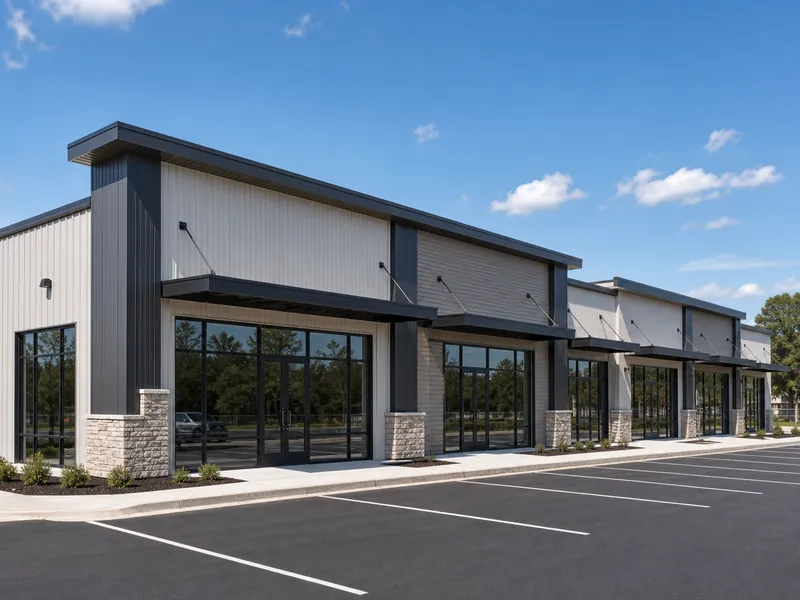
Building a strip mall runs about $200 to $400 per square foot turnkey in most U.S. markets, which puts a typical 10,000-square-foot center near $2 million to $4 million for the building, before land. The structural shell on its own — frame, roof, and wall cladding — is a much smaller slice, often $30 to $70 per square foot, and less again with a pre-engineered steel shell. The gap between that shell figure and the turnkey figure is where most budgets drift, because a “cost per square foot” quote means little until you know whether it buys a bare envelope or a finished, leasable space. This guide walks the number from bare shell to turnkey, line by line.
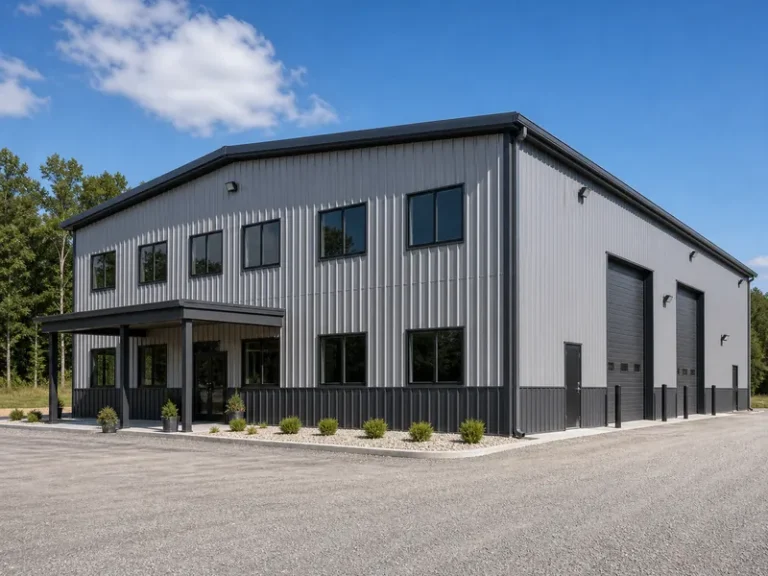
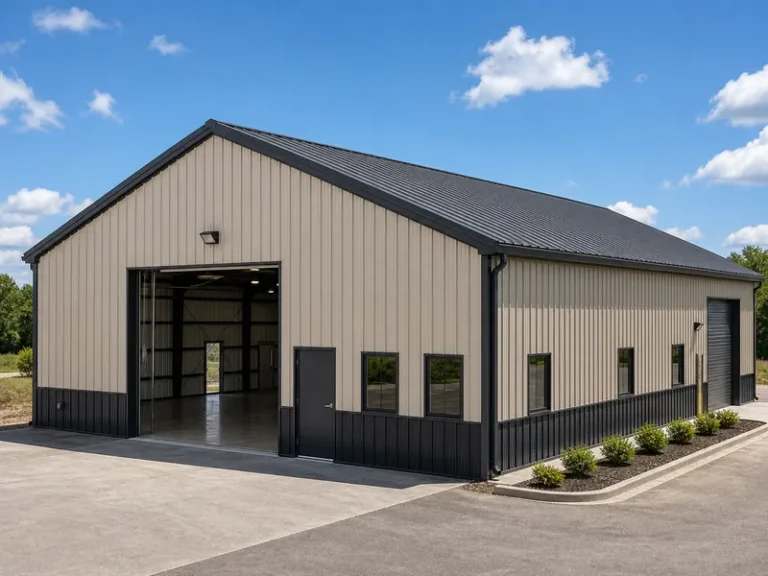
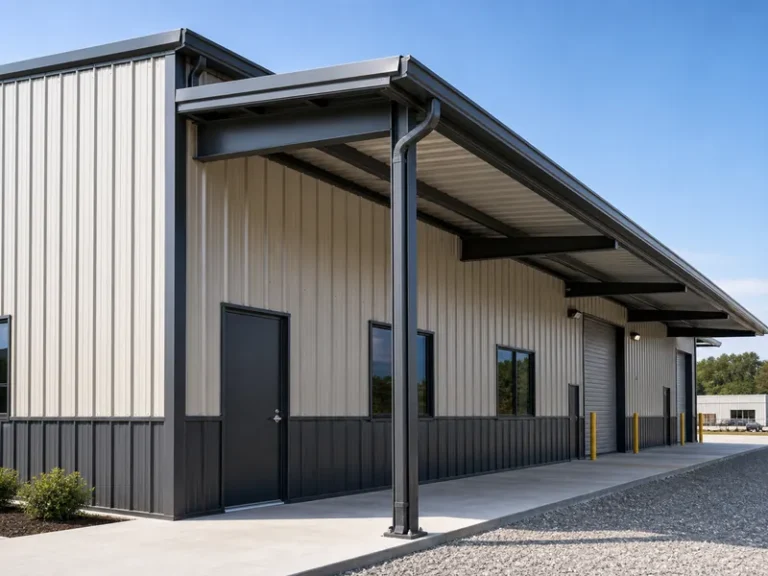
A strip center is one of the more forgiving commercial formats to build: a single-story, multi-tenant retail row with shared parking, individual storefronts, and demising walls between units. That simplicity is why owners so often build them as commercial metal buildings — a clear-span steel frame subdivides into bays cleanly and keeps the structural budget predictable.
What a Strip Mall Costs Per Square Foot
Turnkey strip mall construction lands between $200 and $400 per square foot in most regions, with finish level and location deciding where you fall in that band. “Turnkey” here means a complete, leasable center — shell, storefronts, parking, and a basic interior — but not the land underneath or the specialty fit-out a restaurant or salon tenant adds later.
The same building carries very different price tags depending on how much of it you are pricing:
- Core & shell — the steel frame, roof, wall cladding, and slab; a weather-tight envelope with no interior. The lowest number.
- White-box (vanilla shell) — shell plus demising walls, rough-in plumbing, basic HVAC, lighting, and a finished restroom, ready to hand to a tenant.
- Turnkey — white-box plus storefronts, facade, and finishes across a leasable center.
- Total project budget — turnkey plus land, off-site work, soft costs, and any tenant-improvement allowance you choose to fund.
Cost scope — what these numbers cover. Every per-square-foot figure in this guide is vertical construction. None of them include the land, off-site work, permits and soft costs, or the specialty fit-out a tenant adds — those are separate budgets covered in the sections below. What pushes a project to the top of its $200–$400 band: food-service tenants with grease traps and heavy plumbing, premium facades, stricter Northeast and West Coast labor and code, and a tight or sloped site. Most “cost to build a strip mall” confusion traces back to comparing one project’s shell quote against another’s turnkey quote, so settle which caliber you are estimating before you weigh two bids against each other.
| Building size | Typical tenant bays | Turnkey range ($200–$400/sq ft) |
|---|---|---|
| 5,000 sq ft | 3–4 | $1.0M–$2.0M |
| 8,000 sq ft | 4–6 | $1.6M–$3.2M |
| 10,000 sq ft | 5–8 | $2.0M–$4.0M |
| 15,000 sq ft | 8–12 | $3.0M–$6.0M |
These totals cover vertical construction only. Land, off-site improvements, and tenant fit-out sit outside them.
Where the Money Goes: Cost Breakdown by Component
Six categories absorb most of a strip mall’s hard cost, and mechanical systems usually lead them. The shares below are proportions of hard cost (construction only), not additive dollar figures — they overlap and will not total a single clean number on every job.
| Component | Share of hard cost |
|---|---|
| Site work, paving, utilities | 15–20% |
| Foundation and slab | 5–10% |
| Structural shell (frame, roof, wall cladding) | 20–30% |
| Storefront and facade | 5–10% |
| Mechanical, electrical, plumbing (MEP) | 18–28% |
| Interior white-box (insulation, demising walls, ceilings) | 10–15% |
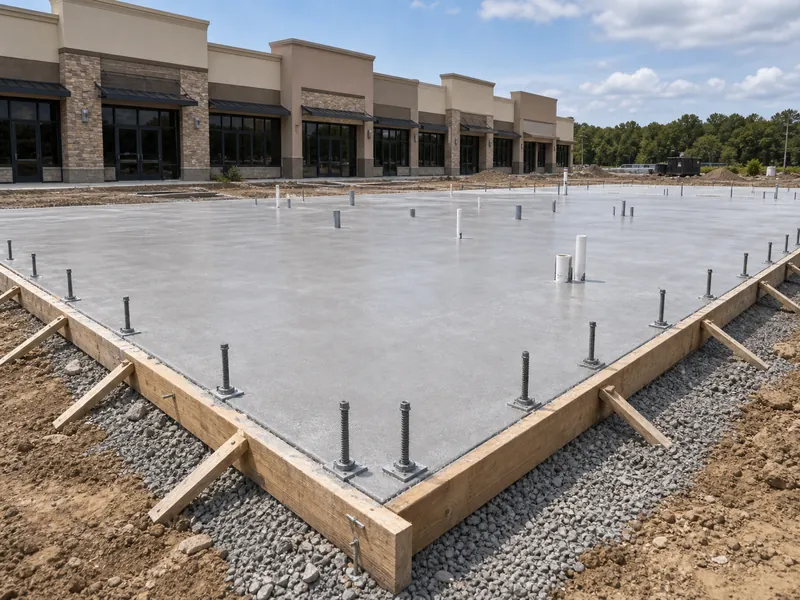
The structural shell line carries the frame, roof, and wall cladding as one envelope; the storefront row is the glazing, entries, and veneer facing the parking lot, a separate scope from the cladding behind it. MEP holds the most variation — a center built for retail and office tenants stays at the low end, while food-service bays with grease traps, kitchen exhaust, and added plumbing push the whole MEP line up. A poured slab and footings sized for a steel building’s point loads is the foundation line. A concrete foundation for metal buildings follows the frame reactions, not a generic thickness, and getting that engineering right early avoids a costly retrofit. How the trades are sequenced across a multi-tenant slab is its own discipline — metal building construction has to leave each bay independently serviceable, with utilities split unit by unit.
Site Work, Land, and Demolition
Site work and land are the two line items early strip mall budgets routinely leave out, and either one can rival the building itself. Grading, utilities, stormwater, curb cuts, and parking commonly run 15 to 20 percent of hard cost, and retail parking ratios are demanding — plan for roughly one acre of parking and drive aisles for every 15,000 square feet of leasable retail.
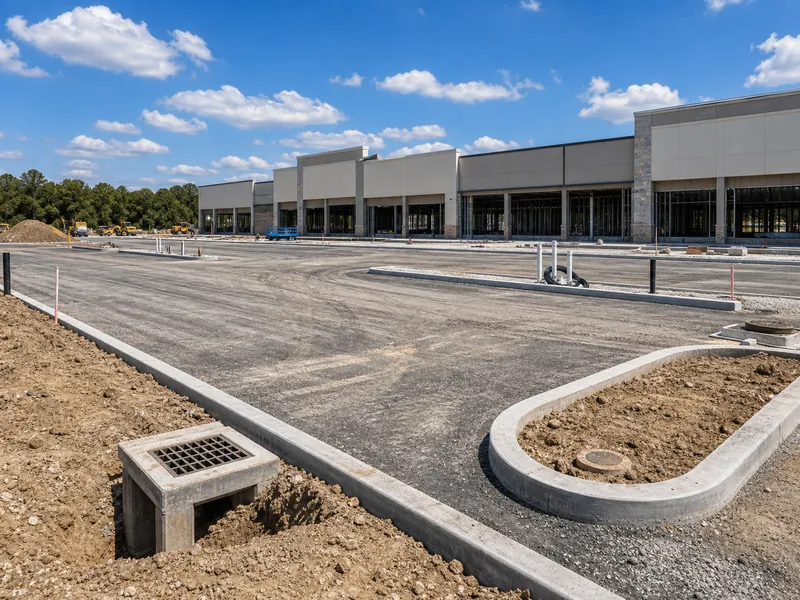
Land is wholly market-driven and sits outside the construction number: in many metros it represents 15 to 25 percent of the total project budget, and prime corners can cost more than the building on them. If the parcel already holds a structure, budget for demolition of buildings cost before site work can start — commercial demolition is a real line item that often surfaces abatement and disposal charges missing from the original pro forma.
Conventional vs. Pre-Engineered Steel Shell
A pre-engineered steel shell is usually the cheaper and faster route to a leasable strip center than masonry or conventional structural steel. The shell — rigid frames, purlins, girts, roof, and wall cladding — often quotes around $25 to $60 per square foot for the frame and envelope, depending on span, eave height, snow and wind loads, and bay spacing. Those rigid frames clear-span the building, so tenants subdivide bays without interior columns cutting through their floor plates, which is precisely what retail leasing wants.
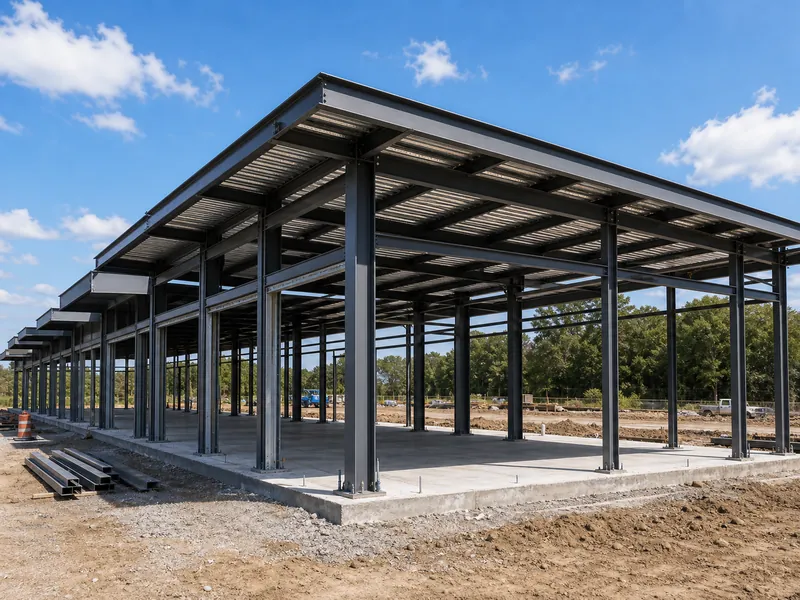
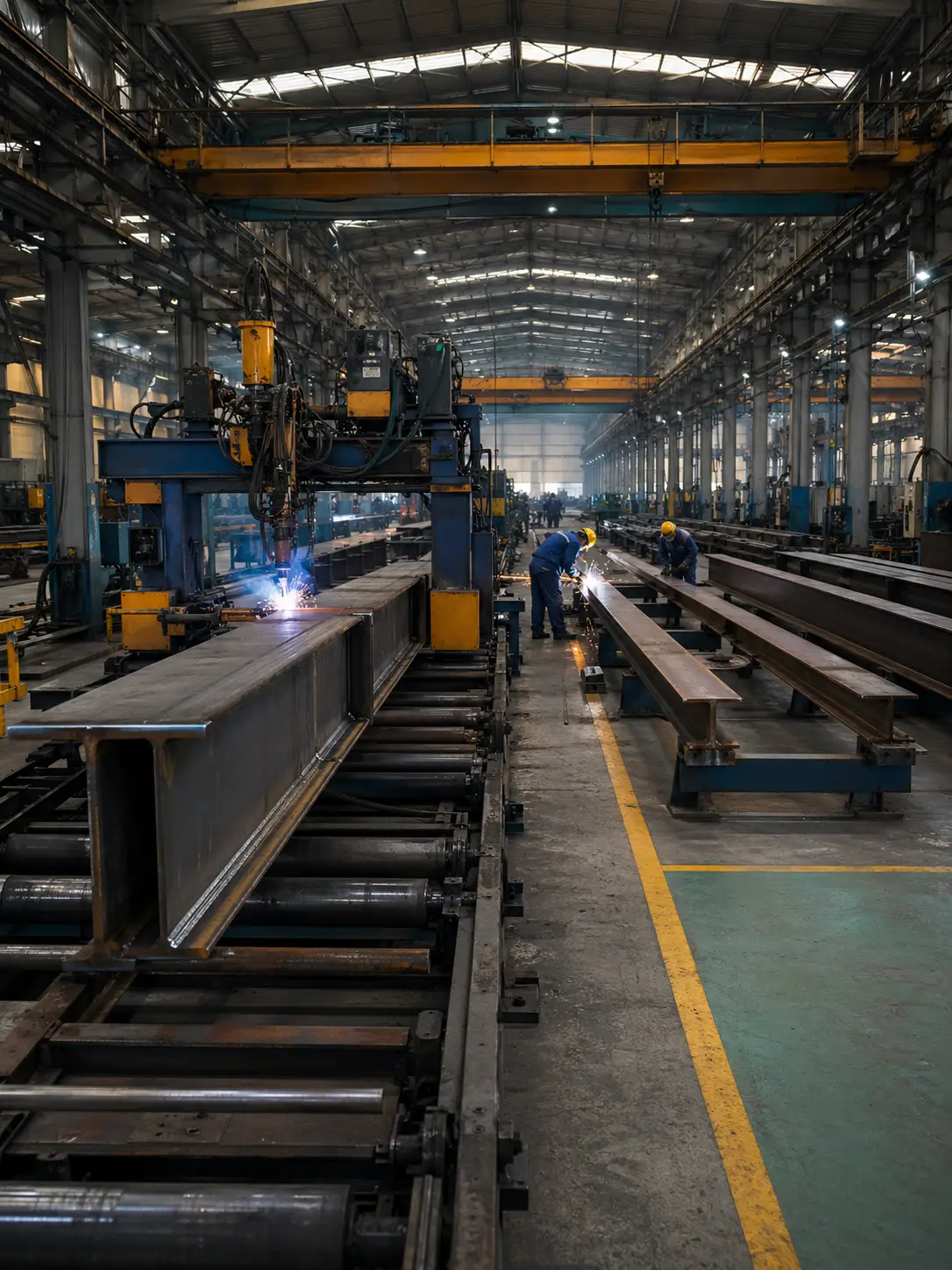
That structural saving is why multi-tenant retail leans on steel. A fabricator that runs its own steel frame construction can hold the shell to a tight, engineered quote rather than a field-built estimate. KAFA, for one, builds light and heavy steel structures on dedicated H-beam, box-section, and C/Z-purlin lines, so the connections arrive pre-detailed and erection stays leaner. Erection is its own cost center: the labor cost for erecting a metal building tracks crew, crane access, and bay count, and it belongs in the shell budget rather than buried under “construction.” Conventional masonry adds mass, fire rating, and a heavier facade — sometimes the right call for code or appearance — but it lifts both the shell number and the foundation underneath it.
Tenant Build-Out and the White-Box Question
Tenant build-out is a separate budget from the shell, and who pays for it is set by the lease, not the construction contract. A landlord typically delivers a white-box: demising walls between units, a rough restroom, capped utilities, basic HVAC, and an unfinished interior. From there, fit-out to a tenant’s brand — finishes, equipment, specialty plumbing — commonly runs $50 to $150 per square foot on top of the shell, and a restaurant or medical bay lands well above a dry-goods retailer.
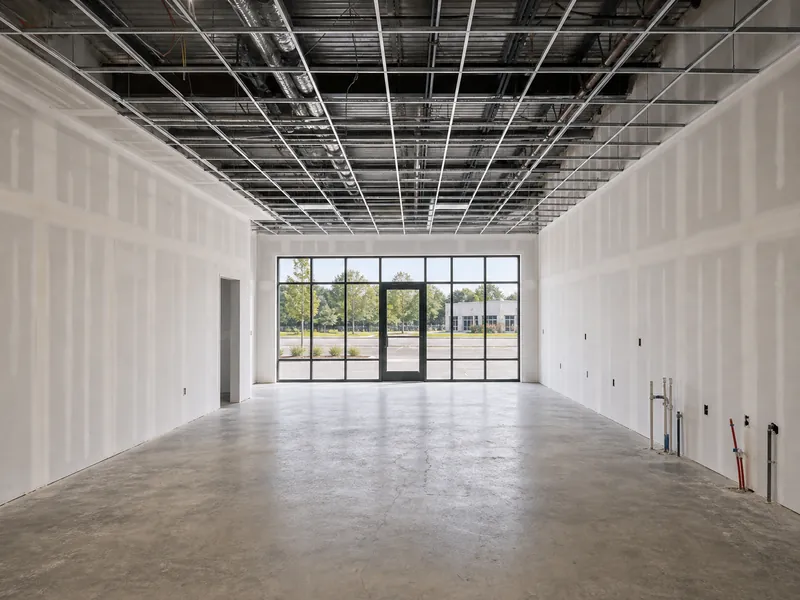
Under the triple-net (NNN) leases common to strip centers, tenants frequently fund their own fit-out, sometimes against a landlord improvement allowance. The interior demising work itself is light-gauge framing, and metal stud framing cost scales with the number of units and the fire-separation rating between them. A center chopped into eight small bays carries more interior framing than the same square footage split into four larger ones. Decide the bay count early; it moves the white-box budget more than the finish selections do.
Soft Costs, Permits, and Code Compliance
Soft costs add 10 to 20 percent on top of hard construction — architectural and structural design, civil engineering, surveys, permits, impact fees, legal, and insurance all live here. Commercial building permits alone commonly run $0.25 to $0.70 per square foot, ahead of the impact and utility-connection fees that swing widely by jurisdiction.
Code drives several of these costs directly. A strip mall is a mercantile (Group M) occupancy under the International Building Code, which sets exiting, fire-separation, and sprinkler thresholds; a fire sprinkler system commonly adds $3 to $6 per square foot once the building or a tenant use crosses the trigger. Accessibility is legally required: parking, entrances, restrooms, and routes must meet the ADA Standards, and retrofitting access after the fact costs far more than designing for it. Treat permitting as a schedule item too, since review timelines in stricter jurisdictions can outlast the steel lead time.
Regional and Size Variables That Move the Budget
Region and building size account for most of the swing in a strip mall’s per-square-foot cost. Labor, land, and code stringency make the Northeast and West Coast the priciest places to build, while much of the South and Midwest sits lower for the same specification. Size pulls the other way: spreading fixed costs — site entry, utilities, design — across more square footage lowers the per-foot number, so a 15,000-square-foot center usually prices better per foot than a 5,000-square-foot one.
Finish level is the third lever, and the one you control outright. A stucco-and-glass facade, upgraded parking lighting, and heavier landscaping can each be dialed up for lease appeal or down to protect the budget. Lock the region and the target bay sizes first; those two decisions frame the budget before any finish question matters.
Conclusion
A defensible strip mall budget turns on three moving numbers more than the rest: the scope caliber you are pricing (shell, white-box, or turnkey), the site and land cost that sits outside the building, and the tenant fit-out that the lease assigns. Settle the caliber first — most blown budgets come from holding a shell quote up against a turnkey expectation — then layer site work, soft costs, and a fit-out allowance onto the $200-to-$400-per-square-foot construction range. For the structure itself, a clear-span steel shell keeps the most controllable line item predictable; to price that piece against real frame reactions and bay sizes rather than a generic per-foot figure, request a quote scoped to your tenant mix and region.
FAQ
How much does it cost to build a 10,000-square-foot strip mall?
A 10,000-square-foot strip mall typically runs $2 million to $4 million turnkey, at $200 to $400 per square foot, before land. That figure covers the shell, storefronts, parking, and a basic interior, but not specialty tenant fit-out or the land itself.
Is a steel or metal building cheaper for a strip mall?
A pre-engineered steel shell is usually cheaper and faster than masonry for the structure, often around $25 to $60 per square foot for the frame and envelope. The larger advantage is clear-span framing, which lets tenants subdivide bays without interior columns.
Does the construction cost include tenant build-out?
No — a turnkey construction number delivers a white-box, while tenant fit-out is a separate budget of roughly $50 to $150 per square foot set by the lease. Under NNN leases, tenants often fund their own build-out against a landlord allowance.
How much should I budget for site work and parking?
Site work, paving, and utilities commonly run 15 to 20 percent of hard cost, and retail parking is land-hungry — roughly one acre per 15,000 square feet of leasable space. On a constrained or sloped site, that share climbs.
What are soft costs on a strip mall project?
Soft costs — design, engineering, permits, impact fees, legal, and insurance — typically add 10 to 20 percent on top of hard construction. Commercial permits alone often run $0.25 to $0.70 per square foot before jurisdiction-specific fees.
Further Reading
- ICSC (International Council of Shopping Centers) — The shopping center and retail real estate industry body; useful background on strip-center formats, leasing norms, and the tenant-mix assumptions behind rent and ROI figures.
- U.S. Census Bureau — Construction Spending (Value of Construction Put in Place) — Official monthly U.S. data covering private nonresidential and commercial construction spending, useful for sanity-checking cost trends over time.
- International Code Council — International Building Code — Publisher of the IBC that governs mercantile (Group M) retail occupancy, fire-separation, and sprinkler thresholds, which drive much of the permitting and compliance cost.