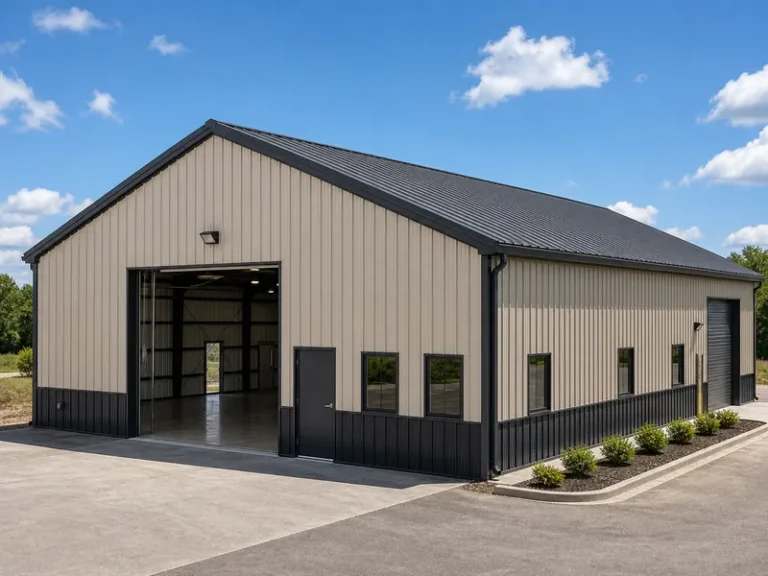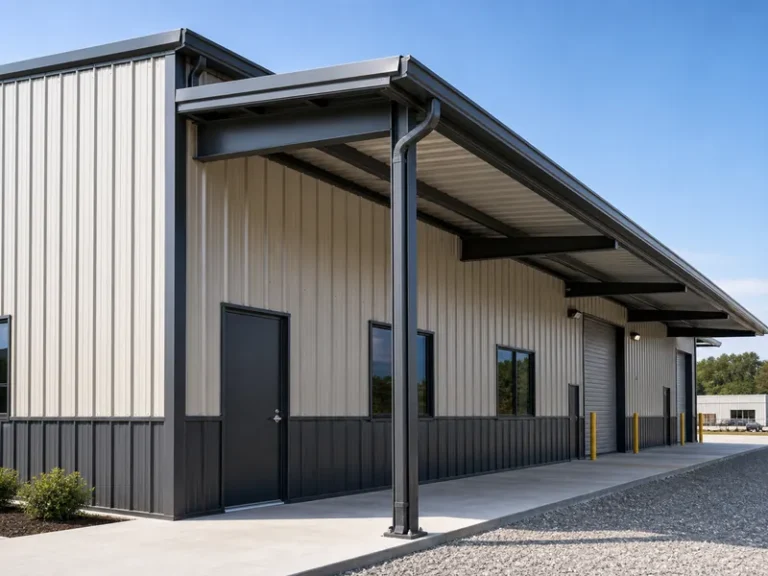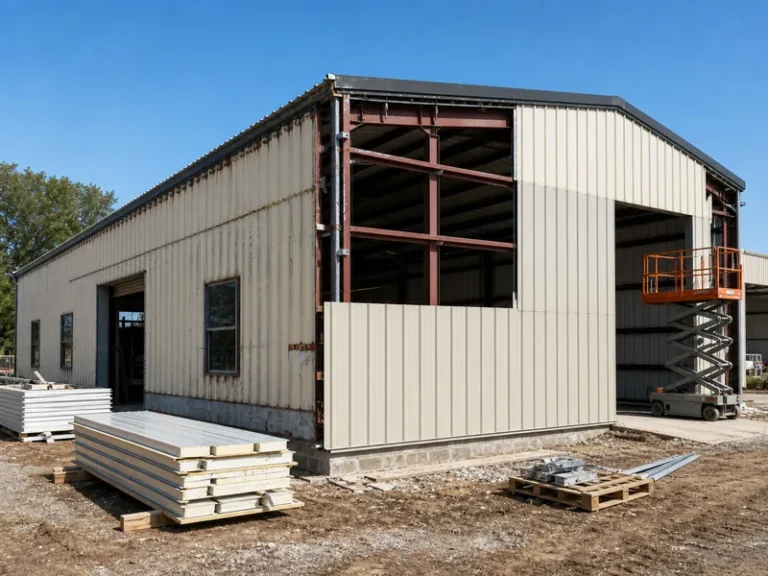





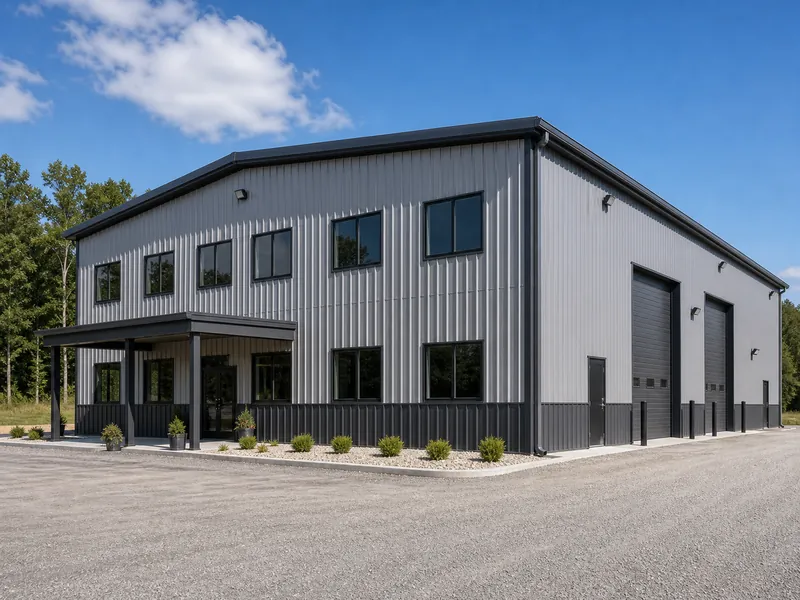
A two story metal building works like a single-story one at the roof and walls, but everything shifts once you put a floor in the air. That second level has to carry people, equipment, and storage, so the framing, foundation, and height all get planned around the upper floor instead of added as an afterthought. Most owners reach a two-story layout for one of two reasons. They want to double usable space without buying more land, or they stack two functions, such as a workshop under offices or retail under a gym, on one footprint. Steel handles both well, but the upper floor, not the shell, is where the real design decisions sit. Expect a two-story design to cost more per square foot than a same-footprint single story, because you are adding floor beams, a deck, stairs, and heavier loads. How much more depends on the choices below. These structures are common across Steel Industrial Buildings as well as office and mixed-use projects.
Why Steel Suits a Second Story
Steel’s strength-to-weight ratio is the main reason it suits a second story: the frame can carry an upper floor without the bulk that timber or load-bearing masonry would need at the same height. A rigid steel frame moves the structural work into columns and beams, which also lets steel frame construction leave large clear areas below the upper level. Going up instead of out concentrates more weight on a higher center of gravity, so lateral forces matter more than they do in a single story. A taller building catches more wind, and the connections and bracing that resist wind load carry a larger share of the work. None of this makes a second story automatic; it makes it predictable enough for an engineer to size the frame.
Full Second Floor or a Mezzanine?
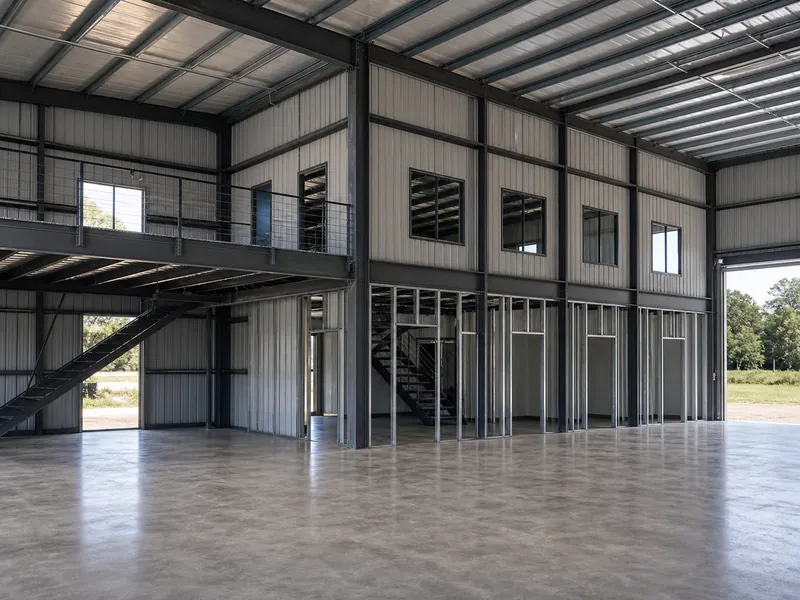
A full second floor and a mezzanine solve the upstairs problem differently, and the gap between them shows up in load, cost, and reversibility. A full second floor spans most or all of the footprint and is framed as a permanent structural level, which suits offices, residential space, or any use where the whole upper area needs finished, code-rated floor space. A mezzanine is a partial intermediate level, often used for storage, parts, or a small office, that fits inside the building’s total height and can frequently be resized or removed later. The deciding factors are how much upper-floor area you need, what that floor will hold, and how much overall eave height you can build to.
| Factor | Full second floor | Mezzanine |
|---|---|---|
| Footprint covered | Most or all | A portion of the floor |
| Typical use | Offices, residential, full occupancy | Storage, parts, small office |
| Height demand | Two finished floor-to-ceiling heights | Fits within one taller shell |
| Relative cost | Higher | Lower |
| Reversibility | Semi-permanent | Often removable or expandable |
For many owners a mezzanine comes first, with the frame designed so a full floor can be added later. That only works if the columns and foundation are sized for the heavier future load from the start.
Floor Loads, Framing, and the Clear-Span Myth
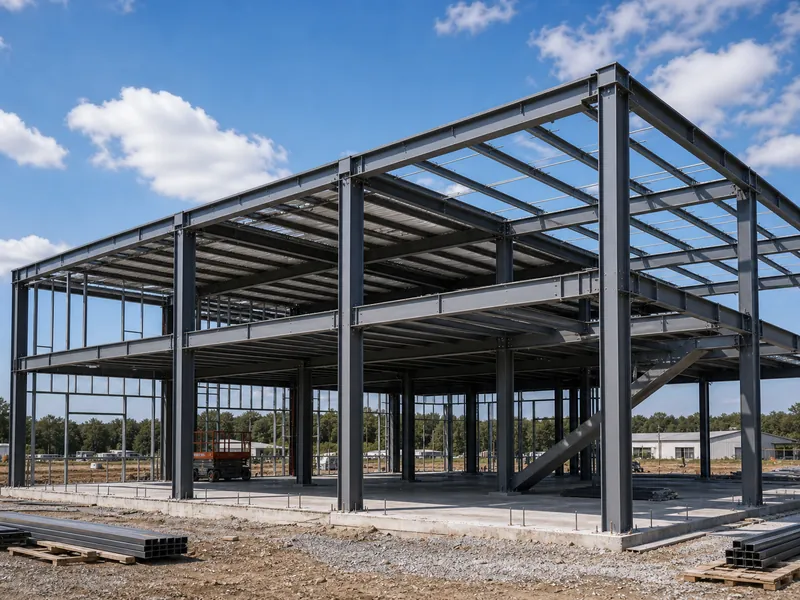
Clear-span describes the roof and walls, not the floor above, and confusing the two is a costly mistake in two-story planning. A clear-span frame keeps the interior free of columns across the width of the building, which is useful below the upper level. The structural floor itself is a different problem: a loaded second floor usually rides on floor beams, and once the span gets wide those beams either get deeper or pick up intermediate columns. Sound steel building design treats the upper deck as a separate structural problem from the roof, because a deck framed as though it were as column-free as the roof leads to bouncy floors and failed inspections.
How heavy that floor has to be depends on what sits on it. A second floor of offices is designed for a lighter live load than one used for storage or equipment, and the governing numbers come from the building code rather than the manufacturer. The International Building Code and the ASCE 7 load standard behind it set minimum floor live loads by occupancy, which your engineer applies alongside local amendments. The weight also has to travel down. A heavier upper floor pushes more load through the columns into the footings, so the metal building foundation has to be sized for the full two-story load, not a single-story one. Settle your floor use and rough metal building sizes early, because both feed the load path. Exact beam sizes and footing depths are an engineering exercise tied to your local loads and soil, not a number to copy from a guide.
Stairs, Egress, and Clear Height
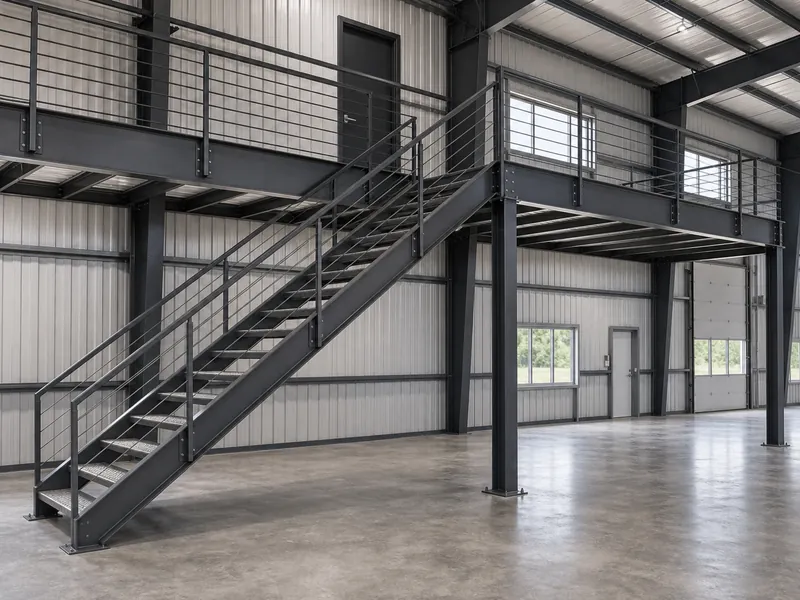
Stairs and exits claim real floor area on both levels, which makes them a planning item rather than a detail. A staircase has to land somewhere on each floor, and the opening it needs cuts into the usable area you are paying to build, so it belongs in the layout from the first sketch. Required exits, stair width, and railing dimensions are set by the building code for the building’s occupancy, and the engineer sizes them to that rather than to a rule of thumb.
Clear height is the other variable to settle early. Each level needs its own floor-to-ceiling height for its use: an office floor reads fine at a standard ceiling, while a ground floor with overhead doors, racking, or a lift needs more. The building’s eave height has to cover both finished heights plus the depth of the floor structure between them. That is why a two-story shell stands noticeably taller than two single stories would suggest. Locking each level’s clear height in early keeps the upper floor from feeling cramped and keeps the stair run within code.
Common Uses for a Two Story Metal Building
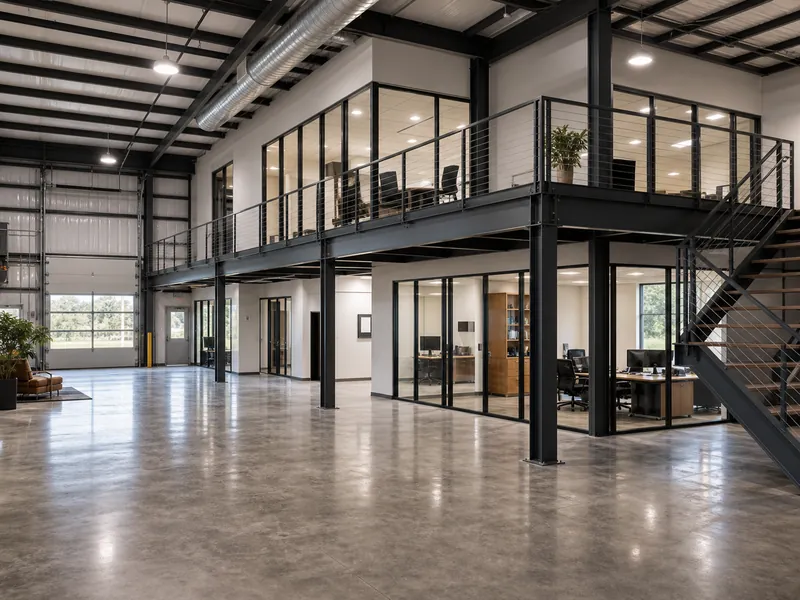
Two story metal buildings fit projects that either stack two functions or add offices above a work floor. The pattern is common in industrial and commercial settings, where a ground-floor work area pairs with finished space above:
- Manufacturing or warehouse space below, with offices, QA, or break rooms upstairs.
- Retail, showroom, or a gym on the ground floor, with administration or a studio above.
- A shop or garage paired with living quarters, the barndominium layout that drives much of the residential demand.
- Storage-heavy operations that use a mezzanine instead of a full upper floor.
Each use sets its own upper-floor live load and clear height, so the same 40-foot-wide shell can be framed very differently for offices than for pallet storage. Matching the upper level to the work below is the part owners control most directly.
What Drives the Cost
A two-story price only means something once you know whether it covers the shell or a finished, turnkey building. A shell-only figure (frame, roof, and wall cladding) sits well below an installed, turnkey number that adds the slab, stairs, interior finish, and the upper floor system. Published per-square-foot ranges for metal buildings vary widely by source and region, and most of them describe single-story shells, so a two-story project generally lands above a single-story quote of the same footprint rather than on it.
The extra cost in a two-story build comes from a few predictable places:
- The floor system itself: beams, decking, and any intermediate columns.
- Stairs and code-required egress, which also consume floor area.
- A foundation sized for the heavier combined load.
- Higher eave height and the framing to reach it.
Before comparing quotes, run a quick scope check: confirm whether each number is shell or turnkey, whether it includes the second-floor structure, and what each one leaves out. The common exclusions are foundation upgrades, insulation, interior fit-out, permits, and freight. Two quotes that look far apart are often just drawn at different scopes.
Planning Your Two-Story Build
A two-story plan holds together when you set the constraints in order rather than starting from a price. Begin with the use of each level, because that fixes the upper-floor live load and the clear height you need. From there, decide between a mezzanine and a full second floor, then size the columns and foundation for that floor, including any future floor you might add. Cost comes last, and it arrives as a scope, shell or turnkey, rather than a single number. Get those four in sequence (use, load, floor type, foundation) and the quote stops being a guess.
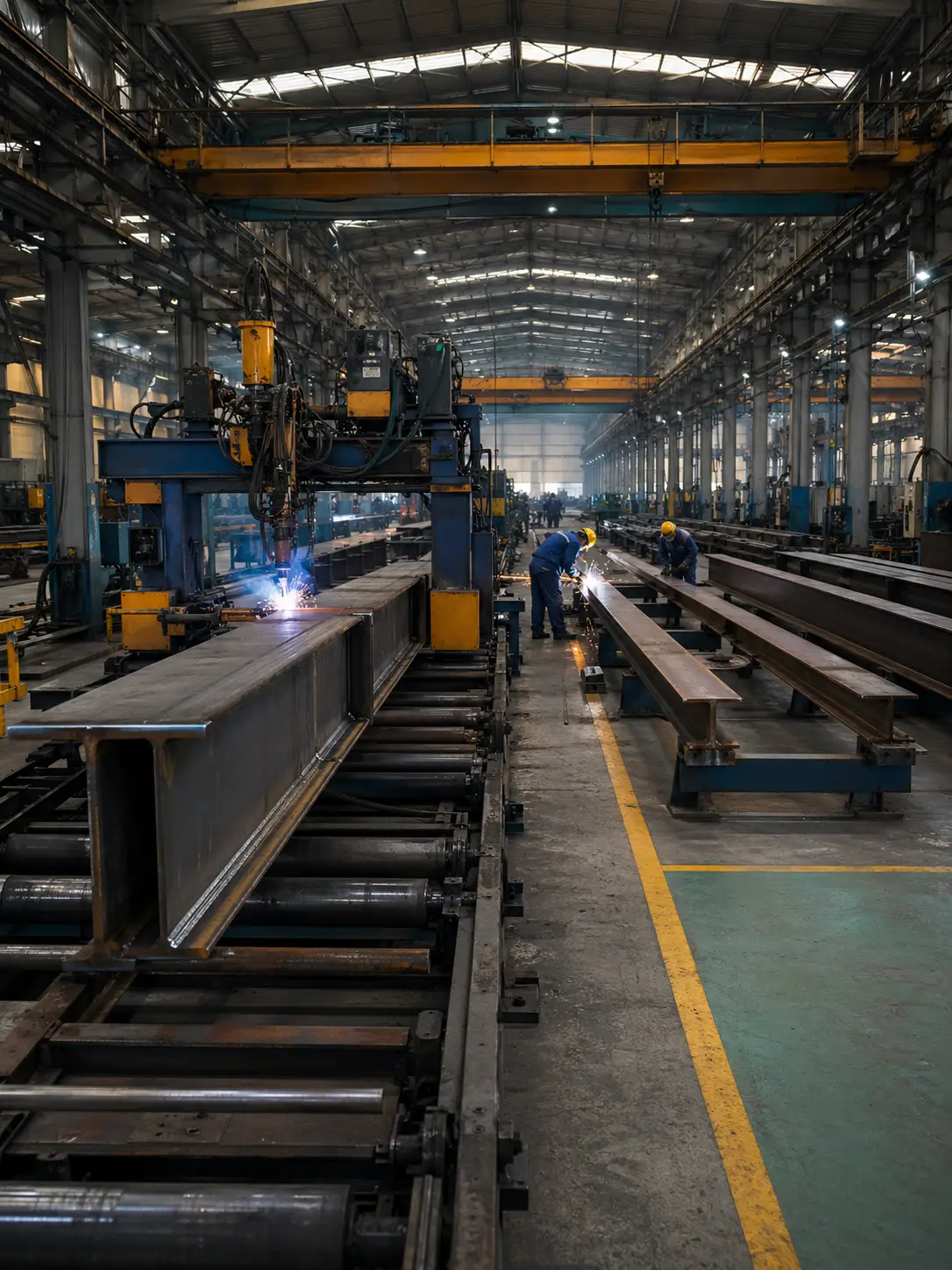
This is the sequence KAFA works through with clients. As a steel structure manufacturer that designs, fabricates, and installs its own frames, we can size the columns, floor beams, and footings around the actual second-floor load instead of a generic template. If you have a use and a rough footprint in mind, you can request a quote and start from the floor up.
FAQ
Can you build a two story metal building?
Yes. Steel frames carry multi-level loads well, and two-story metal buildings are built routinely for commercial, industrial, and residential use. The limit is rarely the steel; it is local zoning and code approval for height, occupancy, and egress, which you confirm before design.
How tall is a two story metal building?
Eave heights for two-story metal buildings fall in a wide range because each level’s clear height is set by its use. Office levels need less height than a floor with overhead equipment or racking. The total is the sum of both finished heights plus the floor structure between them, not a fixed figure.
What floor load does a second story need?
The required floor live load depends on the upper level’s occupancy and is set by code, not by preference. A floor of offices is designed lighter than one used for storage or equipment; your engineer applies the code minimum for that use plus any local amendment, which is why the intended use has to be settled before the floor is framed.
Is a mezzanine cheaper than a full second floor?
A mezzanine usually costs less than a full second floor because it covers part of the footprint, carries a lighter or storage-rated load, and often needs less added height. It also stays more flexible, since many are resized or removed later, but it gives you less finished, occupiable area in return.
Does a two-story build need a special foundation?
A two-story metal building puts more load on its columns than a single story, so the footings and slab are designed for that heavier, combined load. Whether that means larger footings or a deeper foundation depends on the soil and the floor loads above, settled during design rather than on site.
Further Reading
- International Building Code (IBC) — International Code Council — model building code adopted across U.S. jurisdictions; governs story height, occupancy, floor loads, stairs, and egress for multi-story buildings.
- ASCE 7: Minimum Design Loads and Associated Criteria — ASCE — the load standard engineers use to set floor live loads and wind and seismic forces for a two-story frame.
- Metal Building Manufacturers Association (MBMA) — industry body for metal building systems, with technical and performance resources on low-rise steel construction.