




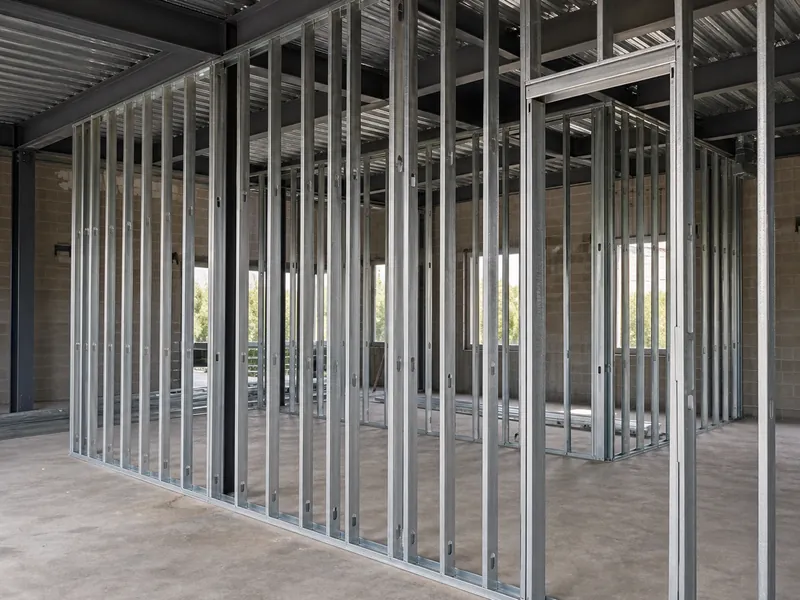
Light gauge metal framing trades wood’s familiarity for a lighter, straighter, non-combustible skeleton — and in return asks you to manage heat conduction, corrosion, and a genuine limit on how far it can span. The advantages are tangible: cold-formed steel studs don’t burn, rot, or feed termites, they hold their dimensions instead of warping, and they go up fast as prefabricated panels. The disadvantages are just as concrete. Steel conducts heat, so it needs continuous insulation to beat thermal bridging; it corrodes without the right coating; and upfront material and skilled-labor costs run above wood. Slender sections also buckle well before a hot-rolled beam would, which keeps interior load-bearing walls in the plan. For partitions, curtain-wall infill, and low- to mid-rise load paths, it is one of the better materials available. For a wide, column-free floor, the right answer shifts to structural steel.
What Light Gauge Metal Framing Is — and How It Differs From Structural Steel
Light gauge metal framing means cold-formed steel — thin sheet, itself cold-rolled to gauge, then roll-shaped at room temperature into C-sections, Z-sections, studs, joists, and tracks rather than hot-rolled into heavy beams. The same product is sometimes sold as cold rolled steel framing. The pieces it produces — the studs, tracks, joists, and bracing that make up the metal building framing components of a wall or floor — are screwed together, not welded. Wall sections are sized to drop into the same layouts as 2×4 and 2×6 wood studs, which is part of why crews adopt it without relearning the trade.
The word doing the work here is gauge. Light gauge usually means steel roughly in the 12-to-20-gauge range — thicker for load-bearing studs, thinner for non-structural partitions — though the exact gauge follows the load a member carries, its span, and the engineer’s spec rather than any fixed rule. All of it stays thin: the design standard for cold-formed steel covers sheet up to one inch thick, well above any framing gauge. Structural, or hot-rolled, steel is a different animal: thick I-beams, columns, and tube sections formed while the steel is molten, then bolted or welded into the primary frame of a building or bridge. One you can carry by hand and cut with a chop saw; the other arrives on a flatbed and needs a crane.
| Property | Light gauge (cold-formed) steel | Structural (hot-rolled) steel | Dimensional lumber |
|---|---|---|---|
| Section | Thin coil roll-formed into C/Z studs, tracks, joists | Hot-rolled I-beams, columns, tube | Sawn or engineered wood studs and joists |
| Typical role | Walls, partitions, low/mid-rise bearing, purlins and girts | Primary frame, long clear spans, multi-story, heavy loads | Walls, floors, roofs in low-rise |
| Span and load reach | Modest; interior load-bearing walls usually needed | Large column-free spans and high loads | Modest; load-bearing walls needed |
| Fire | Non-combustible; loses strength when hot | Non-combustible; needs protection for a rating | Combustible |
| Moisture and pests | Won’t rot or feed termites; corrodes if unprotected | Same, with heavier coatings | Rots, warps, attracts termites |
| Joining | Self-drilling screws | Bolts, welds | Nails, screws |
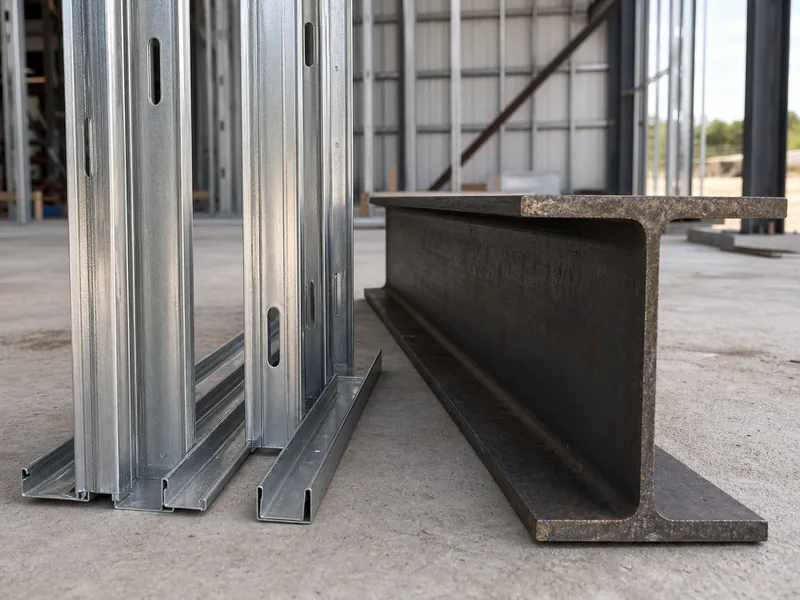
The Advantages of Light Gauge Metal Framing
Dimensional stability is the advantage that shows up first on site: steel sections hold their shape instead of cupping, bowing, or shrinking the way kiln-dried lumber does as it gives up moisture. Straight studs mean flat walls, square openings, and drywall that doesn’t telegraph framing movement a year later — a real maintenance saving on larger builds, where a handful of warped studs multiply into callbacks. Because the sections are roll-formed to tight tolerances, less gets cut and wasted on site, and the panels repeat predictably from one floor to the next.
Strength-to-weight is the structural draw. Cold-formed steel is light for the load it carries, which lowers the dead weight the foundation has to support and makes panels easy to hand-carry and lift into place. Exact weight savings against wood get quoted all over the map — they depend on the section and the assembly — but the direction is consistent: lighter framing, lighter footings, faster handling. A fuller steel vs wood frame comparison weighs that against timber’s lower sticker price.
Then there is what steel simply doesn’t do. It doesn’t burn, so light gauge framing is non-combustible and, in a fire, buys time before a frame loses capacity. It doesn’t rot, mold, or feed termites and carpenter ants, which removes a whole category of long-term repair in humid and pest-heavy regions. And it is recyclable, with meaningful recycled content already in it, so the offcuts and the eventual teardown don’t simply go to landfill. Prefabrication ties these together: panels framed in a controlled shop go up quickly and consistently, shrinking the time a building sits open to weather.
The Disadvantages and Limits to Plan For
The downsides of light gauge framing trace back to three things the steel itself does: it conducts heat, it can rust, and it buckles long before a heavy section would. None of them disqualify the material, but each adds a detail — or a cost — that wood doesn’t.
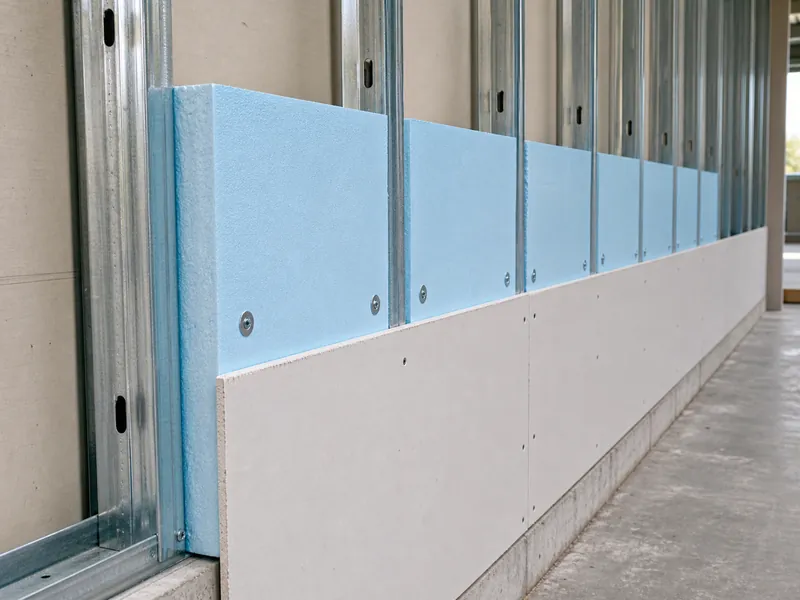
Heat is the big one. Steel is an excellent thermal conductor, so every stud becomes a small bridge carrying warmth straight through the wall. Frame a wall in steel and stop the insulation between the studs, and those studs telegraph to the surface as cold lines. They can pull the wall’s effective insulation value well below what the cavity rating promises, and in the wrong conditions they sweat. That surface condensation later shows up as “ghosting,” the faint stripes that mark every stud on a finished wall. The fix is continuous insulation — a layer of rigid or sprayed foam over the framing that breaks the bridge — but that means added material, thickness, and budget.
Corrosion is the second. Bare steel rusts, so framing steel is galvanized, and the protection is only as good as its weakest spot: cut ends, drilled holes, and screw penetrations are where rust starts in humid or coastal air. Specifying an adequate zinc coating (G60 and G90 are common weights) and keeping sections dry and off the ground before they go up matters more than the catalog number printed on the stud.
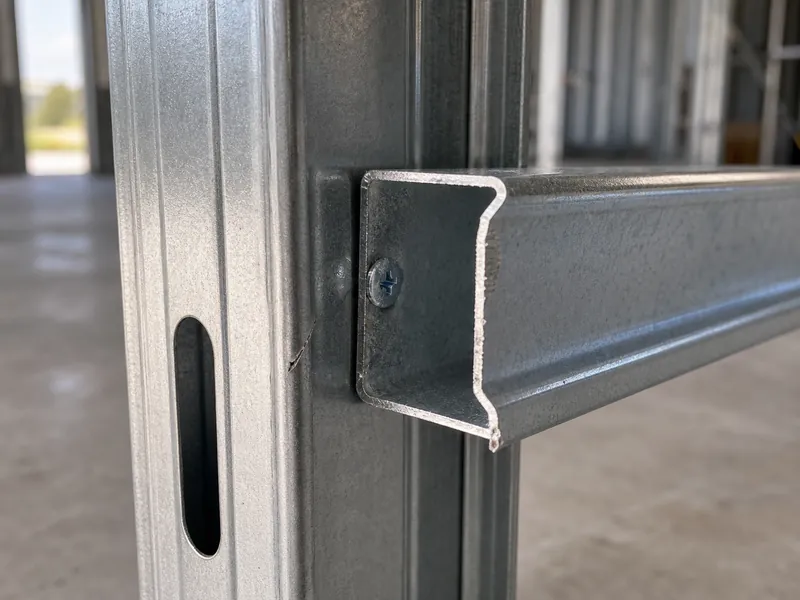
Cost and labor come next. The material costs more than wood up front, and the work needs self-drilling screws and the right chop saw, not a nail gun. It also rewards crews who already know the trade, all of which lifts early-stage labor. The metal stud framing cost breakdown shows where that premium actually lands. On site, steel is also less forgiving: a mismeasured section can’t be trimmed and persuaded into place the way a board can, so the accuracy has to be built in before the screws go in.
The structural limit is the one people underestimate. A slender cold-formed stud carries load in compression and buckles at forces a hot-rolled column would shrug off, which is why clear-span interiors aren’t practical in light gauge and interior load-bearing walls reappear in the plan. In regions with heavy snow or high wind, those loads can outrun what light gauge framing can reasonably carry on its own.
Light Gauge vs Structural Steel: Choosing the Right Framing for the Job
Light gauge and structural steel are less rivals than different tools for different spans. Light gauge is the efficient choice where loads are modest and the walls themselves do the carrying: interior and exterior non-load-bearing walls, partitions, curtain-wall infill, low- to mid-rise load-bearing walls, and secondary framing such as purlins and girts. Inside that envelope, it is hard to beat on weight, speed, and fire behavior.
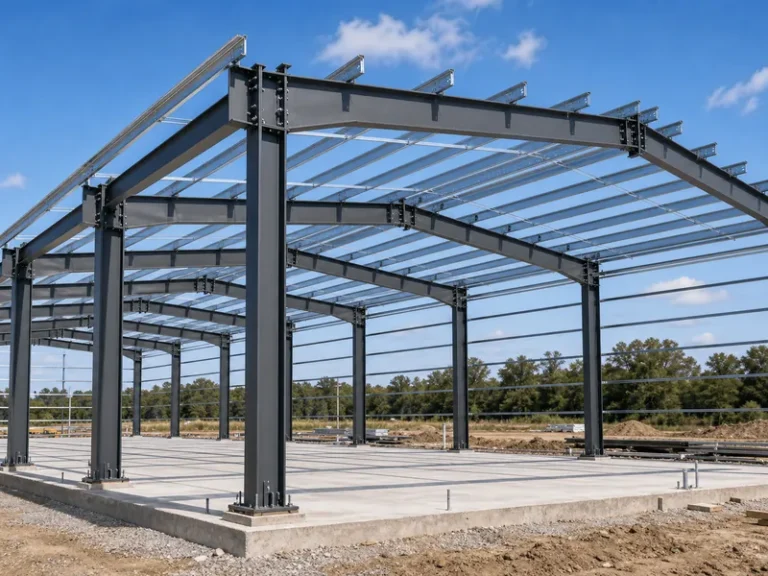
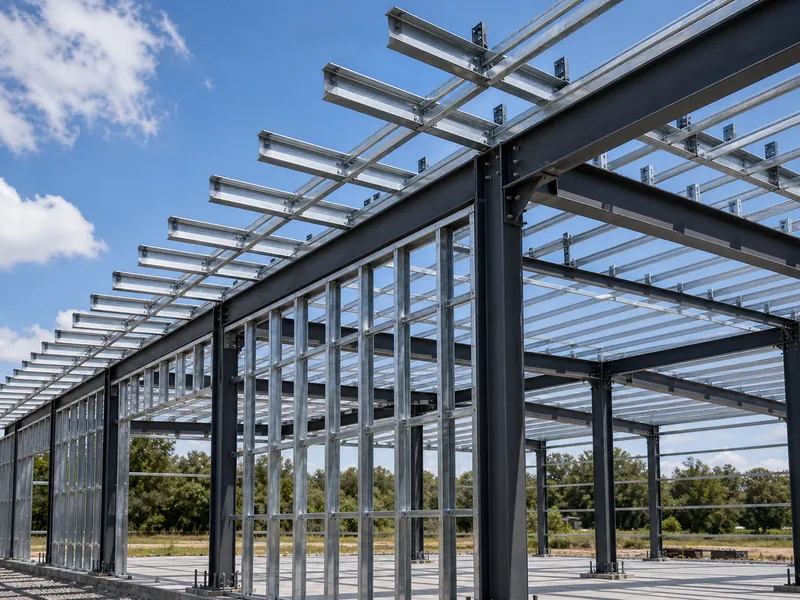
Push past that envelope and the math changes. A wide, column-free floor — the kind of open span that warehouses, hangars, and larger metal commercial buildings are built around — asks for primary members that light gauge sections can’t supply. Heavy point loads, long clear spans, crane rails, and multi-story frames are the territory of hot-rolled rigid frames. The honest rule is span first: if the design needs a clear, column-free interior, the primary structure is structural steel, and light gauge comes back in for the walls and secondary framing inside it.
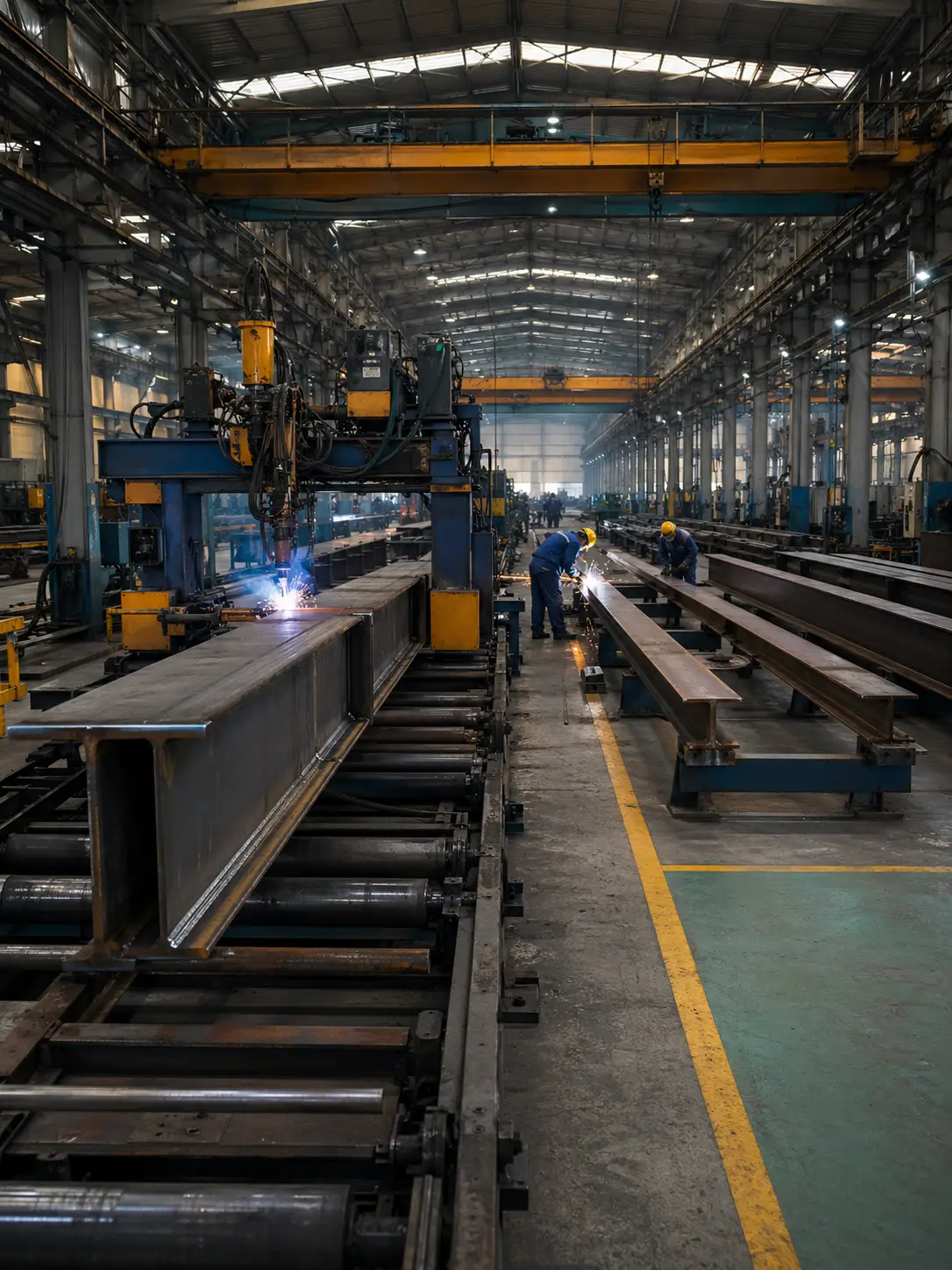
Because the two systems solve different problems, plenty of buildings use both at once — cold-formed C- and Z-sections as purlins, girts, and infill walls hung on a hot-rolled primary frame. Qingdao KAFA Fabrication, qualified for both light and heavy steel work, runs dedicated lines for C/Z-section purlins alongside H-beam and box-section frames. Detailing the two together lets a building’s secondary light gauge framing and its primary structure share the same connections instead of clashing on site.
Getting Light Gauge Framing Right
Most of the disadvantages above are detailing problems rather than deal-breakers, and they get solved before fabrication, not after. Four checks carry most of the weight.
- Break the thermal bridge. Plan a continuous insulation layer over the framing, not just batts between the studs, so the steel doesn’t conduct heat — and condensation — straight to the surface.
- Match the coating to the environment. Set the galvanized coating weight against the humidity and salt exposure of the site, and protect cut edges and fastener points, where rust begins.
- Engineer the load-bearing walls. Any wall carrying load should be sized by an engineer to the snow, wind, and gravity loads it actually sees, not set by a stud-spacing rule of thumb. That sizing is part of proper steel building design and the standard behind it — AISI S100, the North American Specification for cold-formed steel, now maintained by the Steel Deck Institute.
- Set out accurately. Because steel resists on-site trimming, the layout and panel dimensions have to be right before anything is screwed together.
The Bottom Line on Light Gauge Metal Framing
Light gauge metal framing is the right call wherever loads are modest and the walls carry them — partitions, infill, secondary framing, and low- to mid-rise bearing walls. That is the range where its low weight, dimensional stability, and non-combustibility pay off without hitting its limits. The two trade-offs to settle before committing are thermal detailing and corrosion protection: budget for continuous insulation and the right coating, or the heat conduction and rust that read like footnotes become the expensive part. And before anything else, fix the span. If the building needs a clear, column-free interior, light gauge stays in the walls and a hot-rolled rigid frame does the structural work — get that division right, and the rest of the framing decision falls into place.
FAQ
Is light gauge steel framing strong enough for a building?
Light gauge steel framing is strong enough for the walls and floors of most low- to mid-rise buildings, as long as the load-bearing walls are engineered for the loads they carry. Its limit is spanning: slender cold-formed sections can’t hold up a wide, column-free floor or heavy point loads, so taller and long-span structures put the primary frame in hot-rolled structural steel and use light gauge for the secondary framing.
Is light gauge steel framing fireproof?
Light gauge steel framing is non-combustible but not fireproof, and the difference matters. The steel doesn’t burn or add fuel, which slows a fire’s growth. But it loses strength as it heats, so framing in a fire-rated assembly still needs gypsum board or another rated protection to keep its capacity. Non-combustible buys escape time; it does not make the frame immune to fire.
Does light gauge metal framing rust?
Light gauge metal framing can rust if its coating is breached or specified too light for the conditions. Framing steel ships galvanized, and that zinc layer normally protects it for the life of an enclosed, dry building. The real risks are cut edges, drilled holes, screw points, and damp coastal or unconditioned spaces — which is why coating weight and dry storage are worth specifying deliberately.
Is light gauge metal framing more expensive than wood?
Light gauge metal framing usually costs more than wood up front, in both material and skilled labor. That gap narrows over the building’s life, where steel’s resistance to rot, warping, and pests cuts repair spending, and it moves with steel prices and local labor rates. The answer turns on how long the owner holds the building and what wood maintenance would have cost in that climate.
What gauge of steel is “light gauge” framing?
Light gauge framing generally uses steel in roughly the 12-to-20-gauge range, with thicker gauges for load-bearing studs and thinner ones for non-structural partitions. The defining line in the design standard is thickness: cold-formed framing is shaped from steel no more than one inch thick, far above any framing gauge. That thickness ceiling, not the gauge number, is the real boundary between cold-formed framing and hot-rolled structural shapes.
Further Reading
- Steel Framing Industry Association (SFIA) — the cold-formed steel framing trade association; background on products, code-compliance certification, and what qualifies as structural light gauge framing.
- Cold-Formed Steel Engineers Institute (CFSEI) — technical notes and design guides for engineering load-bearing cold-formed steel, useful where light gauge walls carry real loads.
- AISI S100, North American Specification for the Design of Cold-Formed Steel Structural Members (Steel Deck Institute) — the design standard that governs how cold-formed (light gauge) steel members are sized.