




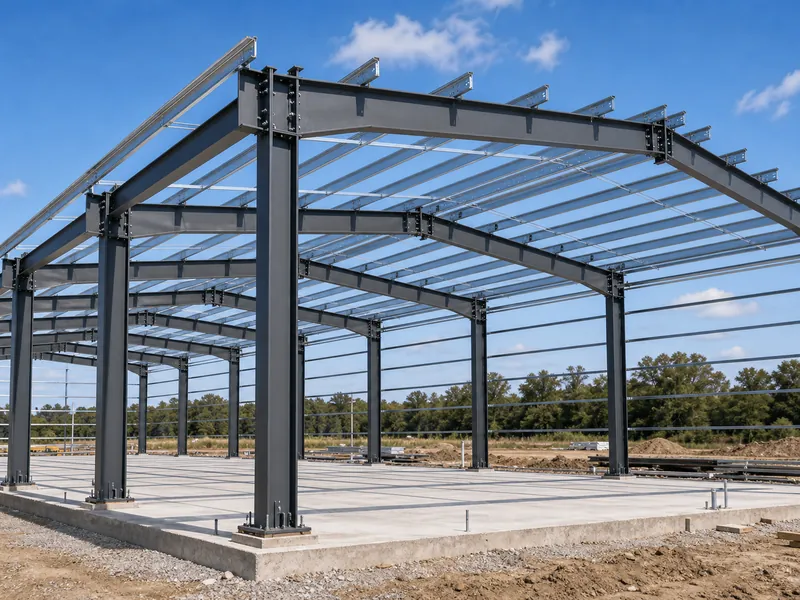
Every steel building is engineered to resist a defined set of loads. Those loads fall into two basic groups, dead and live, plus a family of environmental loads: wind, snow, seismic, rain, ice, and soil pressure. In the United States, the governing reference for all of them is ASCE/SEI 7, the minimum-design-loads standard that the International Building Code (IBC) adopts. For a light steel or metal building, the environmental loads often shape the frame more than the structure’s own weight does, the opposite of what heavier concrete construction leads people to expect.
How structural loads are classified
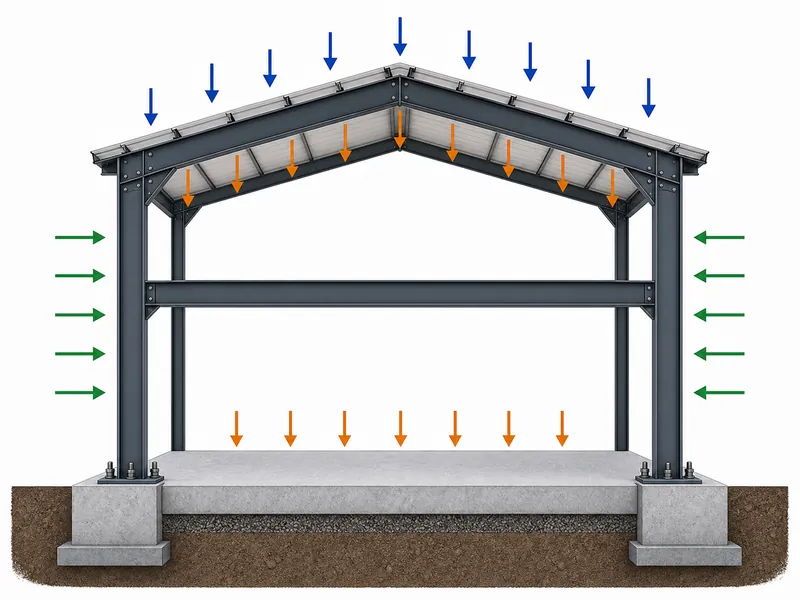
Structural loads are easiest to organize by the direction they act and by how they behave over time. By direction, they split into vertical (gravity) loads that press down, horizontal (lateral) loads that push sideways, and, in some framing systems, longitudinal loads that act along the length of the building. By behavior, they split into permanent loads that stay put and variable loads that change with weather and use, and into static loads that hold steady versus dynamic loads that move, cycle, or strike.
This split is more than bookkeeping, because it tells the engineer how each load travels through the structure. Gravity loads run from the roof and floors into the beams and columns and down to the foundation, while lateral loads must be resisted by bracing, rigid frames, or shear walls before they reach the ground. The table below maps the common load types to that framework; the sections that follow explain where each one governs. Not every project carries all of them, though: soil pressure, ponding, and crane impact appear only when the site or use creates them.
| Load type | Acts mainly | What produces it | Where it usually governs | Where US designers get values |
|---|---|---|---|---|
| Dead | Vertical | Self-weight of frame, cladding, fixed equipment | Long spans, heavy roofs and floors | Material weights, project drawings |
| Live | Vertical | Occupancy: people, furniture, stored goods | Floors by use, mezzanines | ASCE 7 / IBC by occupancy |
| Snow | Vertical | Accumulated snow and drift on the roof | Cold-climate and low-slope roofs | ASCE 7 ground-snow maps |
| Wind | Lateral + uplift | Pressure and suction on walls and roof | Tall, exposed, or lightweight buildings | ASCE 7 wind maps and exposure |
| Seismic | Lateral (dynamic) | Ground motion in an earthquake | High-seismic regions, heavy mass | ASCE 7 seismic maps |
| Rain / ice | Vertical | Ponded water or accreted ice | Low-slope or poorly drained roofs | ASCE 7 rain and ice provisions |
| Soil | Lateral | Earth pressure against buried walls | Basements, retaining walls, pits | Geotechnical report, ASCE 7 |
| Impact / dynamic | Varies | Cranes, machinery, moving equipment | Industrial bays, crane runways | ASCE 7, crane manufacturer data |
Gravity loads: what the structure carries from above
Gravity loads are the downward forces a structure carries through its frame to the foundation, and they are present on every project regardless of climate. They cover the weight the building always holds and the weight that comes and goes with use.
Dead load
Dead load is the permanent weight of the building itself: the steel frame, the roof and wall cladding, the floor slabs, and any fixed equipment that stays put. Because it is constant, it is the one load type an engineer can calculate directly from the chosen members and finishes rather than read from a code map. A point that trips up owners is collateral dead load: the weight of permanently attached items like ceilings, sprinklers, ductwork, and solar racking. That weight is dead load, not live load, and leaving it out is a common way to undersize a roof. In a steel building the dead load is relatively light, part of why the frame reacts so strongly to wind and snow.
Live load
Live load is the changeable weight a building carries from how it is occupied and used: people, furniture, vehicles, and stored material. Its value depends on occupancy rather than on the structure, so a warehouse floor, an office floor, and an assembly space are each designed to a different figure set by ASCE 7 and the local code. Floor live load and roof live load are treated separately, with roof live load mostly covering workers and equipment during construction and maintenance. For the practical difference between the permanent and changeable categories, our breakdown of live load vs dead load vs snow load works through the three side by side.
Snow load
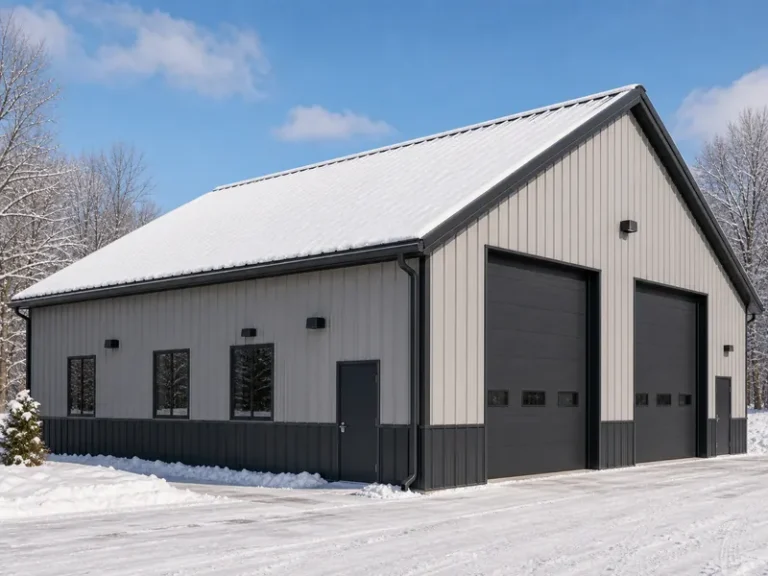
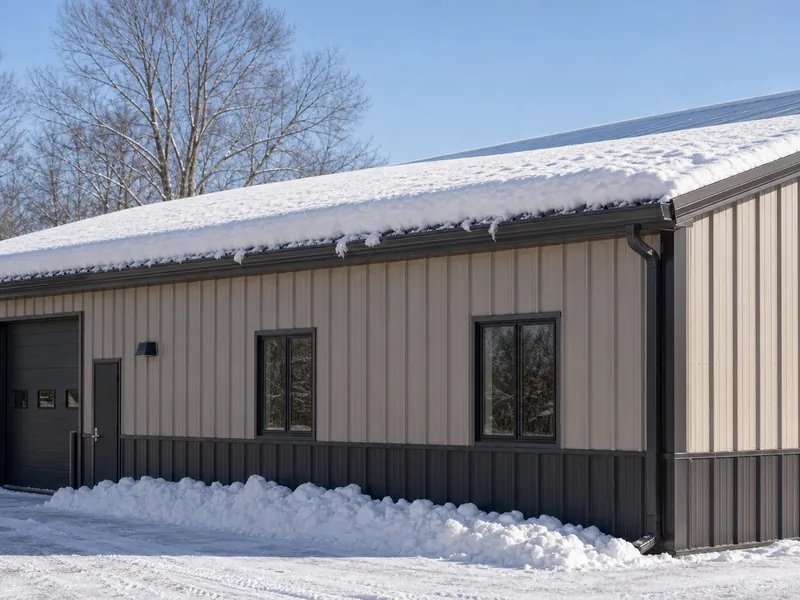
Accumulated snow and ice put a vertical load on the roof that varies sharply with location, roof slope, and the way wind redistributes snow into drifts. Designers start from a mapped ground snow value for the site and adjust for exposure, roof shape, and thermal conditions, so two identical buildings in different counties can carry very different snow loads. Drifting against parapets, equipment, and roof steps often controls the local framing even when the balanced roof load looks modest. Low-slope steel roofs deserve particular care, because shallow pitches hold snow longer and shed it less predictably than steep ones.
Rain and ponding load
Rain load is the weight of water that collects on a roof when drainage cannot keep up, and it becomes dangerous through a feedback loop called ponding. As water pools, the roof deflects, the deflection creates a deeper basin, and the basin holds still more water, which on a flat or under-drained steel roof can progress until the structure is overloaded. The defenses are adequate roof slope, primary drains sized for the design storm, and secondary drains or scuppers that take over if the primary system blocks. Both rain and snow reward a roof that sheds water quickly.
Lateral and dynamic loads: what pushes, shakes, or cycles
Lateral and dynamic loads push, shake, or cycle a structure rather than simply pressing down on it, and they usually decide the bracing and frame design of a steel building. Unlike gravity loads, they can reverse direction, so the structure has to resist them coming and going.
Wind load
Wind acts on a building as pressure on its surfaces, pushing on the windward face and pulling as suction on the roof, side walls, and leeward face. For lightweight metal buildings the uplift often matters more than the inward push, because a light roof has little dead weight to resist negative pressure, which is why fastener patterns and edge zones get special attention. The design value depends on the mapped wind speed for the site, the exposure category of the terrain, and the building’s height and shape. Wind carries its own detailed treatment in our guide to steel building wind load.
Seismic (earthquake) load
Seismic load comes from inertia, not from anything pushing on the building from outside. When the ground moves in an earthquake, the structure’s own mass drives the force, which scales with mass and framing stiffness. Because force follows mass, the low weight of a steel building usually works in its favor, and steel’s ductility lets a well-detailed frame absorb energy by flexing instead of fracturing. The demand depends on the site’s mapped seismic parameters and soil conditions, so two buildings of the same shape can land in very different seismic categories. Seismic and wind are both lateral, but they are checked separately, and one or the other typically governs the bracing.
Soil and lateral earth pressure
Lateral earth pressure is the horizontal push that retained soil exerts on walls below grade, so it only matters when a project has basements, pits, or retaining walls. Its magnitude depends on soil type, moisture, and whether the wall can move, which is why a geotechnical report rather than a code map drives the number. Saturated or poorly drained backfill raises the pressure sharply, and water pressure adds to it. For most single-story metal buildings on a slab this load is minor, but it grows quickly once a structure goes underground.
Impact and dynamic loads
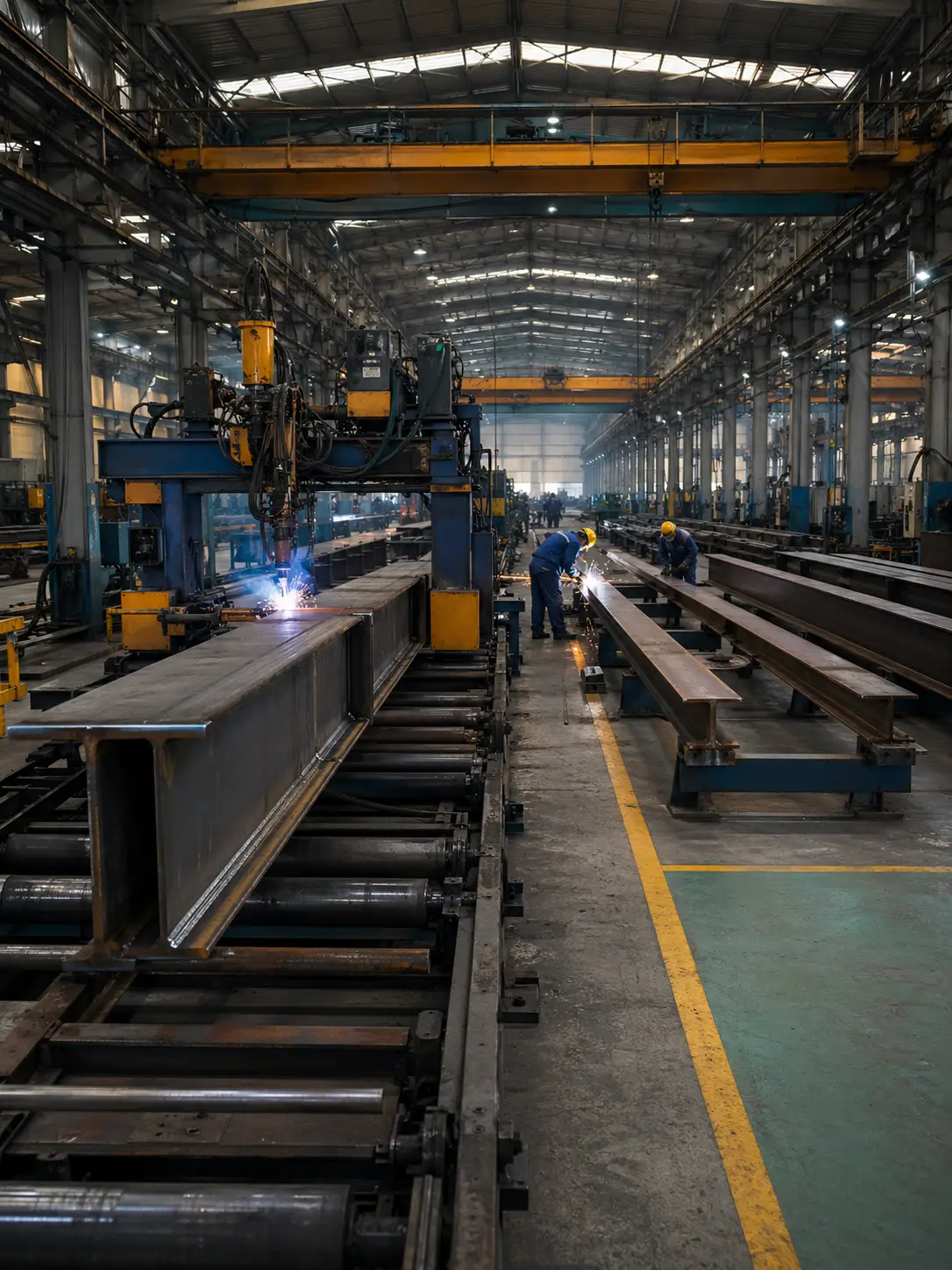
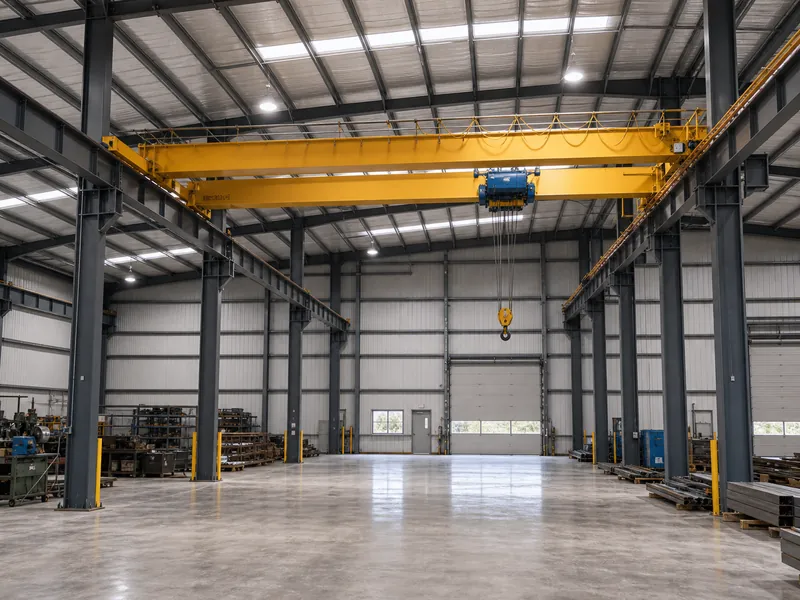
Impact and dynamic loads come from equipment that moves, starts, or stops inside the building, with overhead cranes the classic case in industrial steel structures. A moving crane adds vertical wheel loads plus lateral and longitudinal surge as it travels and brakes, and those repeated cycles introduce fatigue that static loads never do. This is where heavy hot-rolled framing and purpose-designed runway beams come in, detailed in our guide to steel building crane beam design. Vibrating machinery and forklift traffic create smaller versions of the same effect and should be flagged to the engineer early.
How these loads combine in a real design
No structure is designed for one load in isolation; codes require loads to be added in prescribed combinations, because the worst case for a member rarely comes from a single load alone. ASCE 7 sets these combinations under both strength design (LRFD) and allowable stress design (ASD), and each one weights the loads differently. A column might be governed by dead plus live, while the same building’s bracing is governed by dead plus wind. Uplift cases matter for light steel, where wind suction combined with low dead load can lift a roof or its anchors, so the net-uplift combination is checked explicitly. Selecting the controlling combination and turning the values into member sizes is its own quantitative step, which we cover in steel structure load calculation.
Which loads govern a metal or commercial steel building
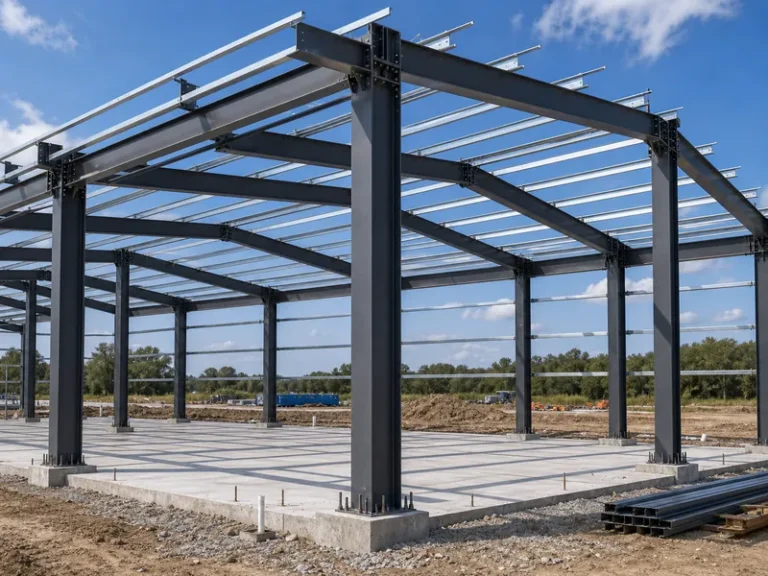
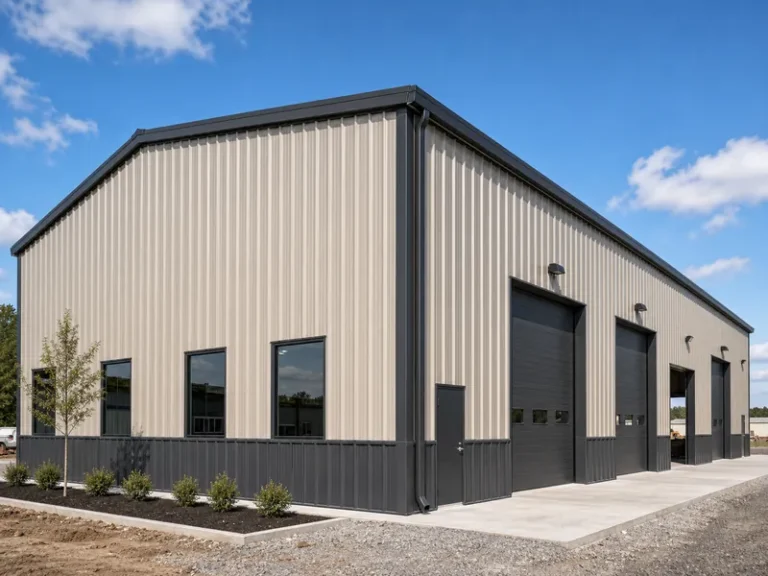
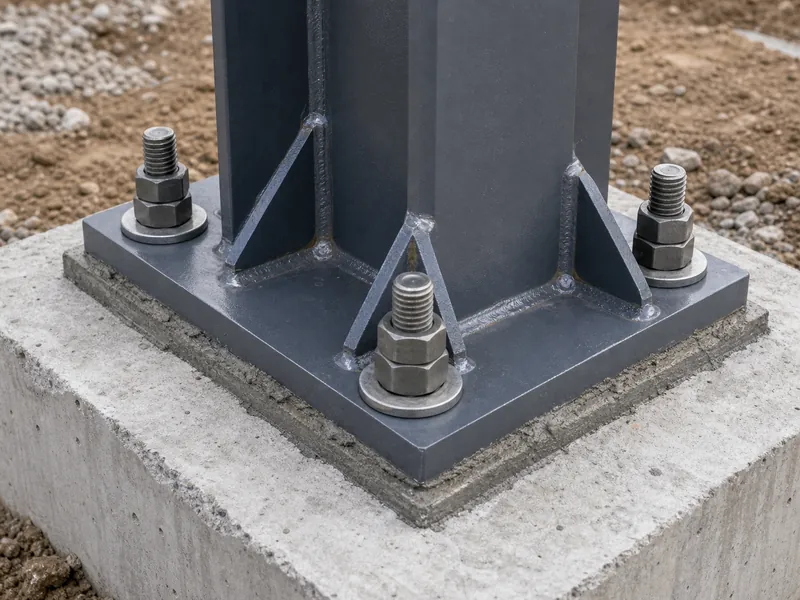
In a typical metal building, environmental loads usually decide the frame more than the building’s own weight does. The light dead load that makes steel economical also means wind uplift and snow drift, not self-weight, set the roof and connections, while seismic demand stays moderate because the mass is low. Occupancy still sets the live load, which is why metal buildings commercial projects like retail, offices, and assembly spaces are sized around the use their floors and mezzanines will see. A manufacturer that designs both light and heavy steel structures, as we do at KAFA, matches the framing to whichever load controls. Sound steel building design turns on that match: lighter secondary framing for wind-and-snow-driven roofs, and heavier rigid frames where crane or industrial loads take over. Whatever governs above, the load path ends the same way, with every force resolved into the metal building foundation and the soil beneath it.
Conclusion
Identifying the load types is the starting point; turning them into a design means locking the inputs in order. Start with the project’s location, which fixes the mapped snow, wind, and seismic values that often govern a steel frame, then set the occupancy, which fixes the live load the floors must carry. The rest follow: dead weight from the chosen assembly, rain from the roof drainage, and any crane or soil pressure unique to the project, all feeding the load combinations. Getting that order right keeps a building from being governed by a load nobody planned for, such as drift snow on a low-slope roof or uplift on a light metal one. The load type is the question; the governing combination, read off the right ASCE 7 maps for the site, is what the structure is built to resist.
FAQ
What are the main types of load on a building?
The main types are dead, live, snow, wind, seismic, rain, ice, soil, and impact loads, grouped into gravity (vertical) loads and lateral or dynamic loads. Dead and live are the two basic structural loads present on every project, while the rest are environmental or use-specific and depend on the site and occupancy. ASCE 7 also defines flood and tsunami loads for the specific coastal regions where they apply.
What is the difference between dead load and live load?
Dead load is permanent and live load is variable. Dead load is the fixed self-weight of the structure and anything attached for good, so it can be calculated directly from the building’s own materials. Live load comes from changeable occupancy like people, furniture, and stored goods, so it is taken from code tables by use rather than measured. The practical consequence is that dead load is known precisely while live load is a conservative allowance for how the space might be used.
Are snow load and roof live load the same thing?
No, snow load and roof live load are separate loads that a roof is checked against individually. Snow load is an environmental load based on mapped ground snow for the site and adjusted for drift and slope, whereas roof live load is a minimum occupancy allowance for workers and equipment during construction and maintenance. In a cold climate the snow load is usually the larger of the two and controls the roof framing.
Which type of load is most critical for a steel building?
For most light steel buildings, wind and snow tend to govern, because the frame is light enough that uplift and drift outweigh the modest dead load. The answer still varies with site and use: a crane bay is governed by impact and fatigue, a high-seismic site by earthquake demand, and a heavily loaded floor by live load. The design checks all of them through load combinations and lets the worst case for each member win.
What code defines load types in the United States?
ASCE/SEI 7, “Minimum Design Loads and Associated Criteria for Buildings and Other Structures,” defines the load types and the combinations used in US design. The International Building Code adopts ASCE 7 by reference, so a building permit effectively requires designing to it. Local jurisdictions can amend specific provisions, which is why the site’s adopted code edition matters.
Further Reading
- ASCE/SEI 7-22, Minimum Design Loads and Associated Criteria — American Society of Civil Engineers. The standard that defines dead, live, snow, wind, seismic, rain, ice, soil, flood, and tsunami loads and their combinations for US design.
- Demystifying Loads (2024 IBC / ASCE 7-22) — International Code Council. A plain-language guide to how the building code applies each load type, useful for understanding where the values come from.
- MBMA Metal Building Systems Design Resources — Metal Building Manufacturers Association. Design and load guidance for metal building systems, including the Metal Building Systems Manual aligned with the 2024 IBC and ASCE 7-22.