




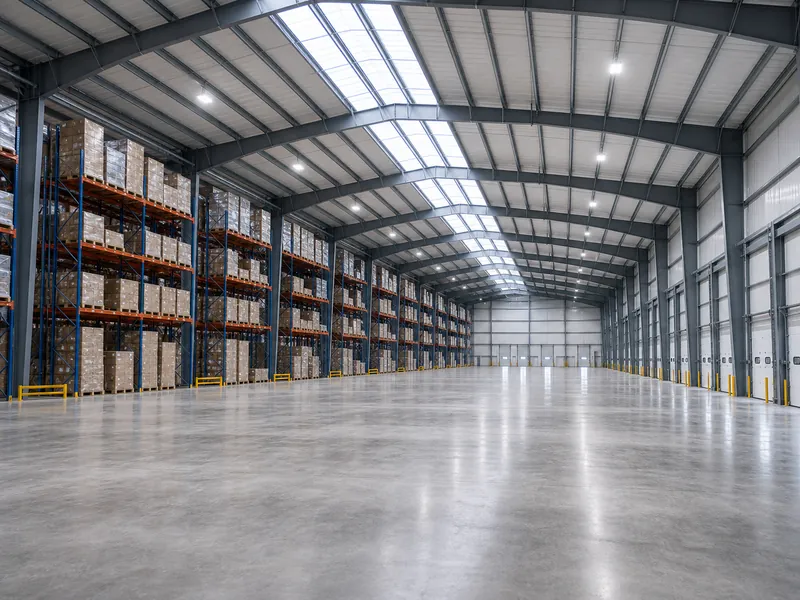
Typical warehouse sizing spans a wide range, from small units under 25,000 square feet to distribution centers above 500,000 square feet. The “average” warehouse figure you see quoted hides two very different numbers. Measured across the entire U.S. building stock, the average warehouse is only about 17,400 square feet, because most warehouses are small. Measured across newly built distribution centers, the average is closer to 180,000 square feet. Which number is “typical” depends entirely on whether you are counting every shed in the country or just the big boxes going up today.
Footprint is also only half of what sizing means. Clear height, the usable vertical space below the lowest overhead obstruction, has risen from a legacy standard near 24 feet to 32–40 feet in modern facilities. That vertical dimension decides how much a given floor area can hold. The sections below break typical warehouse sizes down by category, by use case, and by clear height, then walk through how to estimate the size your own operation needs.
What Counts as a Typical Warehouse Size?
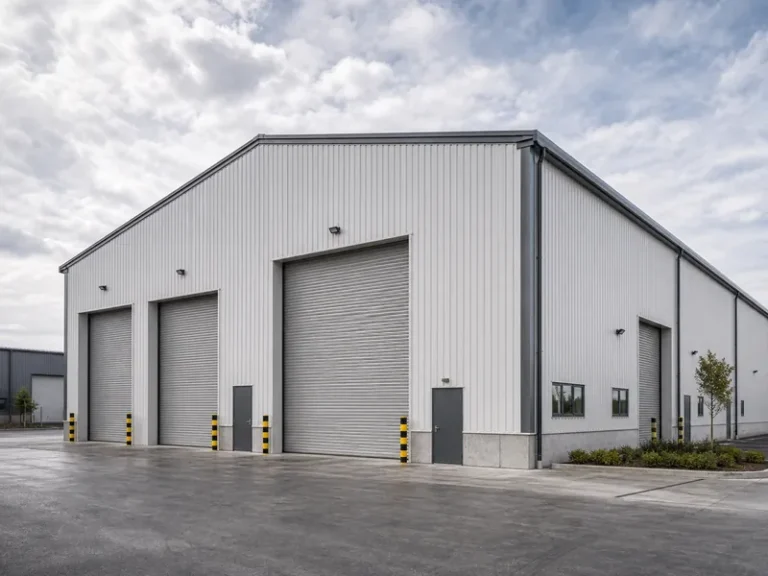
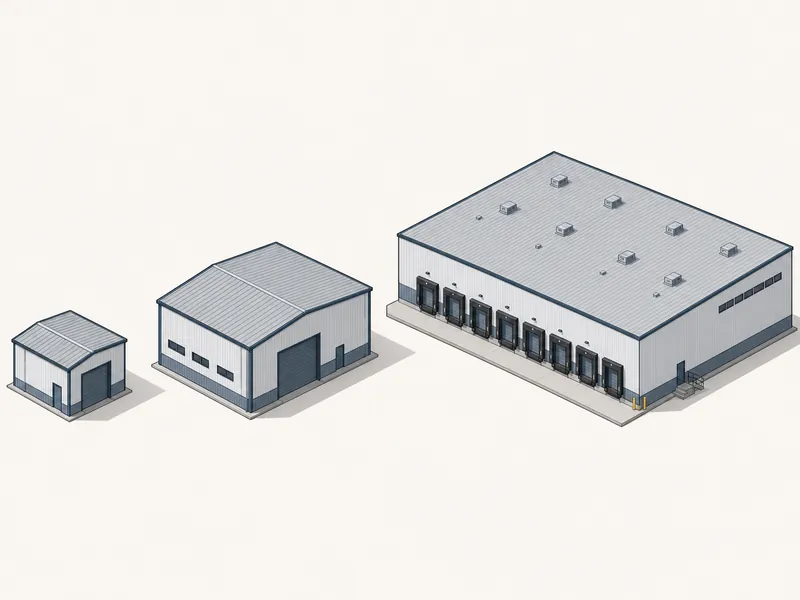
A typical warehouse falls into one of three broad size classes, though the cutoffs shift from source to source. Most guides group buildings roughly like this:
- Small: under about 25,000 square feet, with some sources drawing the line tighter at 5,000–15,000 square feet for single-tenant units.
- Medium: roughly 25,000–100,000 square feet, the band that suits growing regional and last-mile operations.
- Large: above 100,000 square feet, with big-box distribution and fulfillment buildings running past 500,000.
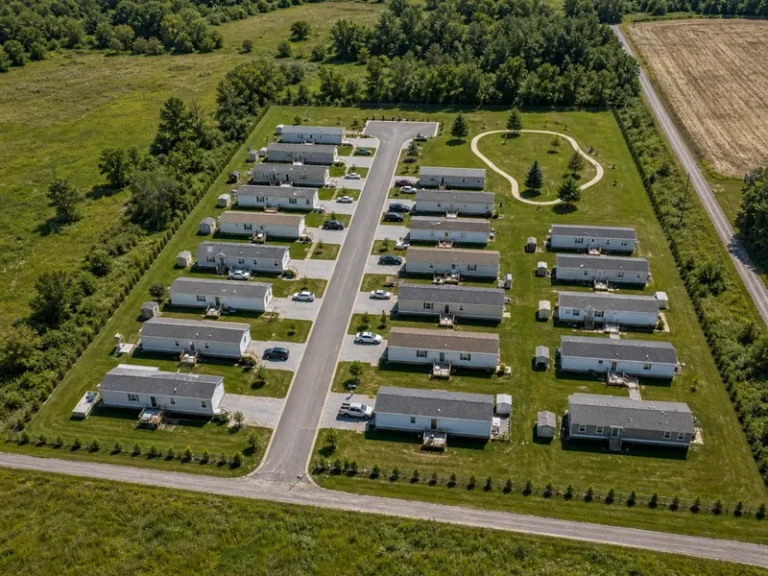
The reason published “averages” disagree is that they describe different populations. The 2018 Commercial Buildings Energy Consumption Survey found that warehouse and storage buildings had become the most common commercial building type in the United States. Across more than one million such buildings, the average was only about 17,400 square feet, because the stock is dominated by small ones: roughly 69% are under 10,000 square feet and fewer than 1% exceed 500,000. The headline “180,000 square feet” you see in real-estate coverage describes only the newest, largest distribution centers, whose average footprint has more than doubled since the early 2000s. Both numbers are correct; they just answer different questions. If you are benchmarking against standard metal building sizes, it helps to know which population a quoted “average” is drawn from before comparing it to your own plan.
Typical Warehouse Dimensions and Bay Layout
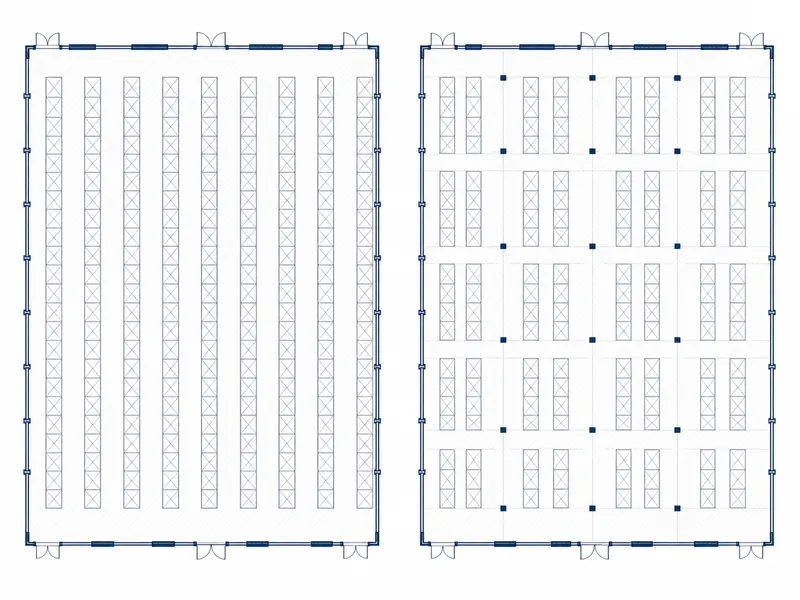
Warehouse dimensions describe more than a square-footage total. The same area can be laid out as a narrow strip or a near-square box, and the column grid inside it governs how the floor is used. A common big-box layout is roughly 200 feet wide by 500 feet long, which works out to 100,000 square feet; at the small end, a 5,000-square-foot unit is often about 50 by 100 feet, or roughly 465 square meters for readers working in metric.
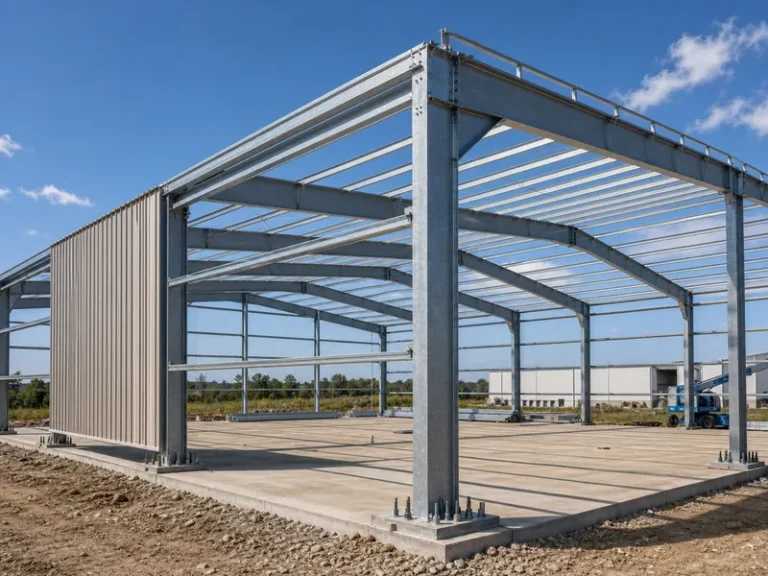
What the outside dimensions do not tell you is the *usable* width. Interior columns interrupt aisles and force racking to align around them, so the clear, obstruction-free width is what drives layout. A clear span buildings approach removes interior columns entirely, giving a fully column-free floor where aisle and rack positions are set by the operation, not by the structure. Where a clear-span is impractical for very wide buildings, the bay spacing, which is the distance between column lines, becomes the working module that rack rows and dock positions are sized around. Because that grid is locked in early during steel building design, the width and bay spacing should be settled before the floor plan is fixed.
Clear Height: The Other Half of Warehouse Sizing
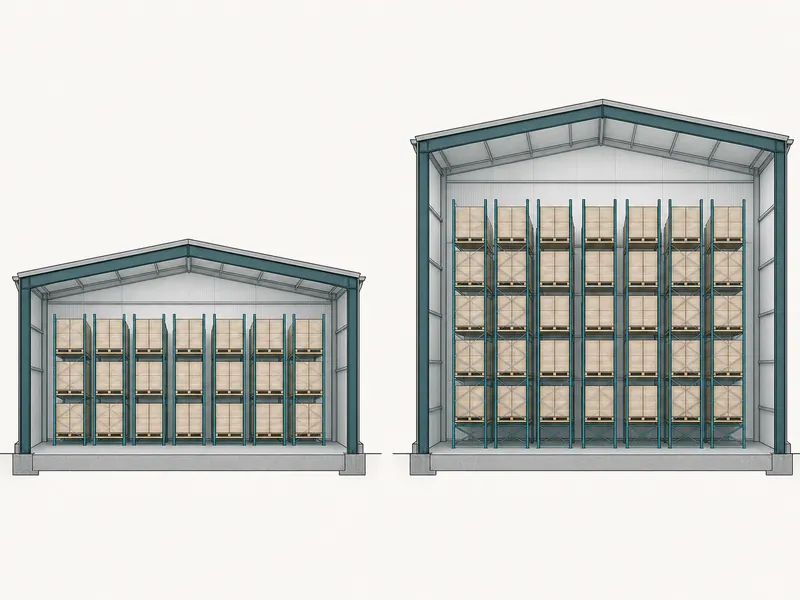
Clear height determines how much of a warehouse you can actually fill, because inventory stacks upward, not just outward. Older warehouses were commonly built to about 24 feet of clear height, while modern distribution centers are routinely specified at 32 to 36 feet, and e-commerce facilities push to 36–40 feet or beyond. Class A industrial space is now widely expected to offer at least 32 feet clear, and buildings stuck at 24 feet are increasingly hard to lease for high-throughput use.
The reason height matters so much is geometric. A 100,000-square-foot building at 24 feet clear encloses about 2.4 million cubic feet; the same footprint at 36 feet encloses about 3.6 million, roughly 50% more storage volume on identical land. In practice you never recover all of that. The top of the usable zone is limited by sprinkler clearance and the rack’s flue spaces, and the eave height of the steel frame sets the ceiling on clear height in the first place. That is why two warehouses with the same square footage can hold very different amounts: the taller frame, not the larger floor, is often where extra capacity is hiding.
Tall clear height also opens a sizing option that floor area alone does not, which is a mezzanine. Building a structural mezzanine over staging, picking, or office zones converts unused height into extra usable square footage without enlarging the footprint, so two buildings with identical outside dimensions can still offer different working areas. The trade-off is that a mezzanine consumes some of the clear height it sits under and adds load to the slab and frame, so it belongs in the plan alongside the racking scheme instead of being added on later.
Typical Sizes by Use Case
Warehouse size tracks closely with what the building is used for, since throughput and product profile decide how much floor and cube an operation needs. As a rough guide rather than a standard, common ranges look like this:
- E-commerce and retail fulfillment: about 50,000–300,000 square feet, driven by high SKU counts and fast pick rates.
- Third-party logistics (3PL): anywhere from 50,000 to over 1,000,000 square feet, since 3PLs consolidate many clients under one roof.
- Manufacturing and industrial storage: roughly 100,000–500,000 square feet, covering raw material, work-in-process, and finished goods.
- Food and beverage: about 10,000–200,000 square feet, with temperature-controlled and cold-storage buildings tending to the smaller, taller end because insulation and refrigeration cost rises with volume.
- Pharmaceutical and healthcare: about 10,000–150,000 square feet, where compliance and controlled environments matter more than raw scale.
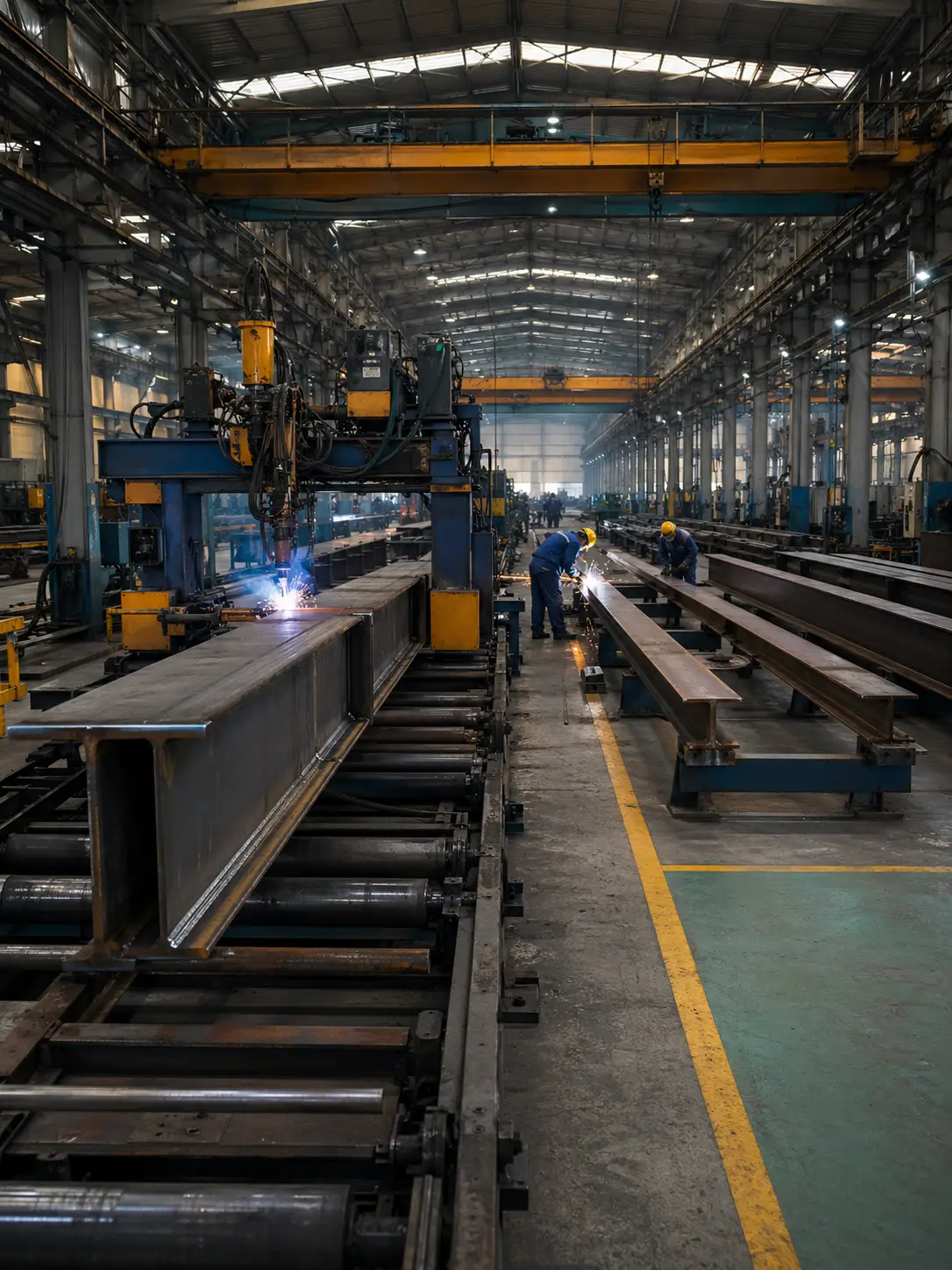
These are starting ranges, not fixed allocations. Many warehouses across these bands are delivered as a prefabricated warehouse building, with the frame and cladding engineered to the chosen size off-site. A cold-storage operation and a bulky-equipment distributor can occupy the same footprint and still need completely different clear heights and dock counts, which is why use case sets the neighborhood and the operation sets the exact number.
How to Size a Warehouse for Your Operation
To size a warehouse, work backward from how many pallet positions you need, then add the space the operation cannot store in. If you know the target pallet count, divide it by the number of rack levels your clear height allows to get the floor-level positions, then translate those into a rack footprint. From there, the building has to be considerably larger than the racks alone. Aisles typically consume 15–20% of the storage area, and a well-run facility often nets only around 22–27% of its total cubic volume to stored product. The rest goes to staging, dock aprons, offices, and circulation. Operations that run inbound and outbound at the same time commonly dedicate 30% or more of the floor to staging and dock zones. Office and support space adds more; though usually well under 10% of the floor, it still comes out of the same envelope. The building is also not the whole site: truck courts, trailer parking, and maneuvering aprons can need as much land outside the walls as the warehouse covers, so the parcel is sized well beyond the footprint.
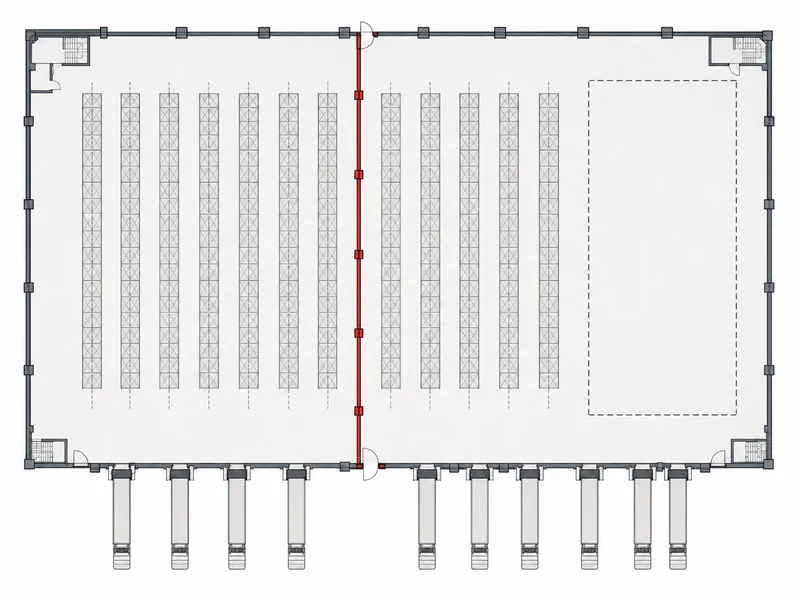
Two more adjustments keep a building from being outgrown on day one. First, build in headroom for growth; a 20–30% buffer over current needs is a common rule of thumb for a five-to-ten-year horizon, though the right figure depends on your growth volatility, land cost, financing, and whether phased expansion is realistic. Second, check the code ceiling on a single building. In the United States, the International Building Code limits the allowable area of a storage (Group S) building, with the actual limit set by the locally adopted code edition, construction type, frontage, and whether the building is sprinklered. Very large warehouses often need rated fire walls or a higher construction type instead of one unbroken floor. This guide covers sizing, not detailed layout, fire-protection engineering, or budgets. Once the size is set, the cost to build a warehouse scales with footprint, clear height, and finish level, and a full warehouse building design then resolves dock counts, slab, and mechanical systems.
Conclusion
The most reliable way to size a warehouse is to fix the binding constraints first, namely clear height and any fire-area limit, and settle the footprint around them. Height and code-driven separations are far harder and costlier to change later than floor area is. Lock in a clear height that suits your racking, and confirm that the target square footage fits within the allowable building area, before you commit to outside dimensions. As a steel structure manufacturer, KAFA sets the clear-span width and eave height early so the column grid and usable height match the intended racking, leaving the footprint as the variable that flexes with future volume rather than the constraint that limits it.
FAQ
What is the average warehouse size in the U.S.?
The average U.S. warehouse is about 17,400 square feet in the 2018 federal building survey, but that single figure is misleading on its own. It is pulled down by a large stock of small buildings, with roughly 69% of warehouses under 10,000 square feet, while newly built distribution centers average closer to 180,000 square feet. The “typical” size depends on whether you are counting the whole building stock or only modern large-format facilities.
How big is a small, medium, or large warehouse?
Small warehouses generally run under 25,000 square feet, medium ones from 25,000 to 100,000, and large ones above 100,000, with major distribution buildings exceeding 500,000. These cutoffs vary between sources, so it is more useful to classify a building by what it can do, such as how many pallet positions and rack levels it supports, than by square footage alone.
What clear height do modern warehouses use?
Modern warehouses are typically built with 32 to 40 feet of clear height, up from a legacy standard near 24 feet. Class A facilities are now widely expected to offer at least 32 feet clear, and e-commerce operations often push to 40 feet to add another level of racking, which is why older 24-foot buildings can be harder to lease for high-throughput use.
How do I estimate the warehouse size I need?
Start from the pallet positions you need, divide by the rack levels your clear height allows to get floor positions, then add aisles, staging, and dock space. Because storage usually nets only around a quarter of a building’s cubic volume, the gross size is several times the rack area alone, and a 20–30% growth buffer is a common allowance for a multi-year horizon.
Does a bigger footprint always mean more storage?
No, clear height can matter as much as floor area, because warehouse capacity is measured by cube rather than square feet. The same 100,000-square-foot footprint holds roughly 50% more volume at 36 feet of clear height than at 24 feet, so a taller building on less land can out-store a larger, shorter one.
Further Reading
- U.S. EIA — Commercial Buildings Energy Consumption Survey (CBECS 2018) — U.S. government statistics on warehouse building counts, total floorspace, and average building size; supports the full-stock average and size-distribution figures used here.
- NAIOP — The Evolution of the Warehouse — Commercial real estate development association report on how e-commerce and automation drive higher clear heights and wider bays; supports the clear-height trend discussion.
- ICC — 2021 IBC, Chapter 5: General Building Heights and Areas — Building-code basis for how construction type and fire-area limits cap a single warehouse’s allowable size; supports the allowable-area constraint noted under sizing.