




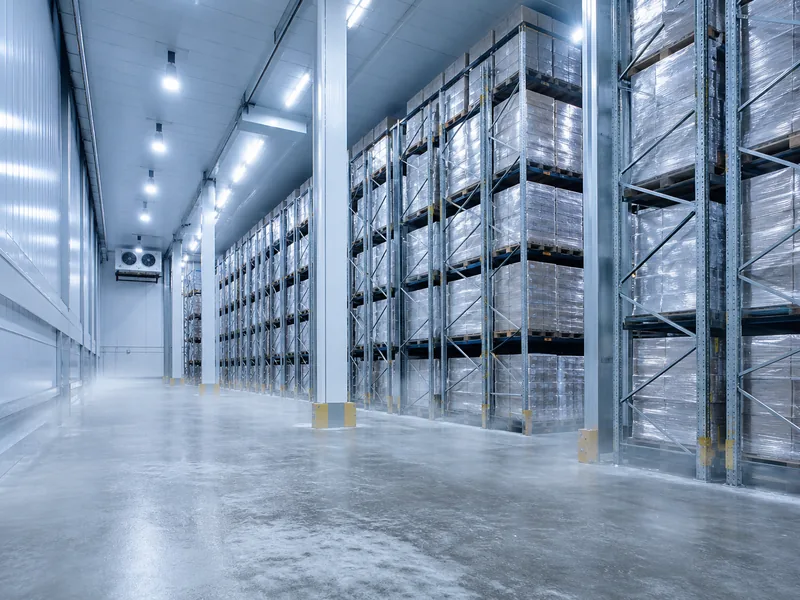
Operating a refrigerated warehouse usually costs about three to four times as much per square foot as running a comparable dry warehouse. Almost all of that gap is electricity for refrigeration that never switches off. In round numbers, the power bill alone runs roughly $3–4 per square foot a year before demand charges, and third-party cold storage commonly rents for $8–25 per pallet position per month. Those numbers move with your electricity rate, your temperature class, and how you staff the building, so the useful question is not only how much, but which line item you are actually paying for.
This guide covers ongoing operating cost, not the price to build the box. Construction is a separate budget; see our guide to cold storage building construction for that side. The reason the operating number surprises people is that the biggest line on the profit-and-loss statement is often not the one they expect.
Why a refrigerated warehouse costs 3–4x a dry one to run
A cold warehouse draws roughly four times the electricity of a dry building of the same size, almost entirely because its refrigeration plant runs around the clock. U.S. refrigerated warehouses average about 24–25 kWh per square foot per year in federal CBECS data, against roughly 6 kWh for a non-refrigerated warehouse. Refrigeration accounts for an estimated 70–80% of a cold warehouse’s electrical load in industry references, while lighting, fans, pumps, and conveyors split most of the rest.
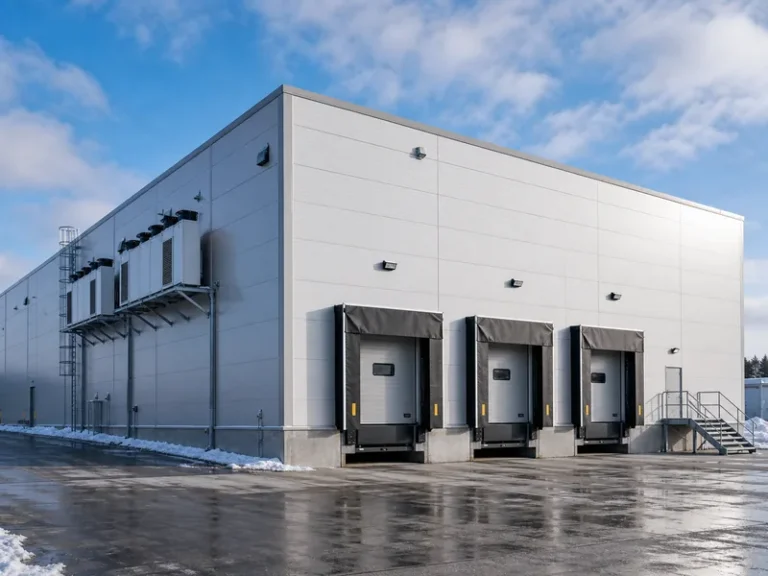
That continuous duty cycle is the defining trait of cold storage warehouses, and it is why their running costs sit in a different bracket from dry-goods space. The compressors fight a constant heat leak through walls, roof, floor, and every door cycle, so the load is continuous rather than seasonal. Put next to standard steel warehouse buildings, a cold facility’s envelope works harder every hour of the year. That is also why the insulation you start with sets a ceiling on how low the bill can ever go.
Where cold storage operating costs actually go
Energy is the cost that makes cold storage exceptional, but it is rarely the single biggest line on the operating statement. In the Global Cold Chain Alliance’s North American benchmarking of refrigerated warehouses, labor is usually the largest single expense, at around 46% of operating cost. Occupancy, meaning rent or the equivalent cost of owning the building, comes next at around 35%. Utilities, supplies, repairs, and administration share what remains. Energy lands inside that smaller slice on a full third-party-logistics P&L, yet it stays the largest controllable utility cost and the one that swings most from month to month.
The “60–70% energy” figure quoted elsewhere usually describes a different scope: an owner-operator who already owns the building and runs lean on labor, or a tally of utility cost only. Both framings are valid; they answer different questions. For budgeting, decide first whether you are counting a full P&L or only the controllable utilities.
| Operating cost line | Typical share or range | Main driver |
|---|---|---|
| Labor | ~46% of a 3PL P&L; wages 20–30% above dry-warehouse roles | Headcount, cold-work premiums, throughput |
| Occupancy (rent or ownership cost) | ~35% of a 3PL P&L | Market, location, building age |
| Electricity (energy + demand) | Largest controllable utility line; about $4–6/sq ft/yr all-in | kWh use, rate, peak demand, setpoint |
| Maintenance and repairs | ~15–20% of refrigeration equipment value per year | Plant age, condition, refrigerant |
| Monitoring, backup power, insurance | About $3,000–8,000/yr at small-to-mid sites | Compliance, redundancy, risk |
Occupancy is the second-largest line, which is why teams weighing build-versus-lease usually price what it costs to rent a warehouse of the right temperature class before committing capital. Maintenance earns its place as a fixed line, not a contingency: deferred compressor and condenser service shows up as higher energy draw long before it shows up as a breakdown. The building shell needs attention too, from roof and doors to seals and panels, which is the subject of our guide to steel building maintenance.
Electricity, demand charges, and the temperature you keep
Your electricity bill has two parts, and cold storage gets hit hard on both. The first part is the energy charge, billed per kWh used. At about 24.9 kWh per square foot per year and typical U.S. commercial rates of $0.12–0.16 per kWh, that works out to roughly $3–4 per square foot annually, so a 100,000-square-foot facility spends on the order of $300,000–400,000 a year on energy units alone.
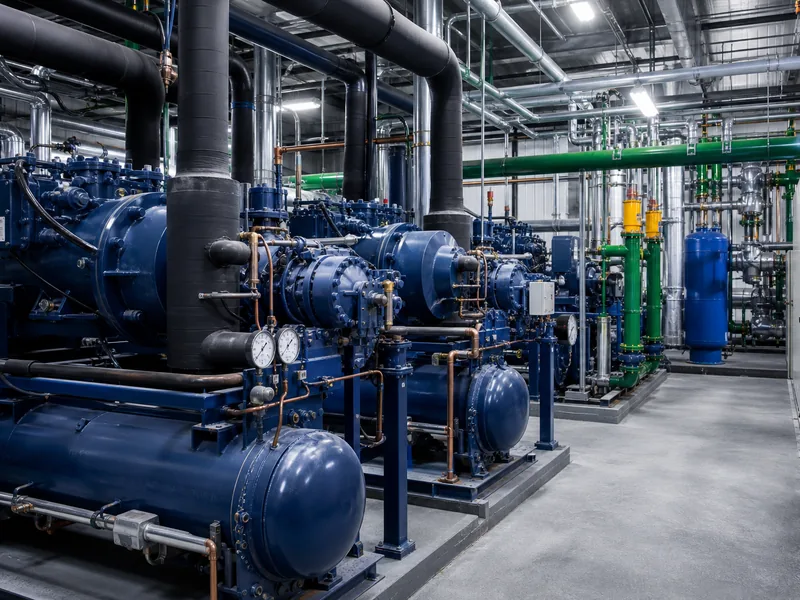
The second part is the demand charge, billed on your highest 15-minute power peak. Refrigeration compressors cycling together can set that peak in a single interval; at a $15/kW rate, a 600 kW peak adds about $108,000 a year. Many utilities also apply a ratchet clause that keeps you paying off one bad summer peak for the next eleven months. Demand charges commonly make up 20–50% of a cold store’s electric bill, which is why two facilities with the same kWh usage can land far apart on total cost. Reducing that load is the highest-return project most operators have, and the levers appear in energy efficiency in metal buildings as well as later in this guide.
Temperature class is the largest single lever on both parts of the bill. Every degree colder raises the heat the plant must remove, so a freezer held at -10°F to 0°F can use 20–40% more energy per cubic foot than a cooler at 34–40°F. That gap is the reason frozen space always prices above chilled.
What an energy figure does and does not include. A per-square-foot energy number covers electricity for refrigeration, lighting, and building systems. It excludes the demand charge, standby generator fuel, refrigerant top-ups, and the labor to run the plant, and it climbs with a colder setpoint, a higher utility rate, or an older, leakier building. When you compare quotes or benchmarks, confirm whether the figure is energy-only, all-in electricity, or full utilities, because mixing those scopes is one of the easiest ways a cold storage budget goes wrong.
Cost per pallet and per square foot: the benchmarks operators use
Most cold storage is priced per pallet position per month rather than per square foot, because pallet positions are the unit a facility actually rents out. Third-party cold storage commonly runs $8–25 per pallet position per month across U.S. markets, with frozen positions near the top of that range and chilled toward the bottom; high-cost metros and small-volume accounts push higher. Larger or specialized space is sometimes quoted per cubic foot, which rewards tall and densely racked buildings, or per square foot for dedicated single-tenant deals.
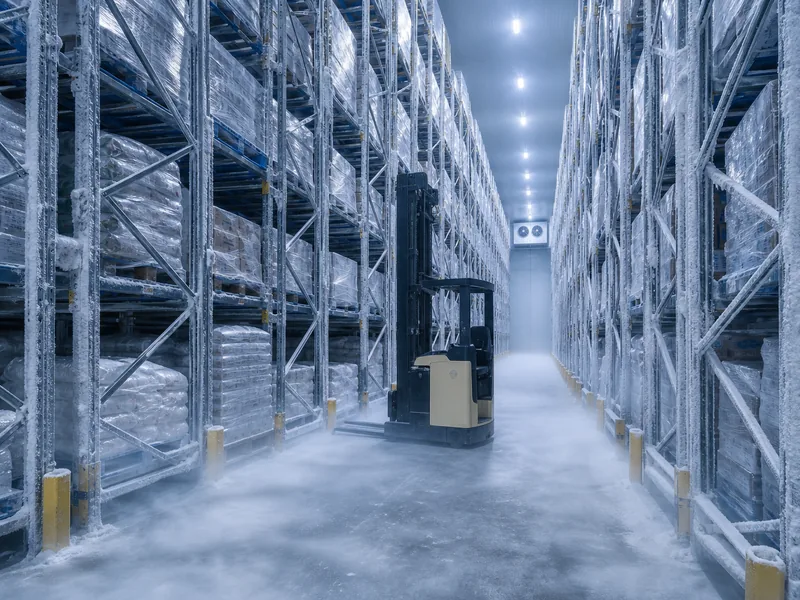
Storage rent is only the base rate. Handling is billed on top: receiving and put-away often run $25–50 per pallet, order picking a few dollars per line, and blast freezing or special handling more again. For a budgeting model, keep the recurring storage line separate from these per-transaction fees, because a high-throughput account can spend more on handling than on storage.
How to lower cold storage operating costs
The cheapest kilowatt-hour is the one the refrigeration plant never has to remove, so the highest-return savings start with the building envelope and how the doors are run. A leaky envelope or thin roof insulation makes the plant work against a heat leak it should never see, and that penalty compounds every hour for the life of the building. Upgrading metal building insulation, sealing penetrations, and adding rapid-close or air-curtain doors at temperature breaks cut the load at its source.
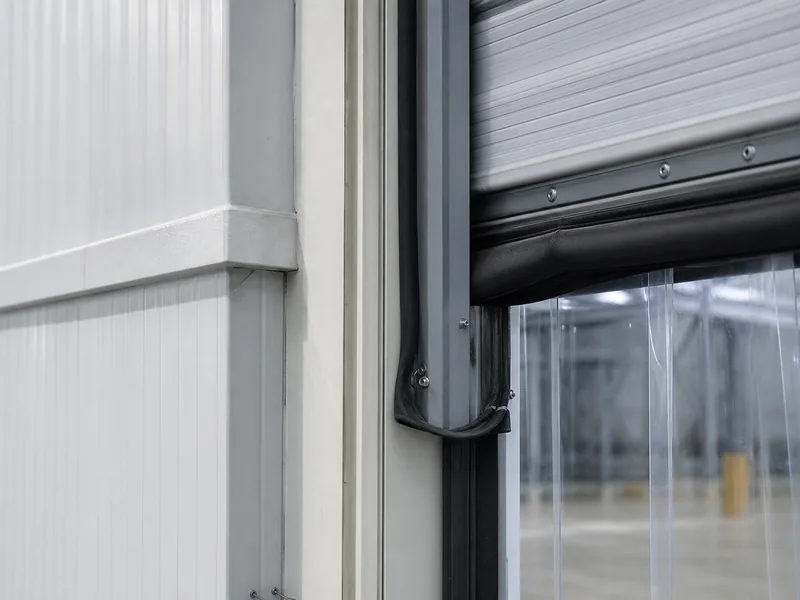
On the plant side, floating head pressure controls, variable-speed compressors and fans, and demand-defrost settings trim energy without touching the cold chain. Demand management, such as staggering compressor starts and pre-cooling before peak windows, targets the demand charge specifically. LED lighting cuts both the lighting load and the heat it adds to the room. Benchmarking the building against its peers, which the ENERGY STAR score does for refrigerated warehouses, tells you whether there is headroom to cut at all before you spend on a retrofit.
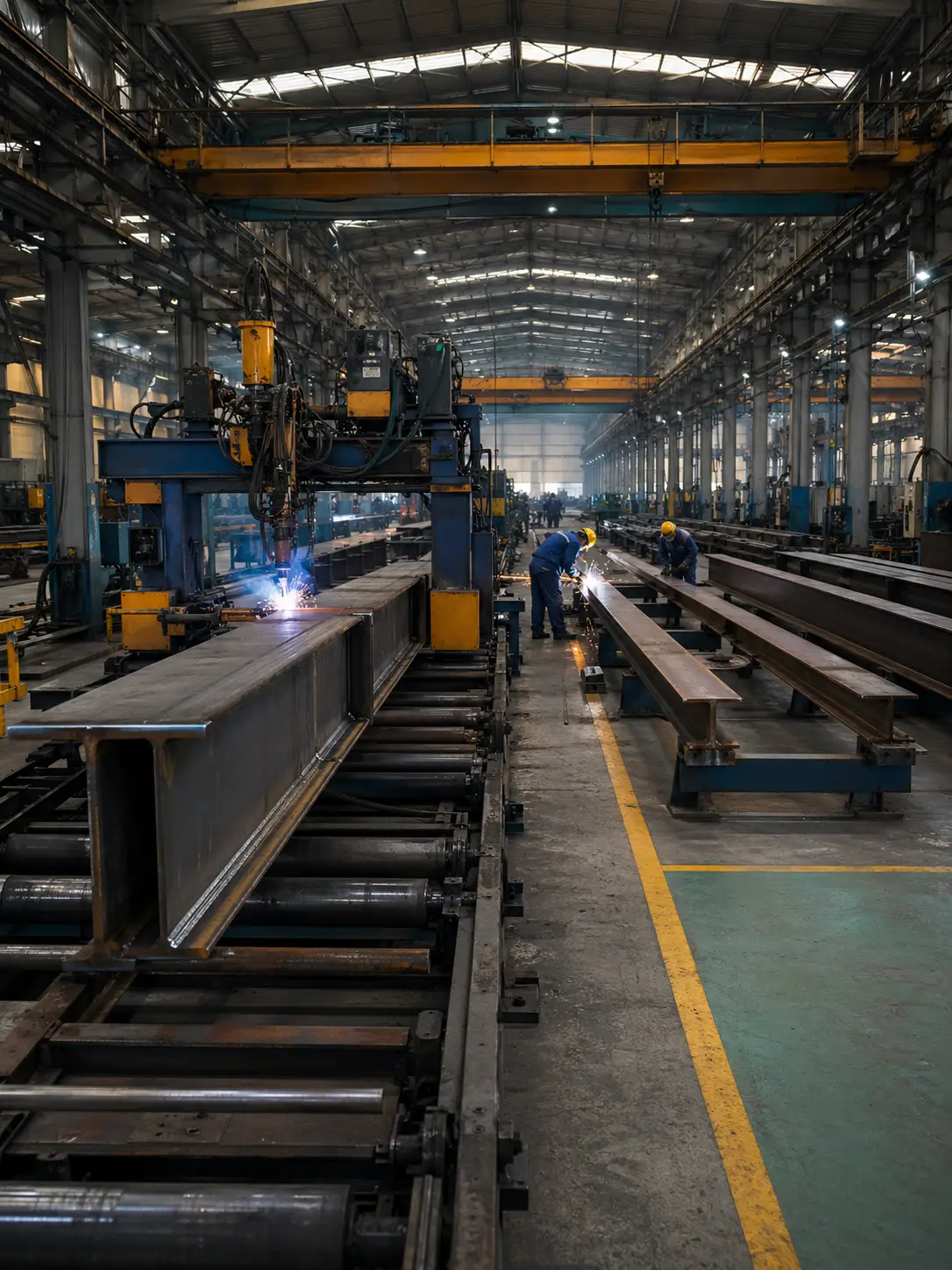
Because so much of the lifetime bill is locked in at the envelope, the choice of builder matters more for a cold store than for a dry one. As a steel structure manufacturer, KAFA runs dedicated H-beam, box-section, and C/Z purlin lines under ISO 9001:2015 quality management. It fabricates the insulated panel envelopes and clear-span frames that decide how airtight, and how cheap to run, a facility is once the compressors start. Getting the shell right at fabrication is far cheaper than chasing energy losses after the building is standing.
Which operating-cost number to lock first
Before estimating a cold storage operating budget, lock the three inputs that move it most: your electricity rate and demand structure, your labor and occupancy model, and the temperature class you have to hold. Those three explain most of the spread between a $9 and a $20 pallet position.
Decide which lens you are budgeting in before you compare any benchmark. Use an all-in per-pallet rate if you are buying space from a third party, all-in electricity per square foot if you own the building and want the controllable number, or a full P&L if you run the operation yourself. A figure quoted in one lens says very little about another. Start with the electricity rate and the setpoint, because those are fixed by your utility and your product and are the hardest to change once the building is committed.
FAQ
How much does cold storage cost to operate per square foot?
Electricity alone runs about $3–4 per square foot per year at typical commercial rates, and $4–6 once demand charges are included, with frozen space and high-rate regions higher. That figure is utilities only; add labor, occupancy, and maintenance for a full operating number, which is why most operators track cost per pallet position instead.
What is the single biggest operating cost in a cold storage warehouse?
Labor is usually the largest single line on a third-party warehouse’s P&L, around 46% in the Global Cold Chain Alliance’s North American benchmark, followed by occupancy near 35%. Energy is the biggest controllable utility cost and the reason cold storage runs several times a dry warehouse, but on a full operating statement it sits below labor and rent.
How much does it cost to store a pallet in cold storage per month?
Third-party cold storage commonly costs $8–25 per pallet position per month, with frozen at the top of the range and chilled toward the bottom. Handling, receiving, and blast freezing are billed separately, so a fast-moving account can pay more in transaction fees than in storage rent.
Why does frozen storage cost more to run than chilled storage?
Frozen storage costs more because every degree colder increases the heat the refrigeration plant must remove. A freezer at -10°F to 0°F can use 20–40% more energy per cubic foot than a cooler at 34–40°F, and the colder plant also carries higher defrost and maintenance loads.
Can you cut cold storage energy costs without a major retrofit?
Yes. Door discipline, defrost scheduling, setpoint review, and demand management cut energy with little or no capital. Sealing dock doors, replacing failed strip curtains, and staggering compressor starts to flatten peak demand often save 10–20% before any equipment is replaced. Benchmarking with the ENERGY STAR score first shows whether the building is already efficient.
Further Reading
- U.S. EIA — Commercial Buildings Energy Consumption Survey: Warehouse and Storage — U.S. Energy Information Administration. Federal source for warehouse energy-use intensity, the basis for comparing refrigerated and non-refrigerated buildings.
- ENERGY STAR Score for Warehouses — U.S. EPA ENERGY STAR. Explains how refrigerated warehouses are scored 1–100 against their peers, so you can benchmark a facility before investing in upgrades.
- Warehouse Energy Management Best Practices Checklist — U.S. EPA ENERGY STAR. Practical measures for cutting warehouse and cold storage energy use, supporting the reduction levers above.