




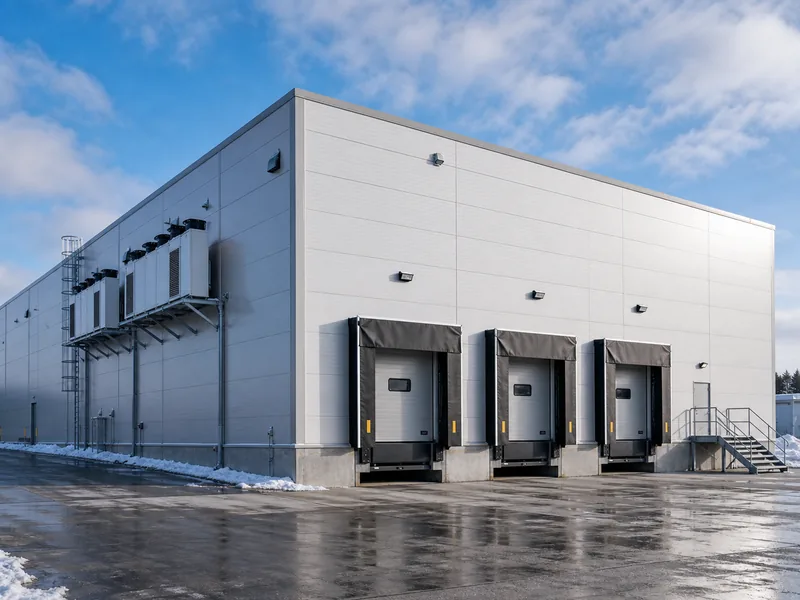
Cold storage building construction is the work of wrapping a temperature-controlled space inside three systems an ordinary warehouse never needs: a sealed insulated envelope, a protected slab, and a refrigeration plant sized to the temperature you have to hold. That added stack is why a refrigerated or freezer building commonly runs $130 to $350 per square foot turnkey, roughly two to three times a comparable dry warehouse. It is also why the design has to start at the envelope and the floor rather than the floor plan. This guide follows the build from the steel shell outward to the panels, down to the slab, and through the refrigeration and cost decisions that set the budget. It does not size refrigeration equipment or work through food-safety code line by line; those belong to your refrigeration contractor and local authority.
What Sets Cold Storage Construction Apart
Temperature class drives every other decision in a cold storage build, so it is the first thing to fix on paper. Coolers hold roughly 32 to 40°F for produce, dairy, and beverages, freezers sit around -10 to 0°F for frozen goods, and blast or ultra-low rooms go colder still for rapid freezing and pharmaceuticals. Each step down is not a thermostat setting; it raises panel thickness, refrigeration capacity, slab detailing, and the budget together.
Purpose-built steel cold storage buildings are designed around that target temperature from the first sketch, unlike a dry shell that someone later tries to chill. Fix the holding temperature, and any future colder zones, before structural and envelope design begins. Retrofitting a colder class into a warmer building means re-skinning walls and rebuilding the floor, which is rarely worth the saving.
The Steel Shell and Clear Height
The structural frame for a cold store carries loads a dry warehouse never sees, starting with the refrigeration equipment on its roof. A rigid-frame, pre-engineered steel building suits the job because it delivers wide clear-span, column-free floor area for high-density racking and the high eave heights modern facilities want, with clear heights often reaching about 40 feet. Evaporators, condensers, refrigerant piping, and sometimes a rooftop machine deck add dead and concentrated loads that the primary frame, purlins, and girts have to be sized for at the start.
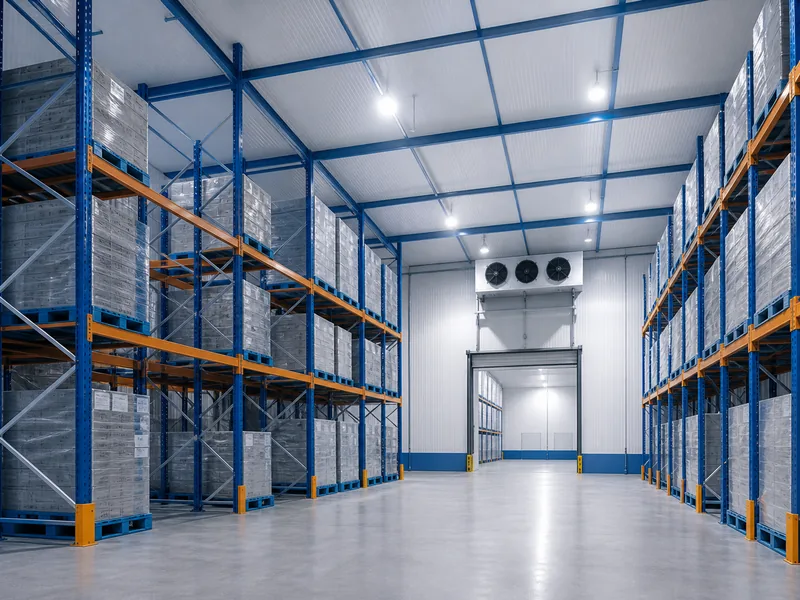
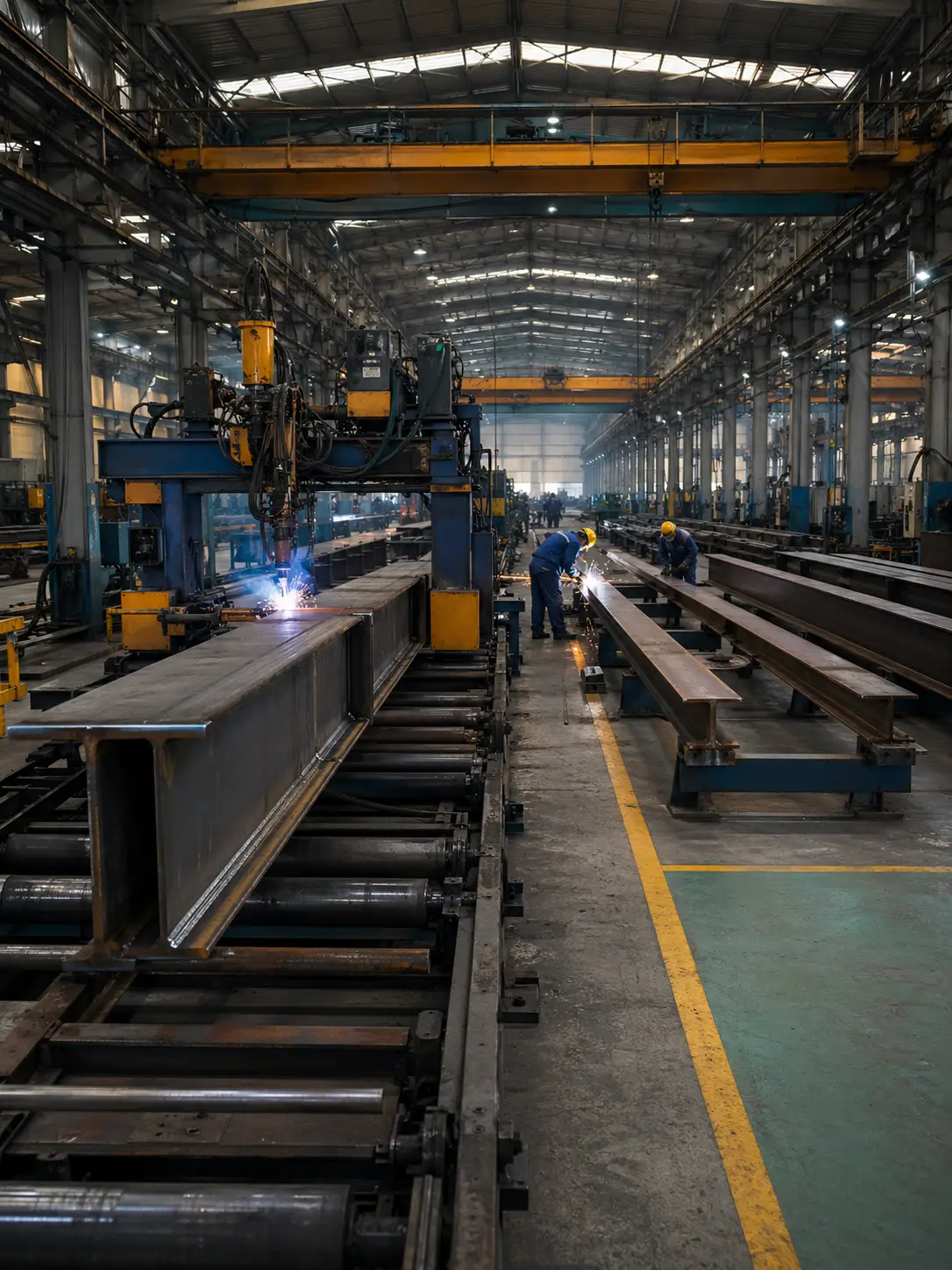
The same steel skeleton gives the insulated panels a true, rigid plane to seal against, which matters far more in a freezer than in any ambient warehouse building design. As a steel structure manufacturer, KAFA fabricates the rigid frame and the C/Z-section purlins and girts that the insulated envelope hangs on, under ISO 9001:2015 quality management. Refrigeration and panel installation stay with cold-chain specialists. Tally the roof-mounted and equipment loads during structural design and confirm the frame carries them, because adding a machine deck after the steel is set usually means reinforcement.
Insulated Panels and the Building Envelope
The insulated envelope does the actual temperature-holding in a cold store, and it is built from insulated metal panels rather than conventional cladding. IMPs bond a foamed core, usually polyisocyanurate or mineral wool, between two steel skins. Their thickness scales with the temperature class: roughly 2 to 4 inches for coolers, 5 to 6 inches for freezers, and 6 to 8 inches or more for blast and ultra-low rooms. Wall and ceiling assemblies commonly land between R-30 and R-50. Installed panel cost runs about $12 to $35 per square foot of wall and ceiling area depending on thickness and finish, measured on panel area rather than building footprint, so it scales with how much surface the building wraps.
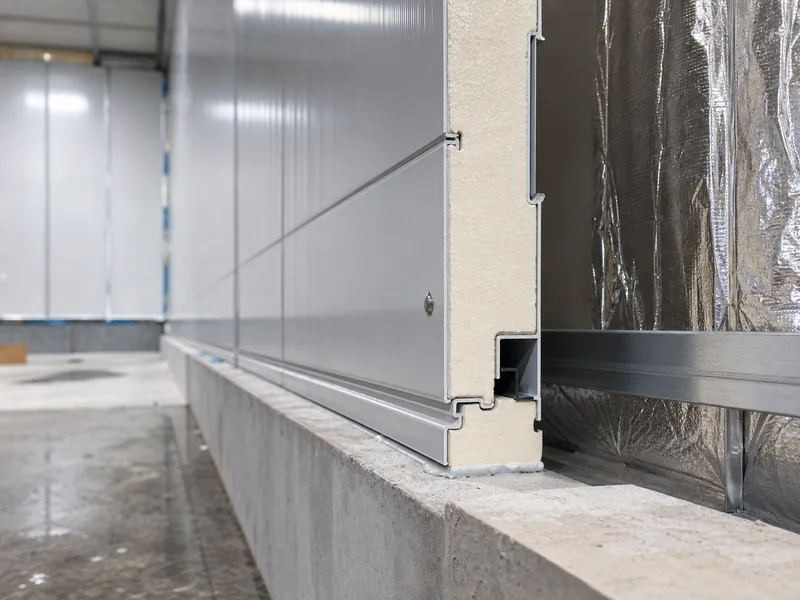
Thickness alone does not make an envelope work; the detail that causes the most callbacks is the vapor barrier. Warm outside air constantly pushes moisture toward the cold interior, and any break in the vapor seal lets that moisture condense and freeze inside the assembly, degrading insulation and feeding hidden ice. Continuous sealing at panel joints, doors, and penetrations, plus attention to thermal bridging at fasteners and structural connections, is what keeps an envelope performing over years. Specifying the panel package as if it were ordinary metal building insulation underestimates how unforgiving sub-zero vapor drive can be.
Floors, Slabs, and Frost Protection
A freezer floor is a structural and thermal problem, not just a slab pour, because the ground beneath a sub-zero room will freeze and heave if it is left unprotected. Cold migrates from the slab into the soil, moisture in that soil freezes and expands, and the floor lifts; this is the frost heave that cracks slabs and throws racking out of plumb. Freezer and blast-freezer floors prevent it with rigid insulation under the slab, commonly several inches, plus a sub-slab heating loop of glycol piping or an electric grid that keeps the ground just warm enough to stay stable.
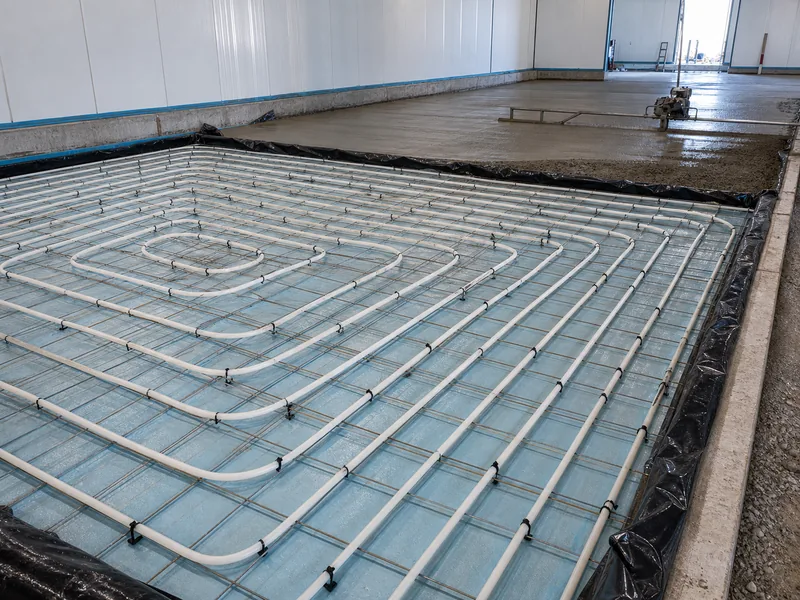
Coolers held above freezing usually skip the heat loop but still need under-slab insulation and a vapor retarder. The heated-slab system is also one of the line items that pushes freezer cost above cooler cost, adding roughly $8 to $18 per square foot. Match the floor build-up to the coldest temperature the room will ever hold and verify the heating and insulation before the pour, since there is no economical fix once a freezer slab is down. This is where a cold store’s metal building foundation diverges most sharply from a standard industrial slab.
Refrigeration Systems and Compliance
Refrigeration choice follows the building’s size, target temperature, and location, and the three common paths are ammonia, CO₂, and synthetic refrigerants. Ammonia is the workhorse for large industrial cold stores because it moves heat efficiently and cheaply at scale. But it is toxic and flammable, so systems above threshold charges fall under OSHA’s Process Safety Management standard and demand engineered detection, ventilation, and operator training. CO₂ and cascade systems increasingly serve very low temperatures and smaller or urban sites where a large ammonia charge is impractical, while synthetic refrigerants still appear in smaller packaged units. Whichever refrigerant is chosen, its handling and emissions are regulated; in the United States, the EPA controls stationary refrigerant management under the Clean Air Act.
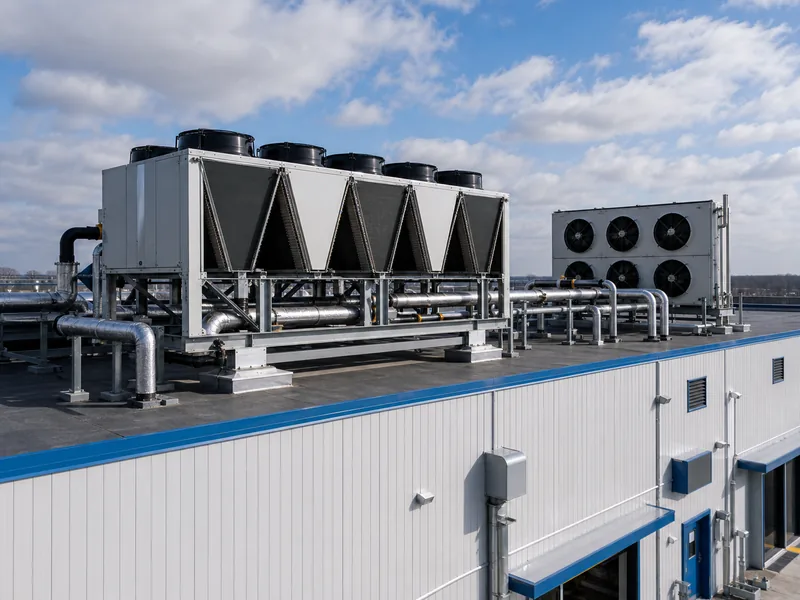
This guide stops at selecting the refrigeration approach. Sizing the plant, choosing compressors, and laying out the machine room are engineering tasks for a refrigeration contractor working from the stored-product load. The roof and structural loads from whichever system you pick feed straight back to the frame design covered earlier. Fire protection, food-safety, and local code requirements vary by jurisdiction and stored product and belong in that same design conversation rather than to any single rule of thumb.
What Cold Storage Construction Costs
Turnkey cold storage construction commonly runs $130 to $350 per square foot, and where a project lands inside that band is set mostly by its temperature class. As a rough industry guide, coolers sit near $150 to $250 per square foot, freezers around $200 to $350, and blast or ultra-low rooms higher still, because each colder step stacks panel thickness, refrigeration capacity, and slab heating at once. For scale, a mid-size 30,000-square-foot cooler often runs around $5 million all-in, and larger facilities trend toward the lower end of the per-foot range as fixed costs spread out.
A turnkey figure and a bare shell price are different products, so it helps to fix what the range above does and does not cover before comparing bids.
- Included: the steel shell, the insulated metal panel envelope, the refrigeration plant, insulated doors, and the finished slab with any required freezer floor heating and basic controls.
- Excluded: land, sitework and utilities to the property line, deep or poor-soil foundations, racking and material-handling equipment, backup power, and permitting and design fees.
- Pushes the number toward the top: a colder temperature class, thicker panels, redundant refrigeration, tall clear heights, and tight or difficult sites.
The cost drivers map straight back to the three systems: temperature class and panel R-value set the envelope, the heated slab sets the floor, and refrigeration capacity and redundancy set the plant. Because a cold store spends far more on energy than a dry building over its life, decisions that improve energy efficiency in metal buildings, such as envelope continuity, dock sealing, and efficient refrigeration, pay back in operating cost, not just first cost. Set against the cost to build a warehouse at ambient temperature, the cold-chain premium is real and traces to these systems, not to markup.
Conclusion
The decisions that are hardest to undo in cold storage construction all happen before the slab is poured and the panels go up. Fix the temperature class first, since it sets panel thickness, refrigeration, and floor build-up in one move. Confirm the structural frame carries the refrigeration and roof loads, then protect the two systems that fail expensively in service: a continuous vapor barrier through every joint and penetration, and a freezer slab with the insulation and sub-slab heating it needs to resist frost heave. Leave time at the end for the commissioning a dry warehouse skips, namely airtightness checks and a controlled temperature pull-down that proves the envelope and refrigeration hold the target before product arrives.
On the structural side, KAFA fabricates the clear-span steel frame and the purlin and girt system that a cold store’s insulated envelope seals against, leaving refrigeration and panel work to cold-chain specialists. If you are scoping the steel shell for a refrigerated or freezer building, you can request a quote with your spans, eave height, and the roof-load allowance for the refrigeration plant.
FAQ
How much does cold storage construction cost per square foot?
Turnkey cold storage typically runs $130 to $350 per square foot, with coolers at the lower end and freezers and blast rooms higher. The figure that trips up buyers is the shell price: a bare insulated steel shell costs far less than a turnkey building that includes refrigeration, doors, and a finished slab, so confirm which scope a quote covers before comparing numbers.
Why do freezer floors need heating?
Freezer floors are heated to stop the ground beneath them from freezing and heaving. A slab held below freezing slowly chills the soil moisture under it, which expands and lifts the floor, so a glycol or electric loop under the insulation keeps that soil stable. Coolers held above freezing generally need only under-slab insulation, not a heat loop.
What insulation R-value does a cold storage building need?
Cold storage envelopes generally fall between R-30 and R-50, scaling with how cold the room runs. Coolers often sit in the lower half of that range with 2-to-4-inch panels, while freezers use 5-to-6-inch panels for higher values and blast rooms go thicker again. Continuity matters as much as the rating, since an unbroken vapor barrier and sealed joints decide real-world performance.
Ammonia or CO₂ — which refrigeration suits cold storage?
Ammonia suits large industrial cold stores because it is efficient and inexpensive at scale, while CO₂ and cascade systems fit very low temperatures or smaller and urban sites. Plant size, target temperature, and how much refrigerant charge a site can safely hold usually decide the choice, and large ammonia systems carry added safety and OSHA compliance obligations.
How long does cold storage construction take?
A pre-engineered steel shell can go up in roughly 60 to 90 days, but refrigeration, envelope sealing, and commissioning add substantial time beyond that. The step that cannot be rushed is the temperature pull-down and airtightness verification at the end, which proves the building holds its target before any product moves in.
Further Reading
- NAIOP — Best Practices in Cold Storage — Commercial Real Estate Development Association. Industry best-practice research on cold storage design and construction, supporting the envelope, slab, and refrigeration choices above.
- OSHA — Ammonia Refrigeration — U.S. Occupational Safety and Health Administration. Federal safety guidance for ammonia refrigeration systems, including the Process Safety Management standard referenced in the refrigeration section.
- EPA — Stationary Refrigeration and Air Conditioning — U.S. Environmental Protection Agency. Federal rules for refrigerant management under Clean Air Act Section 608 that govern the refrigerants used in cold storage plants.