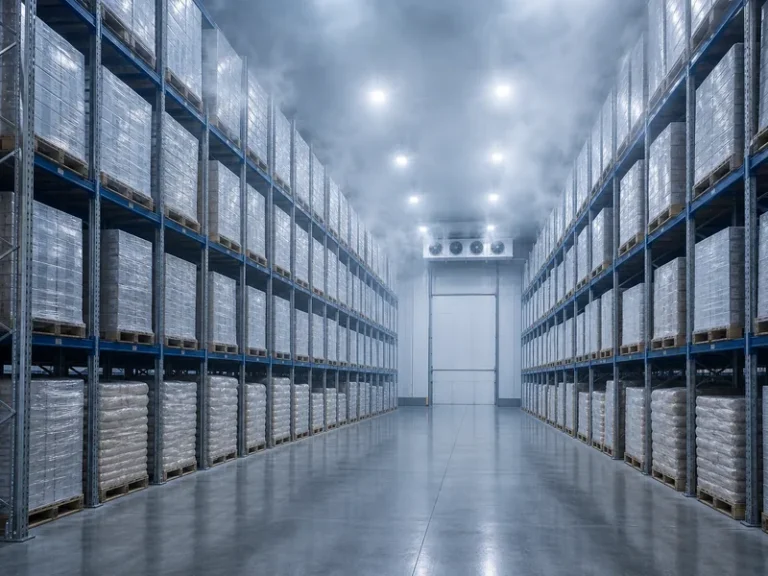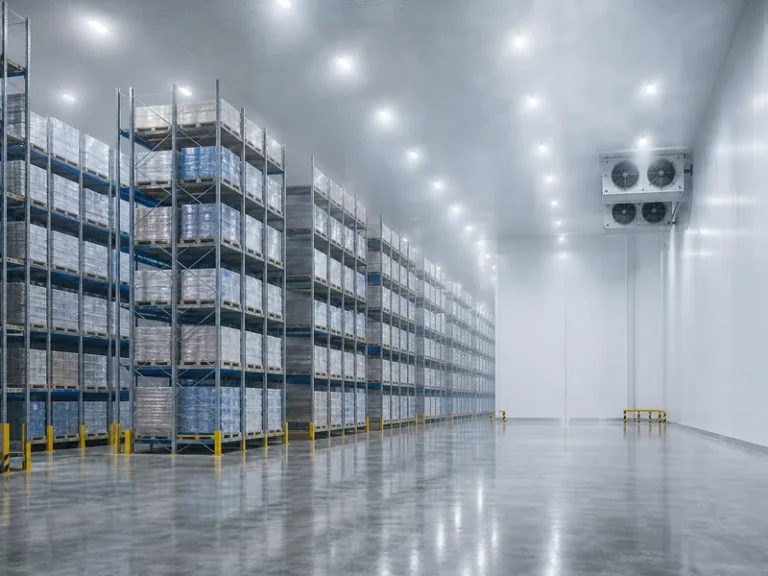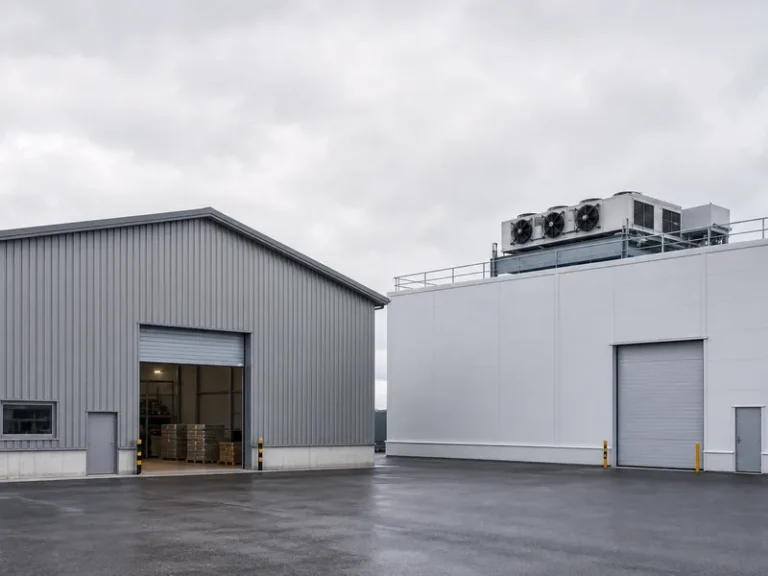





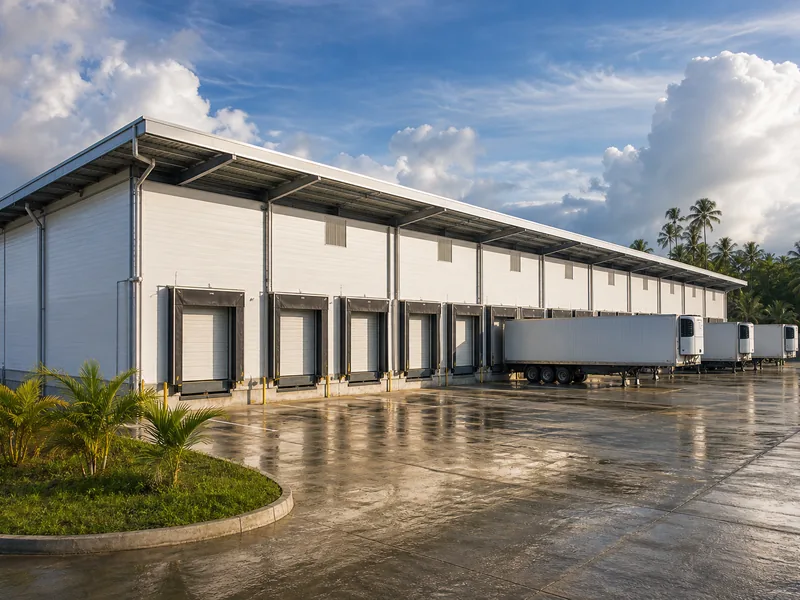
A cold storage facility in the Philippines typically costs two to three times more to build than a standard dry warehouse. The gap comes from its insulated envelope, refrigeration plant, and structural design rather than from finishes. Local cost guides put refrigerated builds at roughly ₱38,000 to ₱60,000+ per square meter, against ₱14,000 to ₱22,000 for a basic steel warehouse of the same footprint. The final figure tracks the temperature class you need, the site’s climate exposure, and how the building handles humidity and typhoon wind. This guide covers what drives those costs, how facility types map to temperature, the climate and code factors specific to Philippine sites, capacity sizing, and the accreditation path. It does not detail refrigeration machinery internals or day-to-day operating costs, which sit in dedicated guides linked below.
Why Cold Storage Demand Is Climbing in the Philippines
Demand for cold storage in the Philippines is rising on three fronts at once: growing imports of meat and seafood, heavy post-harvest losses in fresh produce, and a government push to fund new facilities. Each of those pulls on a different product temperature, which is part of why new builds are rarely single-purpose rooms.
The country runs around 151 Department of Agriculture-accredited cold storage warehouses holding roughly 500,000 tons of capacity, and that base is heavily concentrated in Luzon. Metro Manila alone accounts for close to 37.5% of accredited sites, according to U.S. International Trade Administration and local market data. Industry bodies project capacity growth in the high single digits to low double digits each year, with the Cold Chain Association of the Philippines citing 8 to 10 percent. On the public side, the Department of Agriculture has committed a P3-billion program to build around 100 hybrid cold storage facilities aimed at cutting losses for fruit, vegetable, and high-value crop farmers.
For anyone weighing a build, the practical signal is geography. Supply is thin outside Luzon, so a facility in the Visayas or Mindanao often faces less direct competition. But the archipelago’s inter-island logistics also matter: distance from a port and from refrigeration contractors shapes both freight cost and how fast spare parts arrive when a compressor fails. That trade-off between catchment demand and local technical support should be checked against your product’s source region before you commit to a site.
Types of Cold Storage Facilities and Their Temperature Ranges
Cold storage facilities are grouped by the temperature they hold, and that single choice cascades into panel thickness, refrigeration load, and running cost. A chiller or cooler runs about 0 to 5°C for fresh produce, dairy, and pharmaceuticals; a freezer holds roughly -18 to -25°C for meat, fish, and frozen goods; and a blast freezer drives down to -35 to -45°C to pull heat out of product fast before it moves into longer-term storage. Many facilities combine zones, which is why one building can list both chiller and freezer pallet positions.
| Facility type | Typical temperature | Common use | Insulated panel |
|---|---|---|---|
| Chiller / cooler | 0 to 5°C | Fresh produce, dairy, pharma | ~80–100 mm |
| Freezer | -18 to -25°C | Meat, fish, frozen goods | ~100–120 mm |
| Blast freezer | -35 to -45°C | Rapid freezing before storage | ~150–200 mm |
The colder the room, the thicker the insulated panel and the harder the refrigeration plant works, so setting a temperature lower than the product actually needs is a quiet way to inflate both capital and energy cost. Pick the warmest class that still protects the product, and where a mix spans fresh and frozen, separate zones usually beat running one large room at the coldest common denominator. For the broader engineering choices behind these zones, see refrigerated warehouse design guidelines.
Climate and Site Factors That Shape Philippine Cold Storage Design
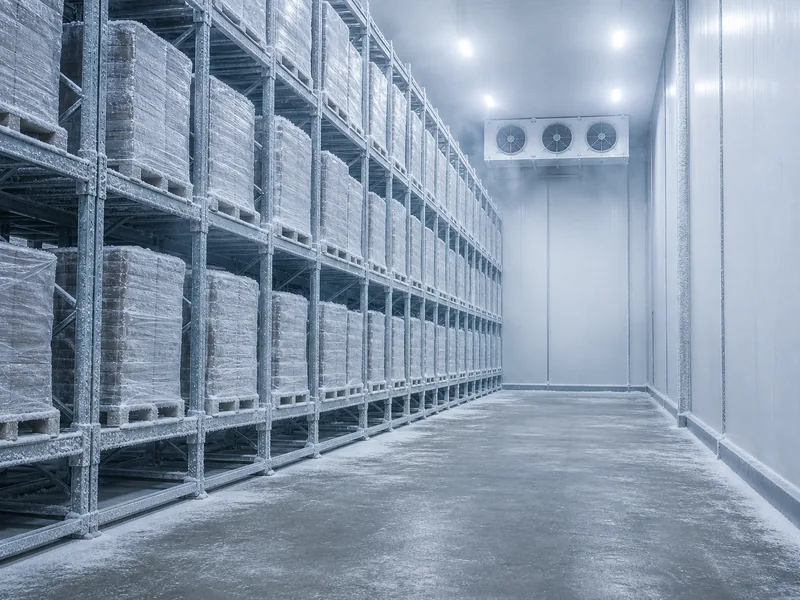
Three local conditions separate a Philippine cold store from a temperate-climate design: high ambient humidity, typhoon wind load, and an unreliable grid. Each one changes the build, and skipping any of them is where converted or copy-paste designs tend to fail.
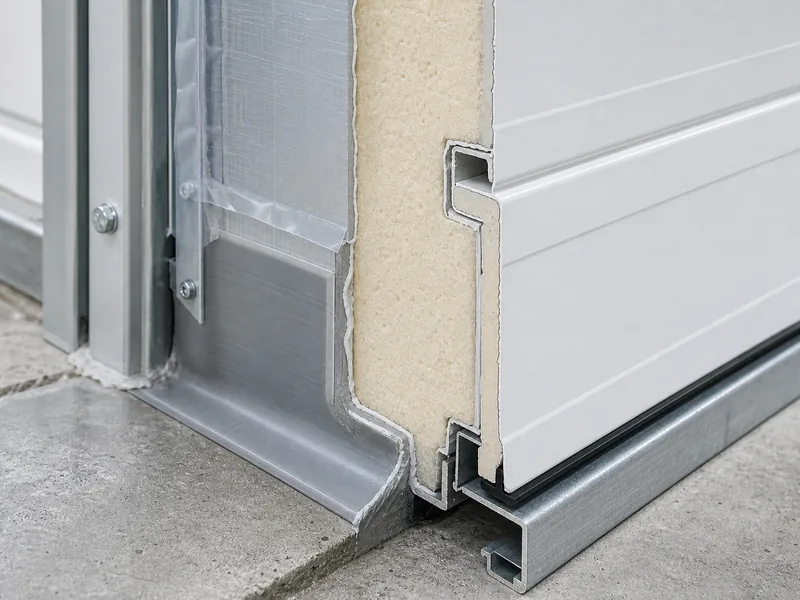
High heat and humidity put constant pressure on the insulated envelope, so a continuous vapor barrier matters as much as the insulation itself. If moisture reaches the cold side it condenses, freezes, and degrades the panel from the inside, which is why builders specify low-conductivity PU or PIR foam panels and detail the joints, doors, and floor-to-wall junctions to stop air and moisture leaks.
Wind is the second driver. The National Structural Code of the Philippines (NSCP 2015), which adopts ASCE 7-10 for wind loads, sets design wind speeds that reach 200 to 250 km/h in high-risk zones. The frame, roof anchorage, and cladding fixings then have to be sized for that uplift rather than copied from a calmer region. Purpose-built steel cold storage buildings handle this well, because a clear-span steel rigid frame carries both the heavy insulated panels and the typhoon uplift without interior columns that would block racking.
Power is the third factor. Brownouts are common enough that backup generation and a ride-through control strategy belong in the design brief, not as an afterthought, since a freezer that loses its plant for hours risks the entire stored load. Specifying insulation, vapor sealing, and backup power as one system is what keeps a tropical cold store stable; for the panel and envelope build-up specifically, insulation for metal buildings covers it in more depth.
What It Costs to Build a Cold Storage Facility in the Philippines
Building a cold storage facility in the Philippines runs roughly ₱38,000 to ₱60,000+ per square meter, against ₱14,000 to ₱22,000 for a basic steel warehouse of the same footprint. On a 500 sqm facility, that points to a combined construction-and-equipment budget of about ₱19 million to ₱30 million or more. Refrigeration and insulation together form the largest single cost block, often a third or more of the build, which is why a blast-freezer room costs far more per square meter than a chiller of the same size.
The per-square-meter range above covers the insulated steel shell, refrigeration, and basic fit-out. It typically excludes land, site development, racking systems, building permits, and import duties on equipment. The number moves up with colder set points, thicker panels, taller clear height, imported refrigeration equipment, and sites that need their own power infrastructure; it moves down with simpler chiller-only programs and larger, regularly shaped footprints. Before comparing bids, confirm exactly what each quote includes, because two prices at the same rate per square meter can hide very different scopes.
That figure is capital cost only. Running a cold store, where energy use can reach several times that of a dry warehouse, is a separate budget line covered in cold storage operating costs. The build sequence itself, from foundation and floor slab through panel installation and commissioning, is detailed in cold storage building construction.
Sizing Capacity: Pallet Positions and Tonnage
Cold storage capacity in the Philippines is usually measured in pallet positions, and translating product volume into that figure is the first sizing step. Facilities range from a few hundred positions in a single-room build to several thousand across multiple zones, with large multi-room sites in Luzon listing 3,000 to 5,000 positions. How much product fits a pallet depends on the commodity: industry figures put whole chickens and processed meats at roughly 300 to 400 kg per pallet, boxed fish at 500 to 600 kg, and boxed beef or pork at 600 to 800 kg.
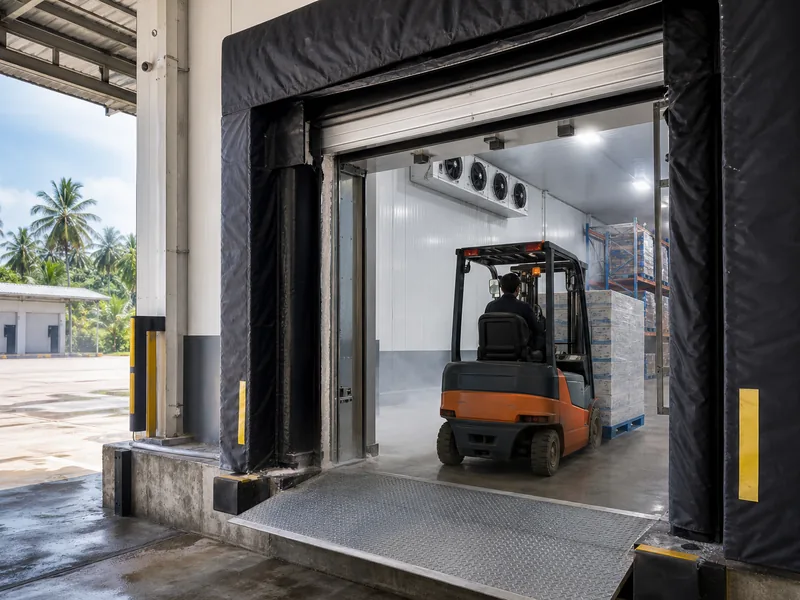
Clear height drives how many pallets stack per position, so a taller clear-span building can lift capacity without enlarging the footprint, though every meter of added height above about 6 m raises structural cost. Size the racking layout, clear height, and door positions together with throughput, because a building sized only for static storage can choke at the loading dock once product starts moving. Confirm the peak inbound and outbound pallet flow, not just the standing inventory, before fixing the building envelope.
Regulations and Accreditation for Cold Storage in the Philippines
A commercial cold storage facility in the Philippines must be accredited by the agency that governs its stored commodity before it can legally operate. Meat and poultry fall under the DA’s National Meat Inspection Service (NMIS); fishery products under the Bureau of Fisheries and Aquatic Resources (BFAR); plant products under the Bureau of Plant Industry (BPI); and processed or packaged food under the FDA’s License to Operate. Operators handling food typically also run GMP and HACCP systems, and accreditation tracks whether the facility holds its sanitary and temperature-control standards over time rather than passing a one-time check.
On the structural side, the build has to satisfy the National Structural Code of the Philippines and clear the standard building permit, fire safety inspection, and environmental compliance before occupancy. Line up the accreditation body that matches your product early, because the sanitary layout, drainage falls, and washable finishes it requires are far cheaper to design in than to retrofit after the shell is already up.
How to Approach a Cold Storage Build in the Philippines
The cleanest way to scope a Philippine cold storage facility is to lock the decisions in order rather than chase a single price. Start with the temperature class the product actually needs, since that one choice sets panel thickness, refrigeration load, and the bulk of the cost. Size capacity next in pallet positions and peak throughput, then test the site against humidity, typhoon wind load, and grid reliability before pricing anything. Cost and accreditation come last, because both depend on the temperature, capacity, and site decisions above, and a quote priced before those are settled is hard to compare.
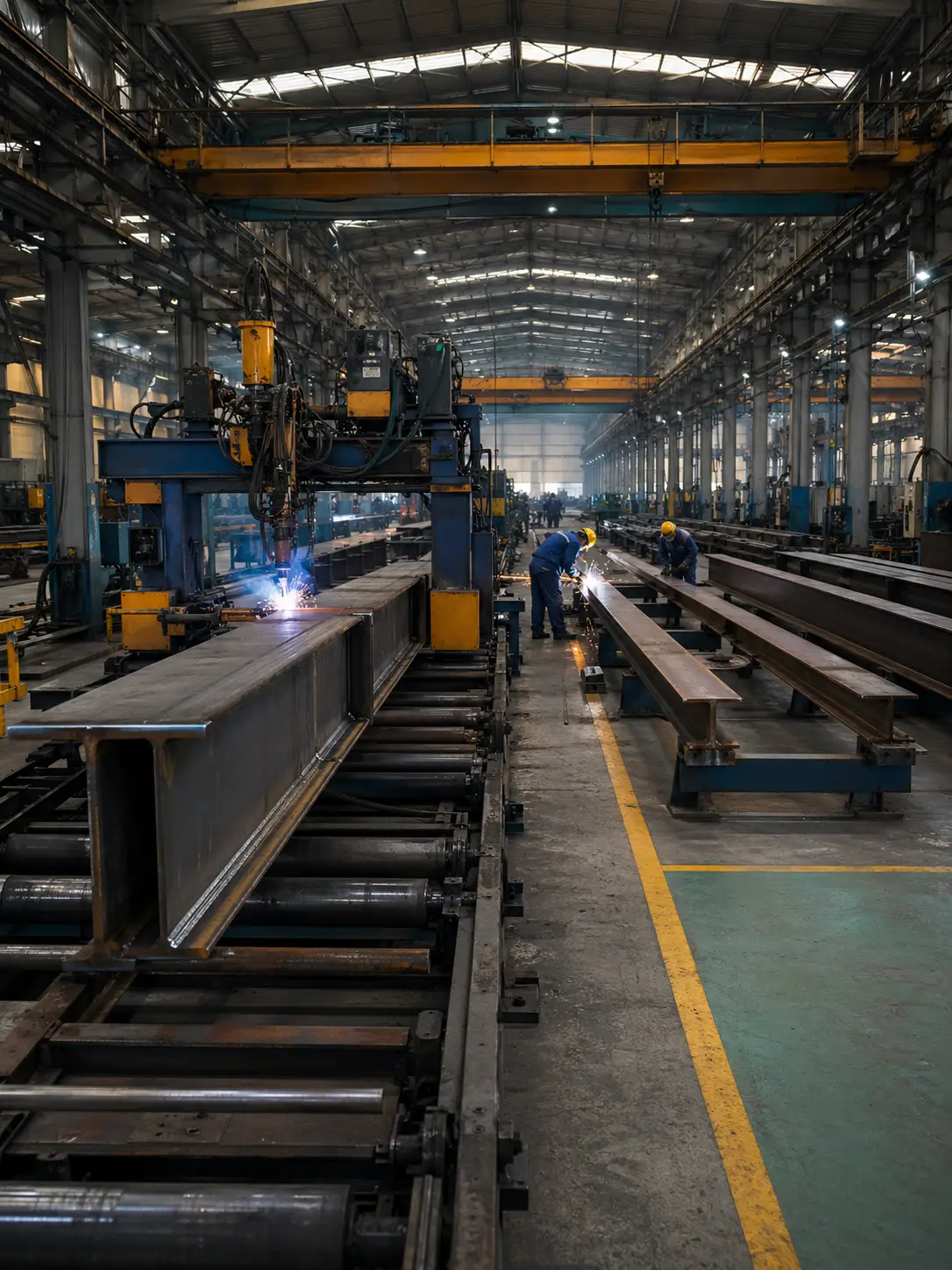
A purpose-built insulated steel structure handles the Philippine combination of typhoon uplift, humidity, and clear-span racking better than a converted dry warehouse, which is where a fabricator’s input on frame and envelope pays off early. As a steel structure manufacturer with in-house design, fabrication, and installation, KAFA builds the insulated clear-span shell that the refrigeration and accreditation work then fits into. To pressure-test a temperature class, capacity, and envelope against a specific site, request a quote with your product mix and target region.
FAQ
How much does it cost to build a cold storage facility in the Philippines?
A cold storage facility typically costs ₱38,000 to ₱60,000+ per square meter, or about ₱19 million to ₱30 million+ for a 500 sqm site including refrigeration. That rate is roughly two to three times a basic dry warehouse, and it excludes land, racking systems, and building permits.
What temperature should a cold storage warehouse hold?
Temperature depends on the product: chillers run 0 to 5°C, freezers -18 to -25°C, and blast freezers -35 to -45°C. Holding a room colder than the product needs wastes energy and forces thicker panels, so the warmest safe class is usually the right target.
Do cold storage facilities in the Philippines need accreditation?
Yes, commercial cold storage must be accredited by the agency governing its commodity before it operates. NMIS covers meat, BFAR covers fish, BPI covers plant products, and the FDA licenses processed food, while structural compliance with the NSCP and a building permit are separate requirements.
How long does it take to build a cold storage facility?
Large cold storage facilities generally take 18 to 22 months from contract award, while modular container-type units can be operating in about three months. The longer timeline reflects refrigeration procurement, panel installation, and commissioning, not just the structural shell.
Is steel or concrete better for a cold storage building?
Steel framing suits cold storage because a clear-span rigid frame gives column-free interior space for racking and erects faster than reinforced concrete. Concrete can suit specific load or fire cases, but most refrigerated builds favor an insulated steel shell that carries the panels and the typhoon uplift in one frame.
Further Reading
- Philippine Department of Agriculture — national cold storage program — Government agency. Backs the public-investment context and the scale of the national cold storage buildout cited above.
- Cold Chain Innovation Hub — Philippine food cold chain report — Industry research body. Supports the demand drivers, infrastructure gaps, and tropical energy-efficiency points.
- U.S. International Trade Administration — Philippine Cold Chain Sector — Government market intelligence. Supports the capacity, accredited-facility counts, and growth-rate figures.