



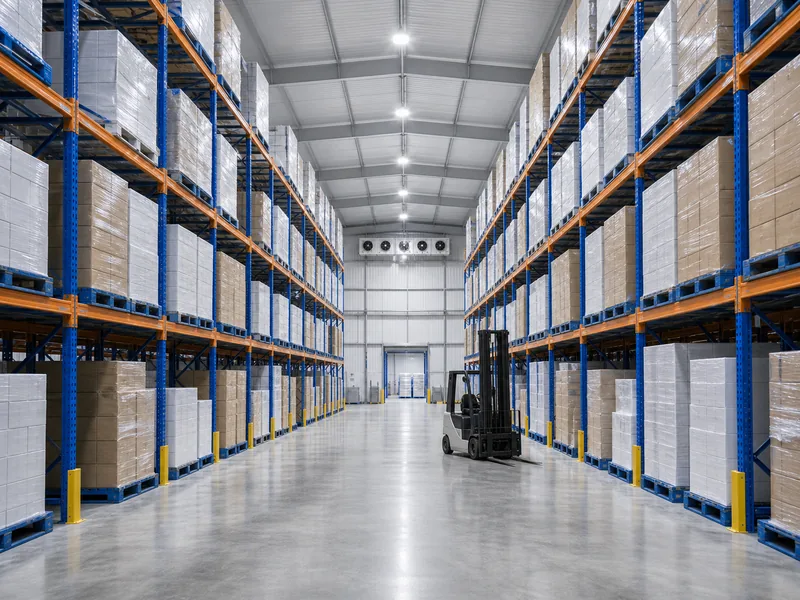
Warehouse management in the food industry is the work of keeping edible stock safe, traceable, and in-date from the moment it arrives until it ships. It rests on four controls that general warehousing can treat as optional but food cannot: holding every product in its correct temperature zone, rotating stock so nothing expires on the rack, recording each lot well enough to trace and recall it, and keeping the space clean enough to pass a food safety audit on any given day. None of those controls work in isolation, and all of them depend on the building they run inside. This guide explains how the pieces fit, where food warehouses usually fail, and what the facility itself has to provide. It covers storage and handling, not upstream food processing, transport fleet routing, or how to choose a specific warehouse management system.
What Sets Food Warehouse Management Apart
Food warehouse management differs from ordinary warehousing because the stock can spoil, sicken people, and trigger legal recalls when it is mishandled. A pallet of bolts tolerates a hot afternoon and a missing label; a pallet of chicken does not. That gap is why the field splits into general storage and food-grade warehousing, the latter meaning a facility built, equipped, and documented to hold food safely rather than one that simply happens to have food inside.
The regulatory frame raises the stakes further. Under the U.S. Food Safety Modernization Act (FSMA), facilities that store food are expected to run a written food safety plan with preventive controls. The sanitation and good-manufacturing-practice expectations in 21 CFR Part 117 also apply to how that food is held. The practical effect for a warehouse manager is that every control below has to be not only performed but evidenced. A temperature log with a four-hour gap is not a small clerical miss; it is an unverifiable period that an auditor, or a customer’s recall investigation, will treat as suspect until proven otherwise.
Temperature Zones and Cold Chain Control
Every food warehouse runs on temperature zones, and the cold chain holds only as long as product never drifts outside the band set for its category. Most spoilage and a large share of recalls trace back to stock that sat too warm for too long, so zone discipline is the first thing a serious food operation gets right.
| Zone | Typical range | Common goods | Where control slips |
|---|---|---|---|
| Frozen | around 0°F (−18°C) or below | frozen meat, seafood, prepared meals | defrost cycles, long door openings |
| Refrigerated / chilled | roughly 32–40°F (0–4°C) | dairy, fresh produce, deli items | dock dwell time, overstacked evaporator coils |
| Dry / ambient | often 50–70°F (10–21°C) | canned and dry goods, packaging | humidity swings, summer roof heat gain |
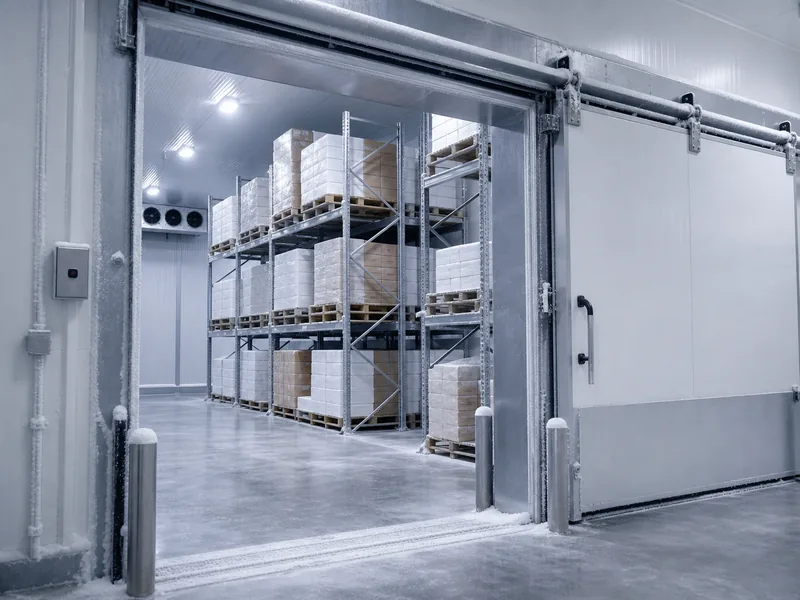
Exact set points vary by product and by the buyer’s specification, so the table is a starting range, not a fixed rule. The more useful insight is that excursions rarely happen mid-aisle at steady state. They happen at the gaps: product waiting on a warm receiving dock, doors propped during a long load, or a freezer running a defrost cycle while a forklift holds the door. Mapping those weak points and putting monitoring on them matters more than trusting the average reading on the wall. Operations that handle a wide temperature spread often find that the cleanest answer is to separate the deep-cold work entirely, which is part of where a standard warehouse ends and a cold storage building begins. The line between a warehouse and dedicated cold storage should be drawn before racking is even ordered.
Stock Rotation That Protects Shelf Life
Stock rotation decides which pallet ships next, and food warehouses base that decision on either arrival date or expiry date. First In, First Out (FIFO) moves the oldest received stock first and suits goods with predictable, uniform shelf lives. First Expired, First Out (FEFO) ships whatever expires soonest regardless of when it arrived, and it is the safer logic for perishables, because a later delivery can easily carry an earlier use-by date than stock already on the rack.
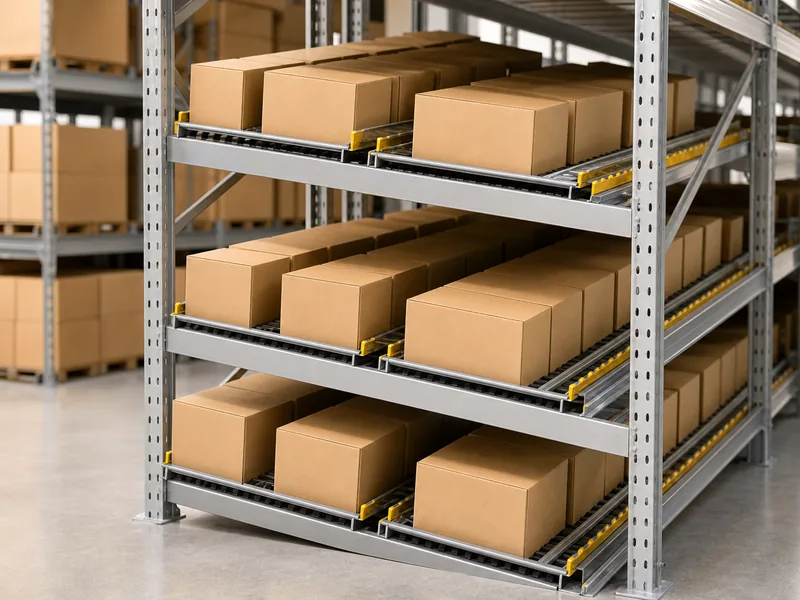
The choice has a direct waste and compliance consequence. Run FIFO on short-life dairy and you will eventually ship a newer-but-sooner-expiring case behind an older one, leaving stranded stock to be written off. Retail and foodservice buyers also set a minimum remaining shelf life, meaning product must arrive with enough days left to sell; plan rotation without that buffer and deliveries get rejected at the door. FEFO only works, though, if expiry data is captured accurately at receiving. When the dock crew scans a pallet in without recording its use-by date, the system has nothing to sort on, and the rotation method reverts to guesswork no matter what the software claims to enforce.
Traceability and Recall Readiness
A recall is only as fast as the records behind it, which puts traceability at the center of food warehouse management. The working standard across the supply chain is one step back and one step forward: for any case on hand, a warehouse should be able to name the supplier and inbound lot it came from and every customer shipment it went to. Lot and batch numbers, captured at receiving and carried through picking on barcodes such as GS1-128, are what make that lookup take minutes instead of days.
Regulation is tightening this expectation. The FDA’s FSMA 204 Food Traceability Rule expands recordkeeping for higher-risk foods on its traceability list, including certain cheeses, shell eggs, fresh produce, and seafood. The compliance date has been pushed back more than once; the FDA’s current compliance date is July 20, 2028, a date to confirm against current FDA guidance rather than treat as fixed law. The capability the rule asks for does not move with the date: capturing key data at each handoff is already how disciplined operations limit a contamination event to a single lot instead of an entire product line. A warehouse that can isolate one batch in an afternoon contains a problem; one that cannot ends up recalling everything and absorbing the cost.
Hygiene, Pest Control, and Allergen Separation
Hygiene, pest exclusion, and allergen separation protect stored food from being contaminated by its own surroundings. Sanitation in a food warehouse is a scheduled daily routine with logged cleaning, not a quarterly deep clean, because residue, spills, and standing water become contamination and pest attractants within hours. Integrated pest management backs this up by sealing entry points and monitoring with traps rather than reacting after an infestation appears.
Separation is the other half of the job. Raw and ready-to-eat products are zoned apart, allergens are isolated so dust or spillage cannot cross into allergen-free stock, and clear labeling with color-coded areas keeps staff from putting the wrong pallet in the wrong place under time pressure. Much of this depends on the physical space: impervious flooring that can be washed down without absorbing moisture, drainage that clears water before it pools, and ventilation that controls humidity so condensation does not form on cold packaging. Those are facility properties as much as procedures, which is where the building itself enters the picture.
How the Warehouse Building Supports Food Safety
The building sets the ceiling on how well every other control can perform, because temperature, cleanliness, and product flow all depend on the shell around them. A well-run team in a poorly built facility spends its day fighting the structure; a sound building lets the same team hold conditions with far less effort. For food work, four structural properties carry most of that weight.
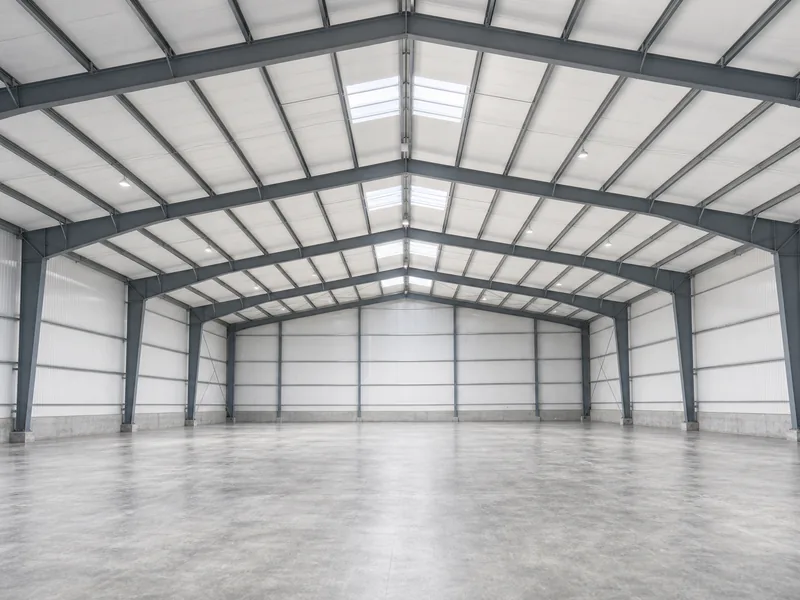
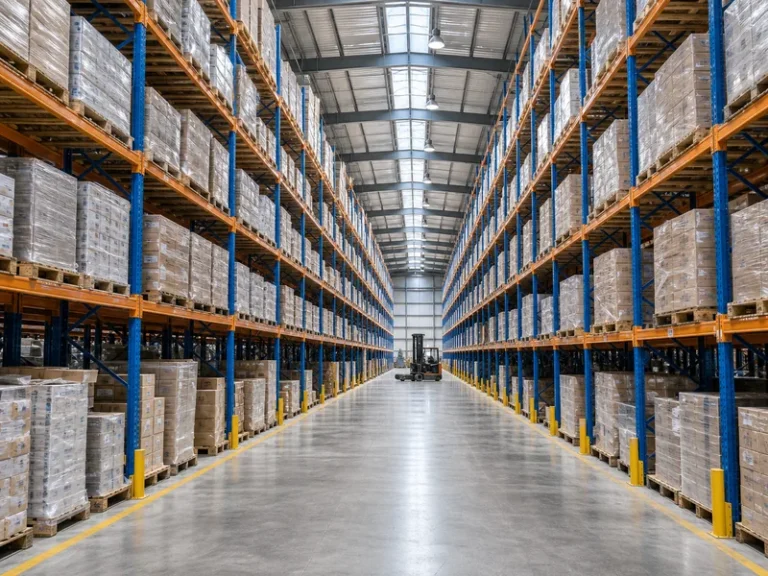
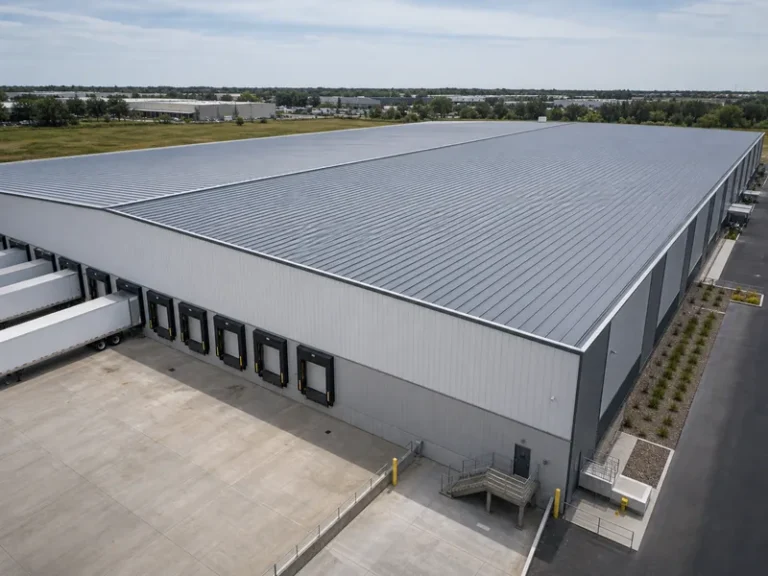
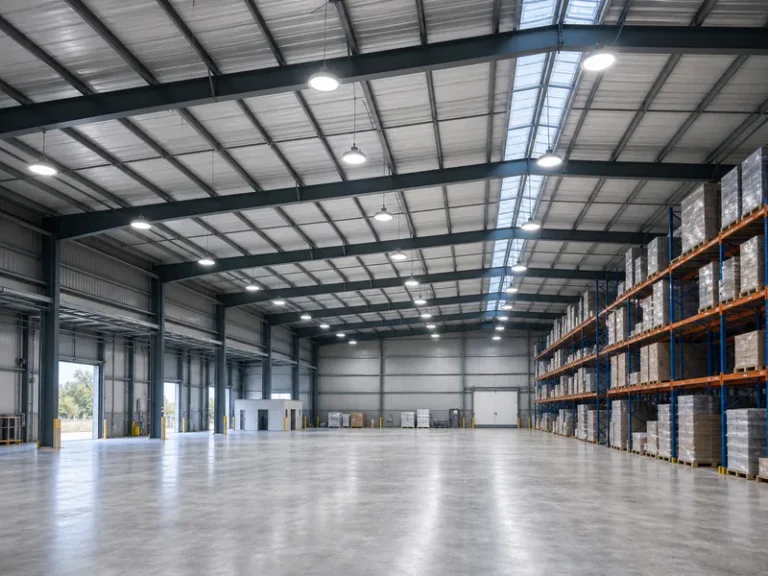
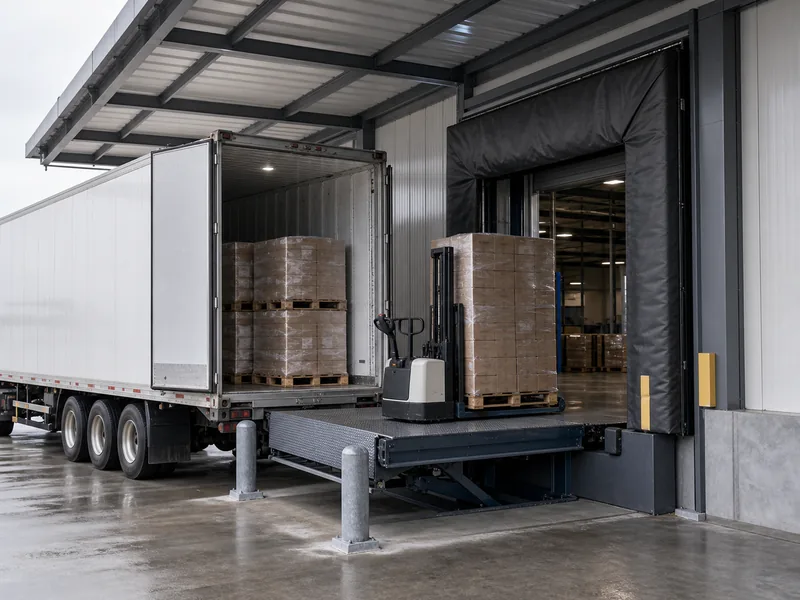
The insulated envelope is what holds a temperature zone steady and keeps refrigeration energy from leaking away, so insulation quality and panel detailing decide whether a cold room runs efficiently or sweats. A clear-span, column-free interior, achievable with a rigid steel frame, lets racking and forklift aisles be laid out for clean one-directional flow from receiving to dispatch instead of being broken up by internal columns. An impervious slab with proper falls to drainage supports the wash-down hygiene above, and a sheltered loading dock keeps the cold chain intact during the most exposed moment, the transfer between truck and store. The failure point insiders watch is the envelope itself: condensation and thermal bridging at panel joints and slab edges are where cold rooms actually break down, which is why detailing matters as much as the headline insulation value.
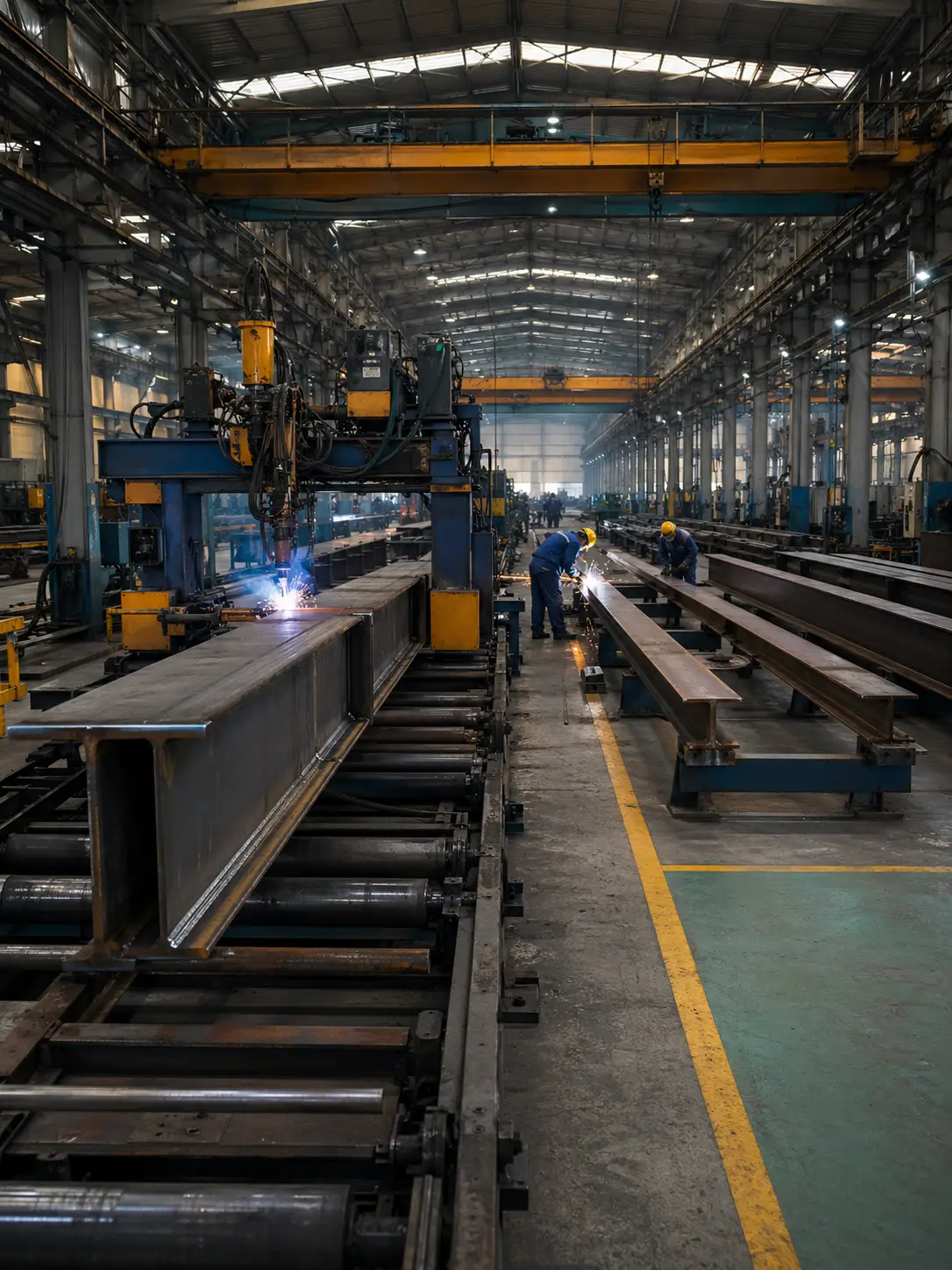
This is the part of food storage that a fabricator shapes directly. Qingdao KAFA Fabrication Co., Ltd. is a steel structure manufacturer that designs, fabricates, and installs the steel shell for warehouse buildings. Its Qingdao plant produces the H-beam frames, box sections, and C/Z purlins for that shell across a 20,000 m² facility under ISO 9001:2015 quality management. Matching that structure to a food operation, deciding clear span, eave height for racking, insulation, and dock layout, is a design exercise, and the same logic carries into dedicated refrigerated warehouse design where the envelope does even more of the work.
Getting Food Warehouse Management Right
Getting food warehouse management right is a matter of sequence, not a single fix. Lock the food safety fundamentals first: a written safety plan, defined temperature zones with monitoring on the weak points, and FEFO rotation fed by accurate receiving data. Layer traceability on top so any lot can be traced back and forward in hours, and build the hygiene and pest routine into the daily schedule rather than the audit week. Only once those are settled does it make sense to ask whether the building helps or fights them, because retrofitting insulation, drainage, or clear-span flow into an existing shell costs far more than specifying it at the start. A food warehouse runs well when the temperature zones, the lot records, and the structure all pull in the same direction. That alignment, not any single piece of equipment, is the difference between a facility that passes audits and one that sits one excursion away from a recall.
FAQ
What is food-grade warehousing?
Food-grade warehousing is storage in a facility built, equipped, and documented specifically to hold food safely, as opposed to a general warehouse that merely has food in it. The distinction shows up in washable surfaces, temperature control, pest exclusion, and the records needed to prove all of it during an audit. A space without those properties can store packaged shelf-stable goods but should not handle perishable or exposed food.
What temperature should a food warehouse be?
Food warehouse temperature depends on the product, so most facilities run several zones rather than one set point. Frozen goods are commonly held around 0°F (−18°C) or below, refrigerated and chilled items roughly 32–40°F (0–4°C), and dry storage often 50–70°F (10–21°C) with humidity kept in check. The governing number is always the buyer’s or product’s own specification, and the real task is preventing drift at docks and doorways rather than hitting an average.
FIFO or FEFO — which is better for food?
FEFO is usually the safer rotation method for food because it ships the soonest-to-expire stock first, even when that stock arrived more recently. FIFO is simpler and works for goods with uniform, predictable shelf lives, but it can strand short-dated perishables behind older inventory. The deciding factor is whether incoming deliveries can carry earlier expiry dates than existing stock; when they can, FEFO is the correct default.
Does FSMA 204 apply to food warehouses?
FSMA 204 applies to warehouses that hold foods on the FDA’s Food Traceability List, such as certain cheeses, shell eggs, fresh produce, and seafood. It requires enhanced records that let a specific lot be traced one step back and one step forward through the supply chain. The compliance date has been extended, and the FDA’s current compliance date is July 20, 2028, but the recordkeeping discipline it describes is already standard practice for warehouses that take recall readiness seriously.
What makes a building suitable for food storage?
A building suits food storage when its shell can hold temperature, stay clean, and route product without obstruction. In practice that means an insulated envelope sized for the required zones, an impervious slab with drainage for wash-down, a clear-span interior for efficient racking and forklift flow, and a sheltered dock that protects the cold chain during loading. Weak detailing at insulation joints or slab edges undermines all of it, so construction quality is part of food safety, not separate from it.
Further Reading
- OSHA: Warehousing — U.S. Occupational Safety and Health Administration. Covers safe handling, powered industrial trucks, and refrigerated-goods work that food warehouse teams face daily.
- CDC: Food Safety Basics — U.S. Centers for Disease Control and Prevention. Outlines contamination sources and storage practices that sit behind the controls in this guide.
- WHO: Food Safety — World Health Organization. Summarizes core safe food-handling practices through the WHO Five Keys to Safer Food framework.