




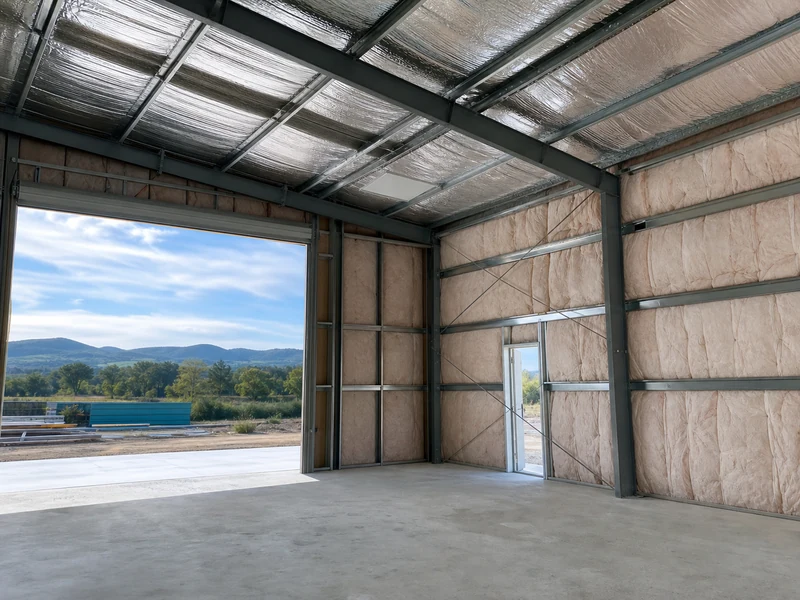
The cheapest way to insulate a metal building is a reflective foil radiant barrier or a single layer of faced fiberglass blanket. Installed, those run about $0.15 to $1.00 per square foot of covered surface. From there, cost climbs through foil bubble wrap, rigid foam board, and blown-in fill, with closed-cell spray foam at the top near $1.50 to $3.50 per square foot. Naming the lowest sticker price is the easy part. The harder question — and the one that decides whether insulation for metal buildings actually saves money — is which option stays cheap after condensation, heating bills, and re-dos are added up. This guide ranks the common methods from least to most expensive, then shows where the bottom of the list turns into the wrong buy.
Metal Building Insulation Costs, Cheapest to Most Expensive
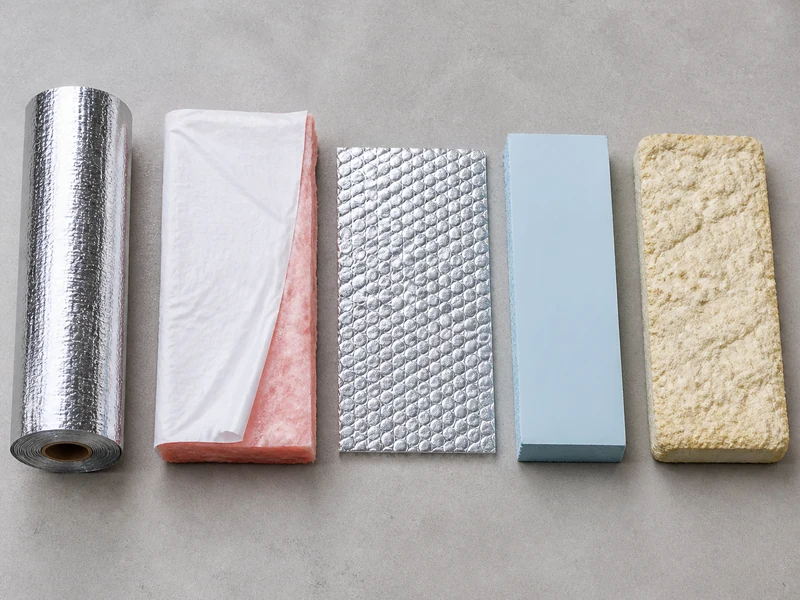
Installed cost for metal building insulation runs from roughly $0.15 per square foot for a reflective radiant barrier to $3.50 for closed-cell spray foam, and the order holds even as regional labor rates move. The table below covers material plus basic installation, with the R-value and the main trade-off for each method.
| Method | Typical installed cost ($/sq ft) | Approx. R-value | Best fit and main caveat |
|---|---|---|---|
| Reflective foil / radiant barrier | $0.15–$0.50 | Radiant only, about R-1 | Hot, sunny climates; little help against winter heat loss |
| Faced fiberglass blanket, single layer | $0.50–$1.00 | R-2.9–3.8 per inch | The usual budget pick; the facing controls condensation |
| Foil bubble (double bubble) | $0.50–$1.50 | R-1.0–1.3 | Thin; works as a layer, not as your only insulation |
| Rigid foam board | $0.70–$1.25 | R-4–8 per inch | High R per inch, but more cutting and sealing labor |
| Blown-in / loose-fill | $0.50–$1.50 | R-2.2–3.8 per inch | Ceilings and dropped attics only; needs a surface to hold it |
| Closed-cell spray foam | $1.50–$3.50 | R-6–8 per inch | Highest R and an air seal in one step; usually a pro-only job |
What those numbers include and leave out matters as much as the ranges themselves. The prices cover material plus a basic install over wall or roof panels. They do not include the facing or vapor-retarder upgrade, tape and fasteners (budget another 10 to 15 percent), structural prep, or the labor premium for a finished interior. Higher R-value targets push every row toward its top end — a thick fiberglass blanket or a polyiso board rated near R-20 can land well above the figures here.
Closed-cell spray foam sits at the bottom of the list for a reason: it doubles as an air and vapor seal, so it solves problems the cheaper layers leave open. That bundled performance is also why a spray foam insulation job costs three to ten times a fiberglass blanket per square foot. On a tight budget, it is the upgrade you reach for in one bay or a climate-controlled room, not the default for the whole shell.
Why the Cheapest Insulation Can Cost You More
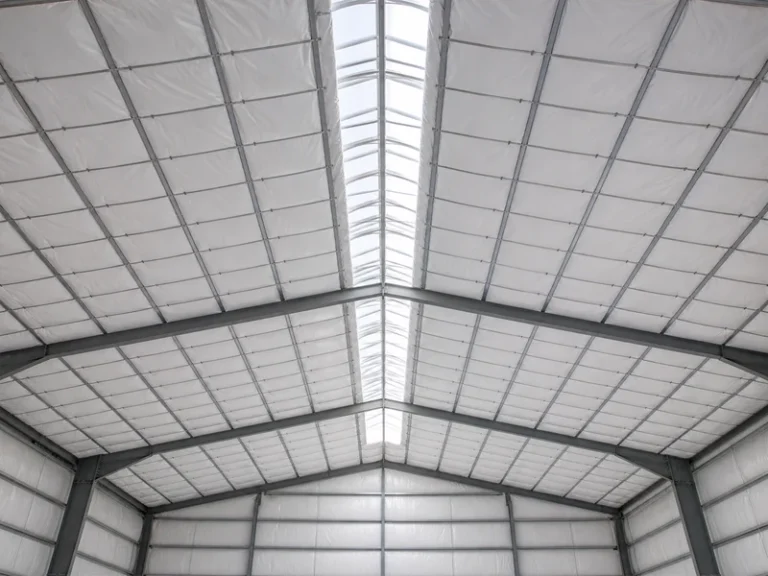
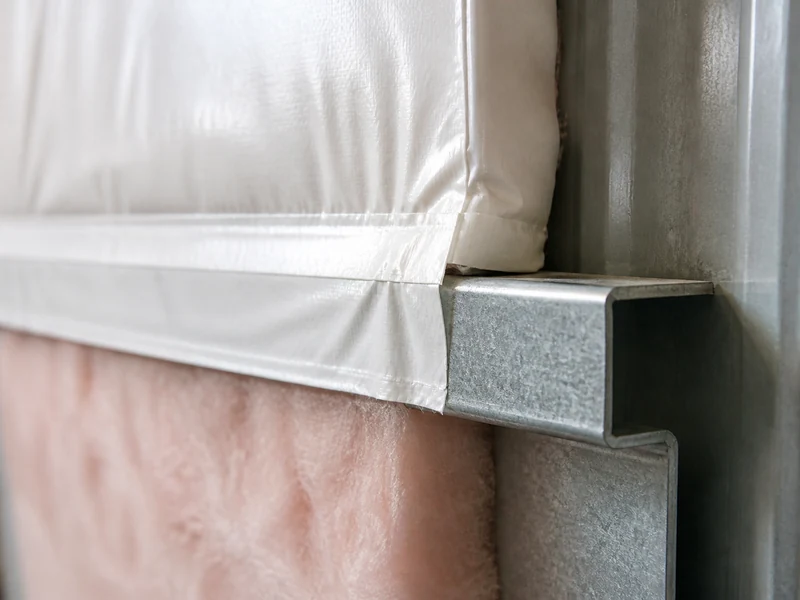
A bare fiberglass batt or a thin bubble wrap is the fastest way to turn a metal building into a condensation trap. When warm, humid indoor air reaches a cold steel panel, it condenses, and an exposed batt with no facing lets that moisture soak straight into the insulation. Wet fiberglass loses much of its R-value and can stay damp long enough to corrode fasteners and panels.
A faced blanket does the job the bare batt cannot: it keeps that moisture out of the insulation and off the steel. That makes the facing on a blanket, or a separate metal building vapor barrier, the one place a budget job should not get cheaper. Skip it, and moisture moves straight into the insulation instead of staying out. Foil and rigid board need the same attention paid to sealed seams, since their performance also depends on a continuous moisture and air layer.
The other hidden cost is under-insulating. An R-6 reflective layer in a cold climate still counts as insulation, but it will not hold heat the way the space needs. The saving shows up once on the invoice, then disappears on every monthly energy bill. Match the R-value of insulation to your climate zone instead of to the lowest price; under-spec insulation is the kind of saving that reverses itself within a heating season or two. Redoing a botched job is the most expensive insulation of all, because pulling out wet batts and re-sealing panels costs more than doing it once at the right spec.
What Actually Drives Your Insulation Bill
Your total insulation bill is set less by the material you pick than by how much surface you cover and how high you take the R-value. Four variables move the number more than the choice between products.
Covered surface, not floor area, sets the quantity. A 40-by-60 shop has 2,400 square feet of floor but close to 5,000 square feet of wall and roof to insulate. At $0.50 to $1.00 per square foot for a faced fiberglass blanket, that surface lands around $2,500 to $5,000 — and the same building done in spray foam can multiply that several times over. Estimating from the footprint instead of the covered surface is how budgets come in short.
Climate zone sets the target. The colder the zone, the higher the R-value the building needs, and higher R means more material or a thicker product in every row of the table above. A radiant barrier that pencils out in Arizona will not carry a building through a Minnesota winter on its own.
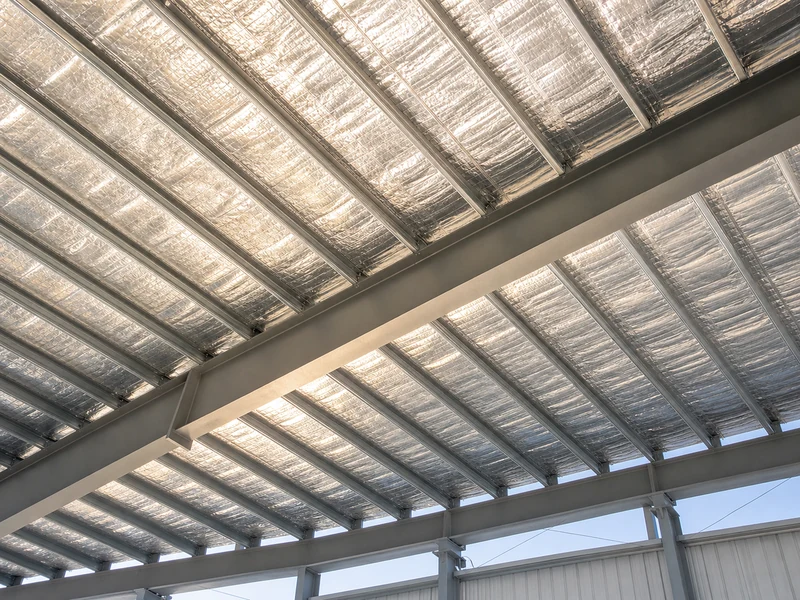
Labor is the swing factor. Reflective foil and faced blankets are genuinely DIY-friendly on a single-story building, which can cut installed cost close to half. Spray foam, and to a lesser degree rigid board, reward a professional crew, so their real-world price carries labor you cannot easily strip out.
Access decides retrofit cost. Insulating during the build, before interior walls and utilities go in, is markedly cheaper than retrofitting a finished, occupied building where crews work around equipment and existing cladding.
Where to Save and Where Not to Cut
The cheapest defensible job spends on air sealing and the right R-value, and saves on labor and finish. Splitting the budget along that line keeps the low cost without buying a problem.
Save on the work you can do yourself. Reflective foil and faced fiberglass blanket go up with hand tools, and a careful DIY install on walls and a single-slope roof removes most of the labor line. Save on sequence, too — insulating the roof first captures the largest share of heat movement before you spend on the walls, which matters if the budget only stretches to one surface this year.
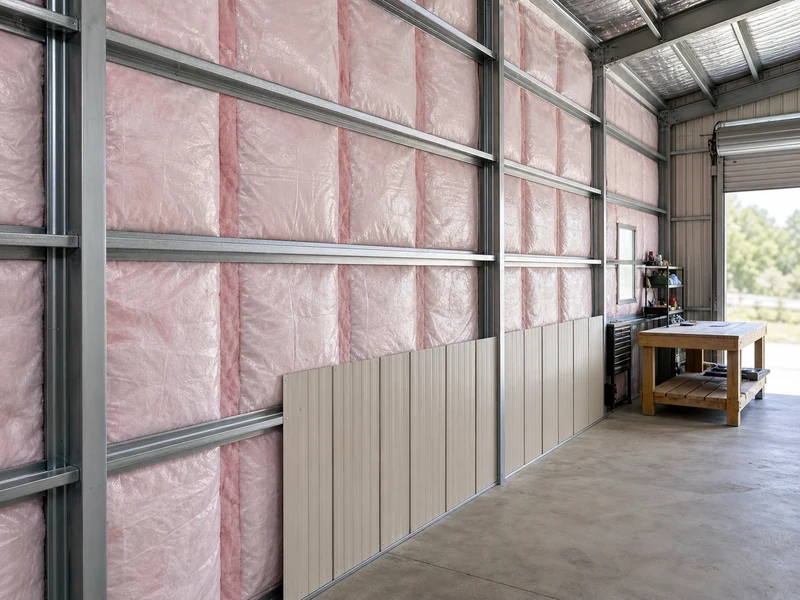
Do not save on air sealing or vapor control. The seams, fasteners, and facing keep the cheap insulation dry and working; skipping them is the shortcut that leads straight back to the condensation problem above. Do not under-spec for the climate either, and do not spread spray foam across a whole shell because one bay needs it. A heated metal workshop or a climate-controlled office area can justify closed-cell foam where it pays back; an unheated storage garage rarely does. Matching the spend to how each part of the space is actually used keeps the cheapest option from becoming a false economy.
Conclusion
The cheapest insulation that actually works starts with three numbers, locked before you compare any products: your covered surface area, your climate’s target R-value, and whether you or a crew will handle the install. Those decide the size of the job far more than the material does.
With them set, the ranking does the rest. In hot, dry regions a reflective radiant barrier is the genuine low-cost answer. Almost everywhere else, a faced fiberglass blanket is the cheapest option that still controls condensation and holds an R-value worth keeping. Reach past them — to rigid board or closed-cell foam — only where a specific room, climate, or moisture problem makes the extra dollars per square foot pay back.
For a building that has not gone up yet, the lowest-cost path is usually to specify insulation as part of the structure rather than add it later. As a steel building manufacturer, KAFA designs and fabricates metal buildings with the insulation method planned in from the start. That sidesteps the retrofit access premium and the redo risk that catch budget jobs after the fact. If a new build is on the table, request a quote with your climate zone and intended use noted, so the R-value and insulation method are priced in rather than guessed at later.
FAQ
What is the cheapest way to insulate a metal building?
A reflective foil radiant barrier is the cheapest option by sticker price, at about $0.15 to $0.50 per square foot, followed closely by a single layer of faced fiberglass blanket. The radiant barrier only earns that price in hot, sunny climates, so in most regions the faced blanket is the cheapest choice that also controls condensation.
Is reflective foil or fiberglass cheaper for a metal building?
Reflective foil is cheaper per square foot, but it does a different job. Foil blocks radiant heat and adds almost no bulk R-value, so it works best in cooling-dominated climates, while a fiberglass blanket adds the R-value cold weather needs. In a mixed or cold climate, the slightly pricier fiberglass is usually the better value because foil alone leaves the building under-insulated.
Is it worth insulating an unheated metal garage?
Insulating an unheated garage pays off mainly through condensation and noise control rather than temperature. Even with no heat, a faced blanket or radiant barrier keeps the steel from sweating onto tools and vehicles and cuts the drumming of rain on the roof. If the space will never be heated or cooled, the lowest-R faced option is usually enough.
Do I still need a vapor barrier with cheap insulation?
Yes — a vapor retarder or facing keeps cheap insulation safe to use on steel. Bare batts with no facing let indoor moisture condense inside the insulation and on the panels, a common way budget jobs fail. A faced blanket includes that layer already; with foil or board, plan to seal the seams and add vapor control separately.
Is DIY metal building insulation cheaper than hiring a pro?
DIY is clearly cheaper for reflective foil and faced fiberglass blanket, which install with hand tools and can roughly halve the installed cost. Rigid board takes more skill to cut and seal, and spray foam needs professional equipment, so the DIY saving shrinks or disappears as you move down the cost table. Match the install method to the product rather than forcing a DIY job onto a material that fights it.
Further Reading
- Types of Insulation — U.S. Department of Energy — DOE Energy Saver. Covers each insulation type and how installable it is for a homeowner versus a contractor, the difficulty side of the cost ranking above.
- Radiant Barriers — U.S. Department of Energy — DOE Energy Saver. Explains why a reflective barrier, the cheapest option here, only pays off in hot climates and not as a building’s only insulation.
- Recommended Home Insulation R-Values — ENERGY STAR — ENERGY STAR. Recommended R-values by climate zone, useful for setting the target before choosing the cheapest method that meets it.