




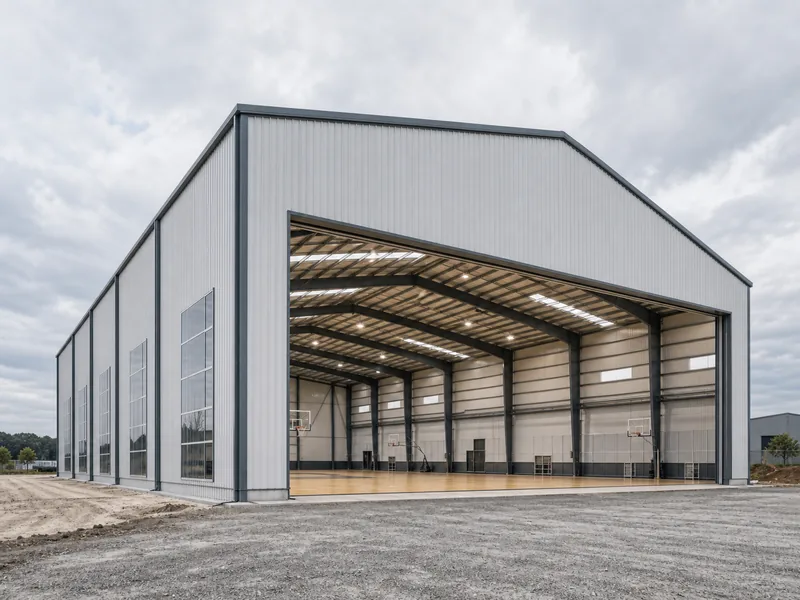
A gymnasium generally costs between $50 and $300 per square foot to build, but the number only means something after the scope is named. A bare steel shell, a turnkey court-ready building, and a fully equipped all-in project can all describe the same 20,000-square-foot gym and still differ by several times in total cost. The budget has to separate construction scope from operating expenses, equipment, and long-term facility costs.
Most gymnasium budgets fall within the broader commercial metal buildings category once seating, restrooms, mechanical systems, and code occupancy are included.
Cost scope note: Treat the ranges below as scope-specific planning numbers. Kit or shell figures exclude the slab, site work, delivery, permits, insulation, utilities, and interior finish unless the line item says otherwise. Heavy loads, poor soil, tight access, and custom openings can move a quote above the base band.
Price per Square Foot Starts With Scope
The per-square-foot price of a gymnasium tells you very little until you know which scope it covers. Published figures cluster around $50 to $250 per square foot for ground-up construction and climb toward $300 for a complete steel gymnasium with finished courts and full mechanical systems. The spread reflects scope. It tracks three different scopes that quotes rarely label clearly, and reading a number from the wrong scope quickly distorts the budget.
| Estimate scope | What it covers | Typical range | What it leaves out |
|---|---|---|---|
| Shell only | Steel frame, roof, and wall cladding (building envelope) | ~$15–$25 / sq ft | Foundation, interior, MEP, flooring, equipment |
| Turnkey building | Shell plus insulation, MEP, court-grade flooring, finishes | ~$50–$150 / sq ft | Land, equipment, FF&E |
| All-in budget | Turnkey plus site work, design and permits, contingency, equipment | ~$100–$300 / sq ft and up | — |
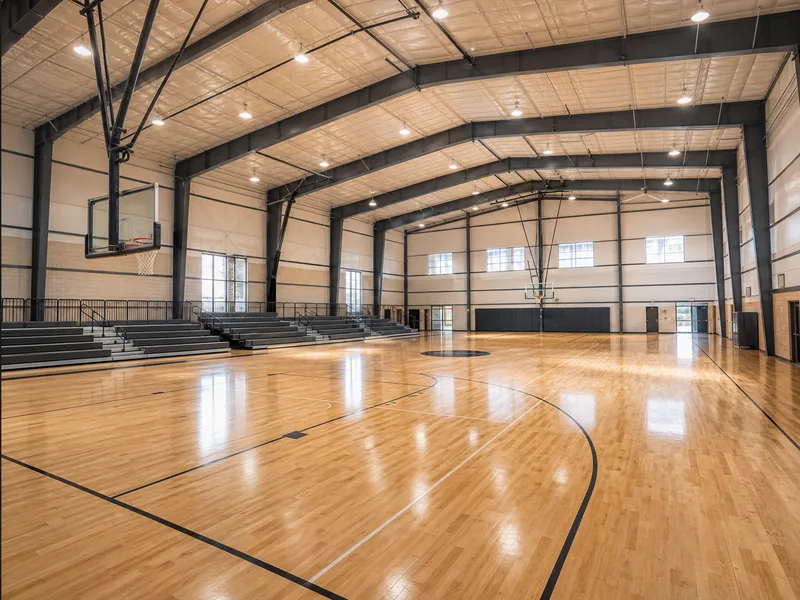
A common budgeting mistake is treating a shell quote as the whole project. Steel-shell pricing of roughly $15 to $25 per square foot is real, but it stops at the frame and envelope. Interior buildout, HVAC, and a competition floor are separate line items that together can outweigh the structure itself. Before comparing any two bids, confirm they describe the same scope, because a shell figure and an all-in figure for the identical building are not in the same conversation.
To make the scopes concrete, picture the same mid-size gym priced three ways. As a shell, the number buys the frame, roof, and walls that keep weather out. As a turnkey building, it adds the court floor, lighting, climate control, and locker-room finishes that make the space usable. As an all-in budget, it also absorbs land work, design and permit fees, and the contingency every sizable project needs. When a bid lands, three questions settle which scope you are reading: does it include the floor and the mechanical systems, does it include site work and permits, and is equipment in or out. The answers can reposition the same headline figure by a wide margin.
Cost Breakdown by Building Component
A gymnasium budget is far easier to control once it is split into the components that actually move the number. Five line items account for most of a turnkey cost, and each carries its own set of variables.
| Component | Typical range | Main variables |
|---|---|---|
| Foundation and slab | $5–$10 / sq ft | Soil, bearing capacity, leveling, frost depth |
| Steel structural shell | $15–$25 / sq ft | Frame with roof and wall cladding folded in; span, clear height, snow and wind load |
| Roof and wall cladding | Included in shell range above | Panel type, insulation, openings; price separately only if a quote is frame-only |
| Flooring | $5–$25 / sq ft basic; $50+ / sq ft competition hardwood | Surface grade, sport use |
| Mechanical, electrical, plumbing | $15–$30 / sq ft combined | HVAC load, lighting, locker and restroom count |
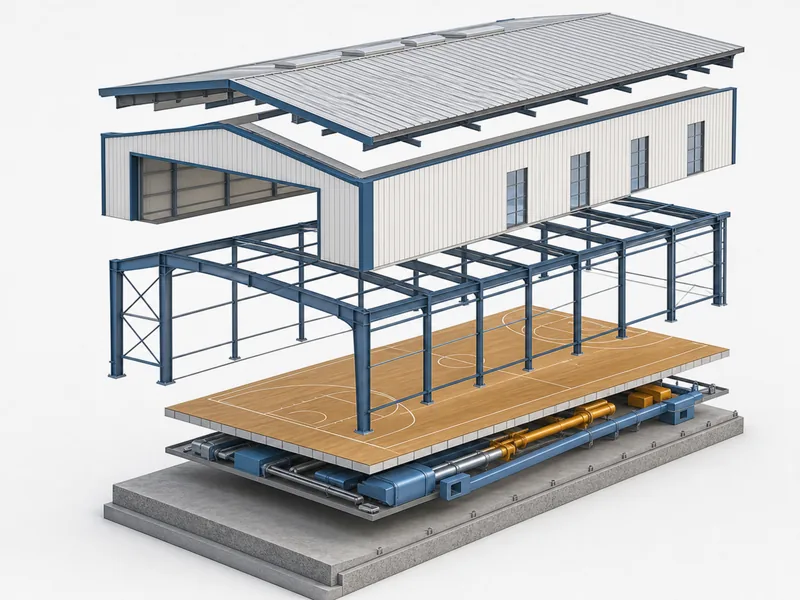
Two figures in any breakdown deserve extra caution. Plumbing swings widely with the number of locker rooms, showers, and restrooms and the distance the runs have to travel, so a single per-square-foot number rarely holds across projects. Framing cost moves with span and clear height instead of floor area alone, which is why two gyms of equal footprint can carry very different steel bills. When a breakdown gives you one tidy rate for either item, treat it as a placeholder until the design is firm. The cladding and insulation package can multiply the mechanical cost because the envelope sets how hard the HVAC system works for the life of the building.
How Size, Span, and Ceiling Height Drive the Price
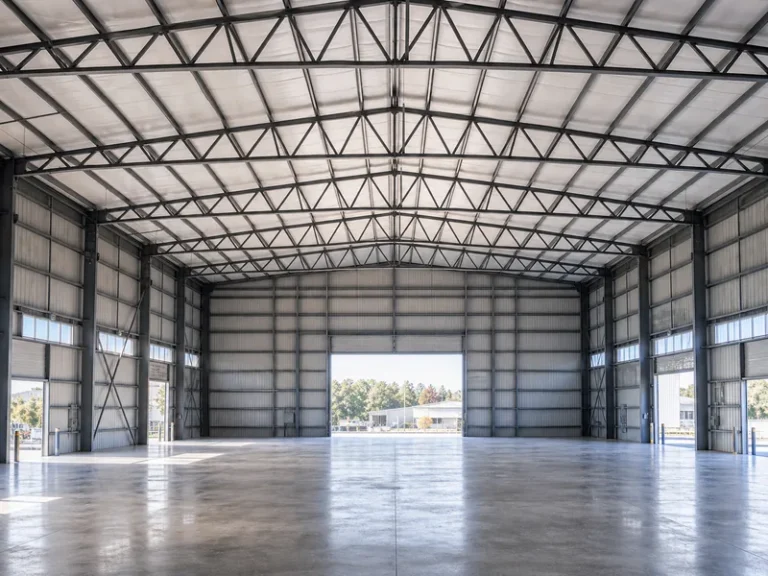
Size raises a gymnasium’s cost in two ways at once: more floor area, and the longer clear spans and taller ceilings a usable court demands. A gym is not just a large shed. It needs column-free playing space and the clear height for backboards, ball flight, and spectator sightlines, and those requirements are exactly why clear span buildings are commonly the preferred structure for the court area. A column in the middle of a basketball court is usually not acceptable, so the frame has to carry the full playing width on its own.
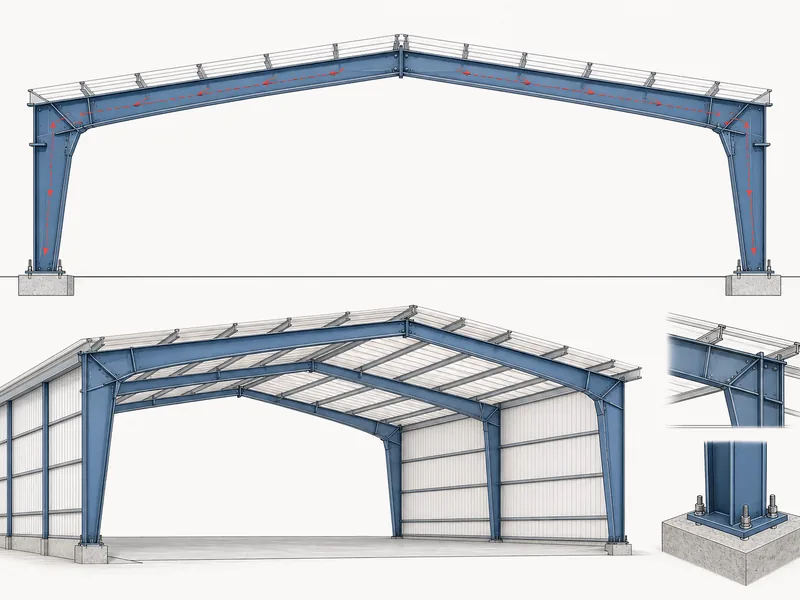
Longer spans and greater clear height increase the steel tonnage and the section sizes carrying the roof, so the frame’s cost per square foot tends to rise as the column-free width grows. That structural relationship is covered in more depth under clearspan building cost. For budgeting, the practical takeaway is that a wide, tall gym frame costs more per square foot than a low, narrow warehouse of the same area. Footprint still matters, and comparing options by metal building sizes helps anchor an early estimate before engineering begins.
Before pricing a gym, a few planning questions move the number more than any single rate:
| Planning question | Why it changes cost | What to verify before a bid |
|---|---|---|
| What clear span and width does the sport need? | Wider column-free spans raise steel tonnage and section sizes | Court layout and sightline requirements |
| How much clear height under the structure? | Taller frames and larger air volume raise both steel and HVAC cost | Backboard, ball-flight, and clearance specs |
| Is the floor basic or competition grade? | Surfaces range from utility rubber to competition hardwood | Sport and level of play |
| Shell, turnkey, or all-in scope? | Each scope can move the same building by several times | Exactly what the bid includes |
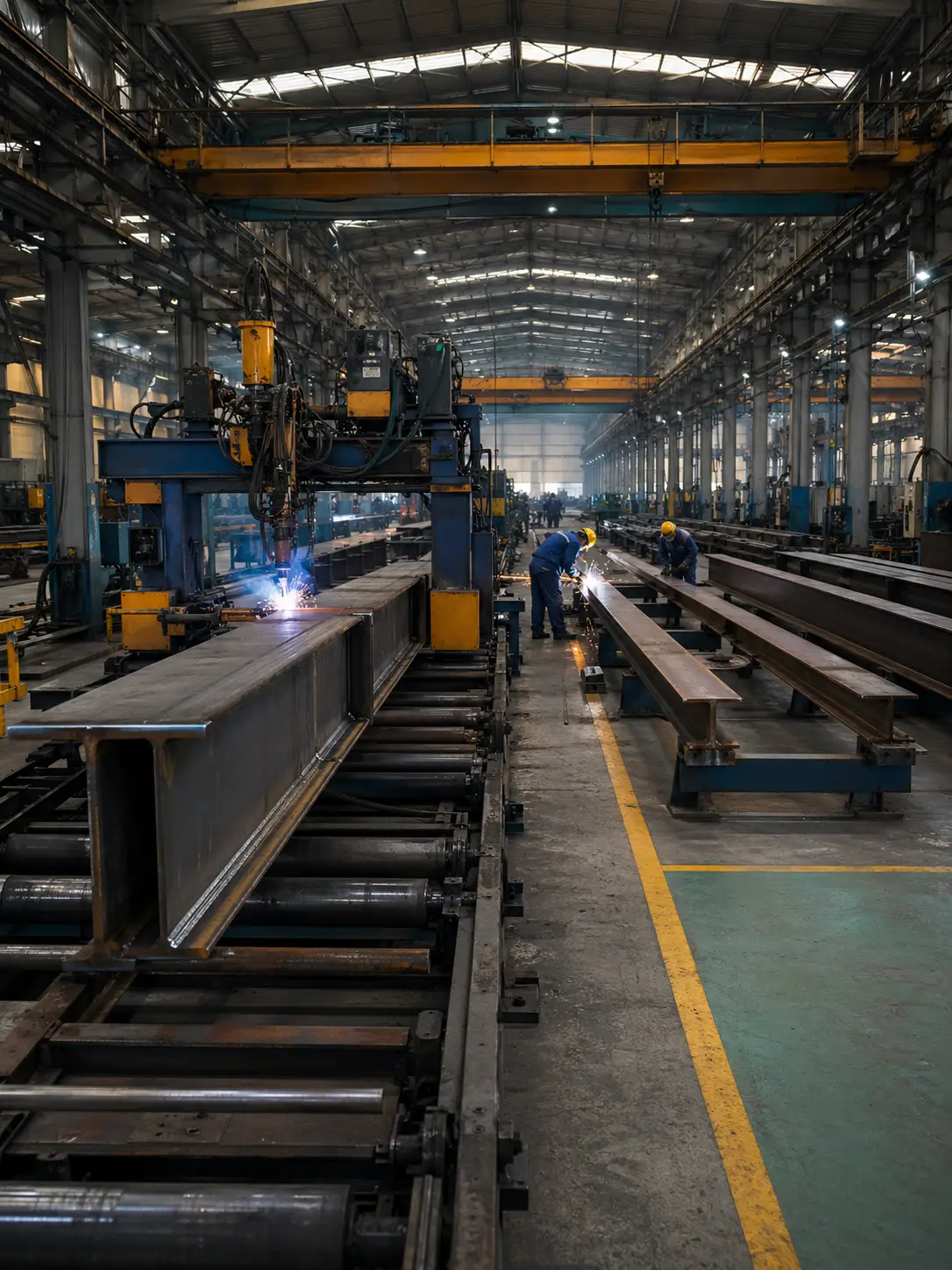
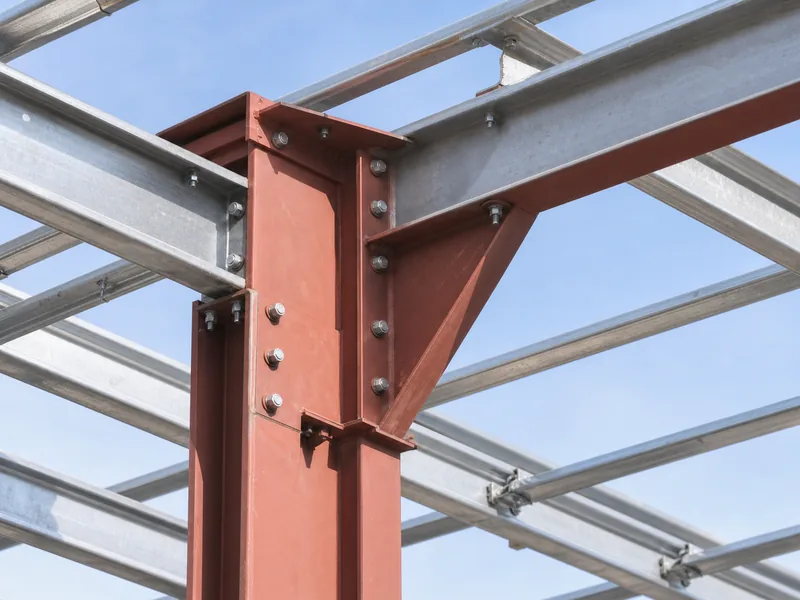
As a rough order of magnitude, small gyms near 5,000 square feet may land in the high six figures once finished, while a 10,000- to 20,000-square-foot facility can run into the low-to-mid millions for a turnkey build. Treat these as rough planning ranges, not quotes; the same footprint can differ by several times depending on finish level and whether site work and equipment are included. From a fabrication standpoint, the frame that carries those spans is usually built from H-section columns and beams, with C- or Z-section purlins spanning the roof. The heavier the load path, the larger those sections grow. A manufacturer such as KAFA engineers the steel frame to the span, clear height, and snow and wind load set by the project. That is why a credible frame price follows the engineering instead of a flat per-foot rate.
Hidden and Often-Overlooked Gymnasium Costs
The costs that break a gymnasium budget are usually the ones missing from the first estimate. Beyond the building itself, several items appear late and inflate the total:
- Site work and utilities often run 10 to 20 percent of total project cost, and more on sloped or poorly drained lots.
- Design, engineering, and permit fees typically add roughly 8 to 15 percent on top of construction.
- A contingency reserve of 10 to 15 percent absorbs change orders and material price swings.
- Mechanical scope, especially HVAC and electrical for a high-volume space, is easy to underestimate.
- Ancillary spaces such as locker rooms, restrooms, and storage carry their own structural, plumbing, and finish costs.
Mechanical scope deserves a second look because a gymnasium is a large, tall air volume, and heating, cooling, and ventilating it is not proportional to the modest floor area a quick estimate assumes. Steel pricing itself also moves with the market, so a frame quote carries a shelf life, and a bid held for several months may not survive a swing in steel cost. Building these items in early, alongside compliance with local building codes and permits, helps keep an early budget aligned with the eventual bid scope.
Steel vs. Brick or Concrete for a Gymnasium
For most gymnasiums, the structure decision depends on cost, schedule, and span instead of appearance. Across published cost comparisons, a steel-framed gym generally lands slightly below an equivalent brick or masonry build on total cost, and steel often compares favorably where the long clear spans of a court are involved. The figures vary by region and design, so the direction of the difference is more reliable than any exact dollar gap.
Steel’s advantage is concentrated where gyms are most demanding. Clear-span steel frames cross wide playing areas without interior columns and erect faster than masonry, which can shorten the construction schedule and may reduce schedule-related carrying costs, depending on how the project is financed. Masonry or concrete can still make sense where a client prioritizes a particular exterior, added mass for acoustics, or local code and aesthetic requirements that favor those materials. The decision is rarely about which material is better in the abstract; it is about which one clears the span, schedule, and budget for this specific gym. The same estimating logic carries over to other large assembly spaces, such as the cost to build a church with an attached fellowship hall.
Budget the Scope Before the Square Foot Rate
The hard part of a gymnasium budget is setting the variables that move the price most: the size, span, and clear-height combination that sets the steel frame; the flooring grade the sport requires; and whether the number is shell, turnkey, or all-in. Set the estimate scope first, because a shell and an all-in budget for the same building can differ by several times and make otherwise sound quotes look incomparable.
From there, settle the clear span and clear height the sport demands, decide the floor grade, then add site work, design, permits, and a contingency before treating any total as real. As a steel structure manufacturer with in-house design, fabrication, and installation qualifications, a metal building company such as KAFA can support the structural-shell scope and fabrication based on a project’s span, height, and load requirements under documented quality procedures. Settling that frame scope early gives you a firmer figure for the part of the budget that drives much of the rest. Once the frame scope is clear, the remaining gymnasium costs are easier to compare and control.
FAQ
How much does it cost to build a gymnasium per square foot?
Gymnasium construction generally runs $50 to $300 per square foot, with the exact figure set by scope. A bare steel shell sits near the bottom of that range, while a turnkey facility with court flooring, HVAC, and finishes sits near the top. Always confirm what a per-square-foot number includes before you build a budget around it.
What is the difference between shell cost and turnkey cost?
Shell cost covers only the steel frame, roof, and wall cladding, typically around $15 to $25 per square foot, with the foundation and slab handled as a separate line item. Turnkey cost adds insulation, mechanical and electrical systems, court-grade flooring, and interior finishes, which commonly pushes the figure to $50 per square foot or more. Comparing a shell bid against a turnkey bid is a common gymnasium budgeting error.
Is a steel gymnasium cheaper than brick or concrete?
A steel-framed gymnasium usually lands slightly below an equivalent brick or concrete build on total cost, and it often compares well where the long clear spans of a court are involved. Steel also erects faster, which can shorten the construction schedule. Masonry can still be preferred for specific exterior, acoustic, or code-driven reasons.
Roughly what does a 10,000-square-foot gym cost to build?
A 10,000-square-foot gymnasium can fall in the low millions for a turnkey build, though the figure shifts with finish level, ceiling height, and region. The same footprint costs far less as a shell-only structure and considerably more once site work and equipment are added. Treat it as a rough, scope-dependent planning range instead of a quote.
What costs do people often forget when budgeting a gym?
Site work, design and permit fees, and a contingency reserve are easy line items to leave out, together often adding a meaningful share on top of bare construction. Mechanical scope and ancillary spaces such as locker rooms are also commonly underestimated. Building these in early keeps the budget from drifting after the frame is priced.