




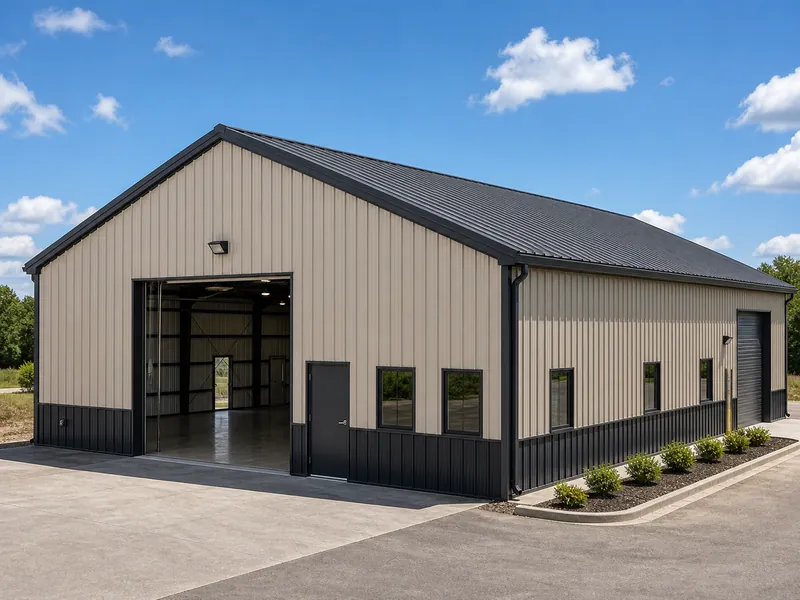
Most steel buildings ship with a roof pitch between 1:12 and 4:12, and a 1:12 low slope is the common factory default. The pitch you can actually run, though, is set by two things outside personal preference. The roof panel fixes a hard minimum slope below which the system leaks; the climate decides how much extra slope you need to clear rain and snow. Panel minimums range from about a quarter-inch of rise per foot for sealed standing seam up to 3:12 for exposed-fastener panels, and a wet or snowy site pushes the working pitch higher still. So the right pitch falls out of your panel and your weather, not a catalog number, and this guide works through both.
What Roof Pitch Means on a Steel Building
Roof pitch is the ratio of vertical rise to horizontal run, written as rise-in-inches over a fixed 12-inch run. A 4:12 pitch rises 4 inches for every 12 inches it travels horizontally, which works out to roughly 18 degrees of slope; a 1:12 pitch rises just one inch over that same foot and reads as nearly flat to the eye. The “12” never changes, so the first number alone tells you how steep the roof sits.
That single ratio drives far more than appearance. It sets how fast water and snow leave the roof, which roof panels are even permitted, how much sheeting and framing steel the building consumes, and how much usable clearance you gain under the ridge. In the trade, anything at or below 3:12 is treated as a low-slope roof and anything steeper as steep-slope. That line is not cosmetic: building codes and panel warranties change their requirements right around it.
Standard Roof Pitch Range for Steel Buildings
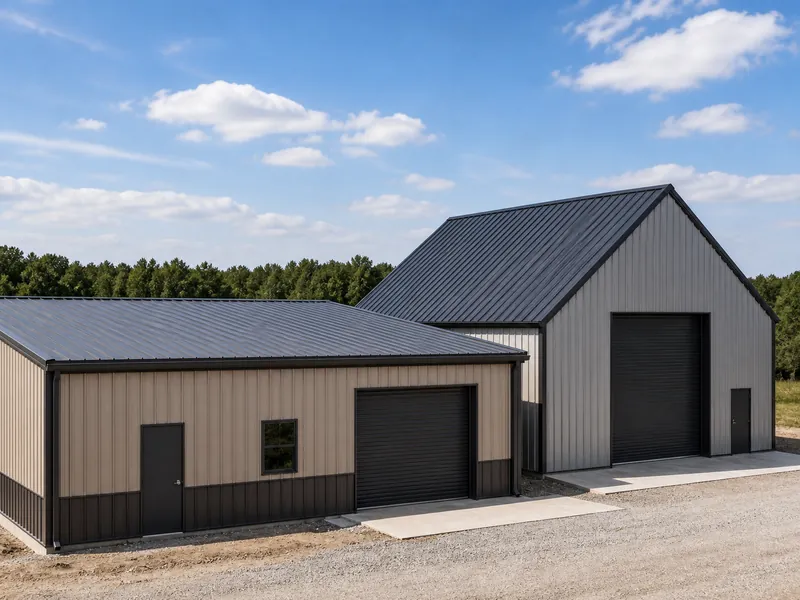
Standard steel building kits run a roof pitch of 1:12 to 4:12, with 1:12 the most common default on pre-engineered frames. A 1:12 slope uses the least roof steel and the shortest rafters, so it is the cheapest to fabricate and the easiest to heat and cool. That economy is why it dominates warehouses, workshops, and other large prefab industrial buildings, where enclosed floor area matters more than ridge height. A 2:12 pitch is the next step up and a frequent compromise when a building needs a little more shedding capacity without leaving standard framing.
Within that band, moving from 1:12 toward 4:12 lengthens the rafters and adds roof panel area, so material cost climbs gradually with slope rather than jumping. None of it requires special engineering yet. The standard range exists precisely because pre-engineered frames are designed and priced around it, and a supplier can quote any pitch inside the band off the same catalog. Costs only break pattern once you leave the band, which the custom-engineering section below covers.
Minimum Slope by Roof Panel Type
The roof panel, not the owner, sets the lowest pitch a steel building can use. Each panel profile seals differently, so each carries its own minimum slope below which water works through seams and fastener holes. The International Building Code and the residential code provisions for metal roof panels codify these floors by seam type, and manufacturer warranties generally track them.
Three panel families cover most steel buildings:
| Roof panel type | Typical minimum slope | Why it holds at that slope |
|---|---|---|
| Mechanically seamed standing seam (with in-seam sealant) | ~0.25:12 to 1:12 | Concealed clips and a folded, sealed seam keep water out almost flat |
| Snap-lock standing seam | 2:12 to 3:12 | Seams snap together without field sealant, so they need more slope |
| Exposed-fastener / through-fastened (R-panel, corrugated) | 3:12 | Lapped seams and thousands of screw penetrations are the weak points |
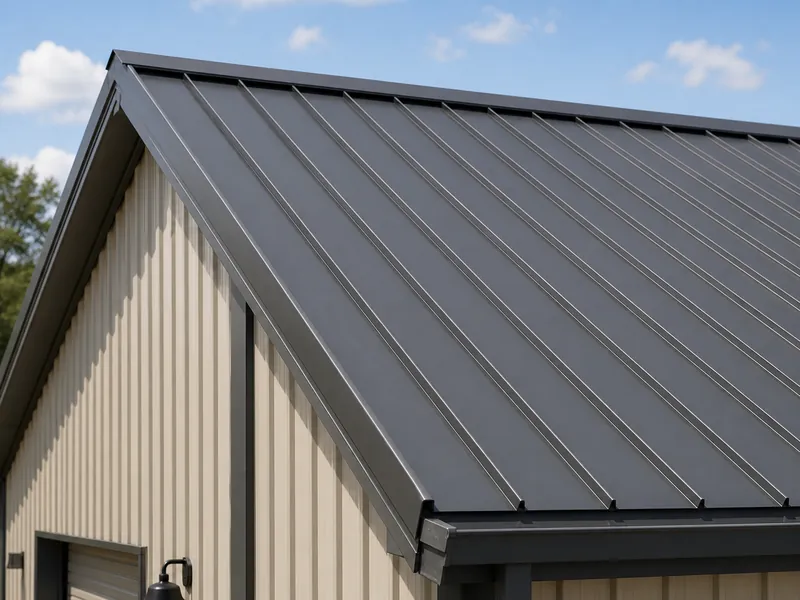
Standing seam is what lets a near-flat steel roof work. A double-lock, mechanically seamed profile with in-seam sealant can be warranted down to about a quarter-inch in 12, roughly a 2 percent slope, under the code’s standing-seam provision. Snap-lock standing seam, which has no field-applied seam sealant, generally wants 2:12 to 3:12. Exposed-fastener panels, the common ribbed and corrugated profiles that are often the cheapest of the types of metal roofs, are held to 3:12 by most warranties because every screw is a potential leak path. A few sealed exposed-fastener systems are warranted lower, but only with the right closures and sealant tape, so confirm the specific panel rather than assuming the profile.
None of these figures is an absolute floor on its own. The binding minimum is whichever is stricter: the panel manufacturer’s warranty or the building code your local authority enforces. A wet or heavy-snow site can push the usable minimum above the panel’s published figure. Go below what standing seam allows and you have left metal panels for membrane or built-up roofing, which is a different system this guide does not cover.
How Climate and Loads Push the Pitch Up
A steeper pitch sheds snow and water faster, and in heavy-snow or high-rain regions that drainage is the main reason to leave the 1:12 default behind. Water that lingers on a low slope has more time to wick under laps and around fasteners, so wet and snowy sites favor 3:12 or steeper, where runoff is quick and ponding is unlikely. Snow also adds weight: design snow loads under ASCE 7 apply a roof-slope factor that trims the accumulated load as the roof gets steeper, because a steep roof simply retains less snow. Pitch is therefore partly a structural decision, not only a drainage one.
Wind cuts the other way. A taller, steeper roof presents more surface to uplift, so the frame, anchor bolts, and connections all see higher steel building wind load as pitch increases, and the engineering has to absorb it. Steeper roofs do buy usable volume, with more clearance under the ridge for cranes, mezzanines, or stacked storage, but they cost more in rafter length, panel area, and sometimes bracing. The pitch that is “right” is the one that clears your snow and drainage demands at the lowest material and load penalty.
Roofline Shape Changes How Pitch Behaves
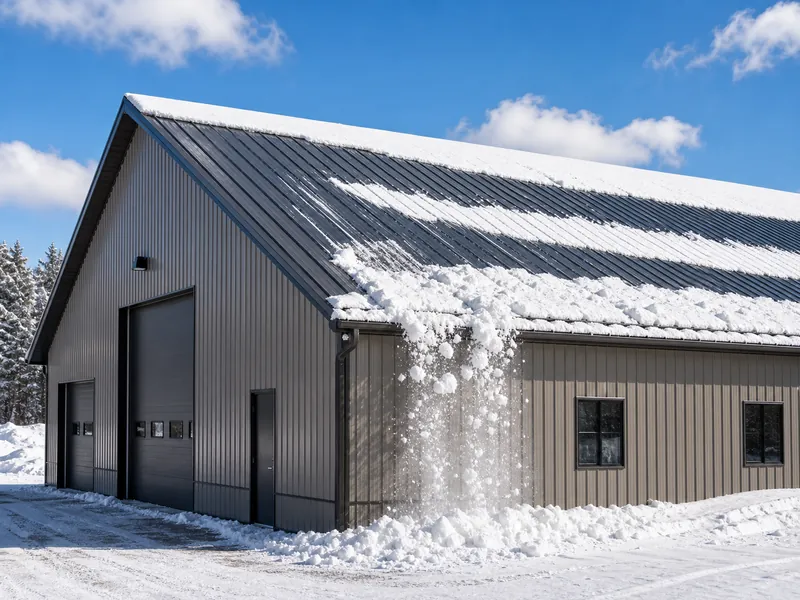
Pitch and roofline shape are separate choices that interact. A symmetric gable roof splits a single ridge into two equal slopes, so its pitch reads the same on either side. A single-slope, or mono-slope, roof runs one continuous plane from a tall wall to a short one, which suits buildings that need drainage thrown to one side or a clerestory along the high wall. Single slope steel buildings often run the same 1:12 to 3:12 band as gable frames, but the whole roof drains in one direction, so the downhill eave and its gutters carry all the runoff and must be sized for it.
Hip roofs, which slope on all four sides, generally need at least 3:12 and add framing complexity, so they are rare on industrial steel and more common where appearance drives the design. For most working steel buildings the real choice is gable versus single-slope, and pitch is then set within whichever shape sheds water where the site needs it to go.
When a Steeper Pitch Becomes Custom Engineering
Past roughly 4:12, a steel building usually stops being a standard kit. Many manufacturers cap their standard pitch around 4:12 and call for purlin bracing or strapping above it to keep the longer roof secondary framing stable. Steeper roofs, commonly up to 6:12 as a standard ceiling and steeper than that as custom work, move the roof out of the catalog and into custom steel building design with re-engineered rafters and connections. Each step adds rafter length, panel area, and engineering time, which is why a steep architectural pitch costs noticeably more than a low industrial one.
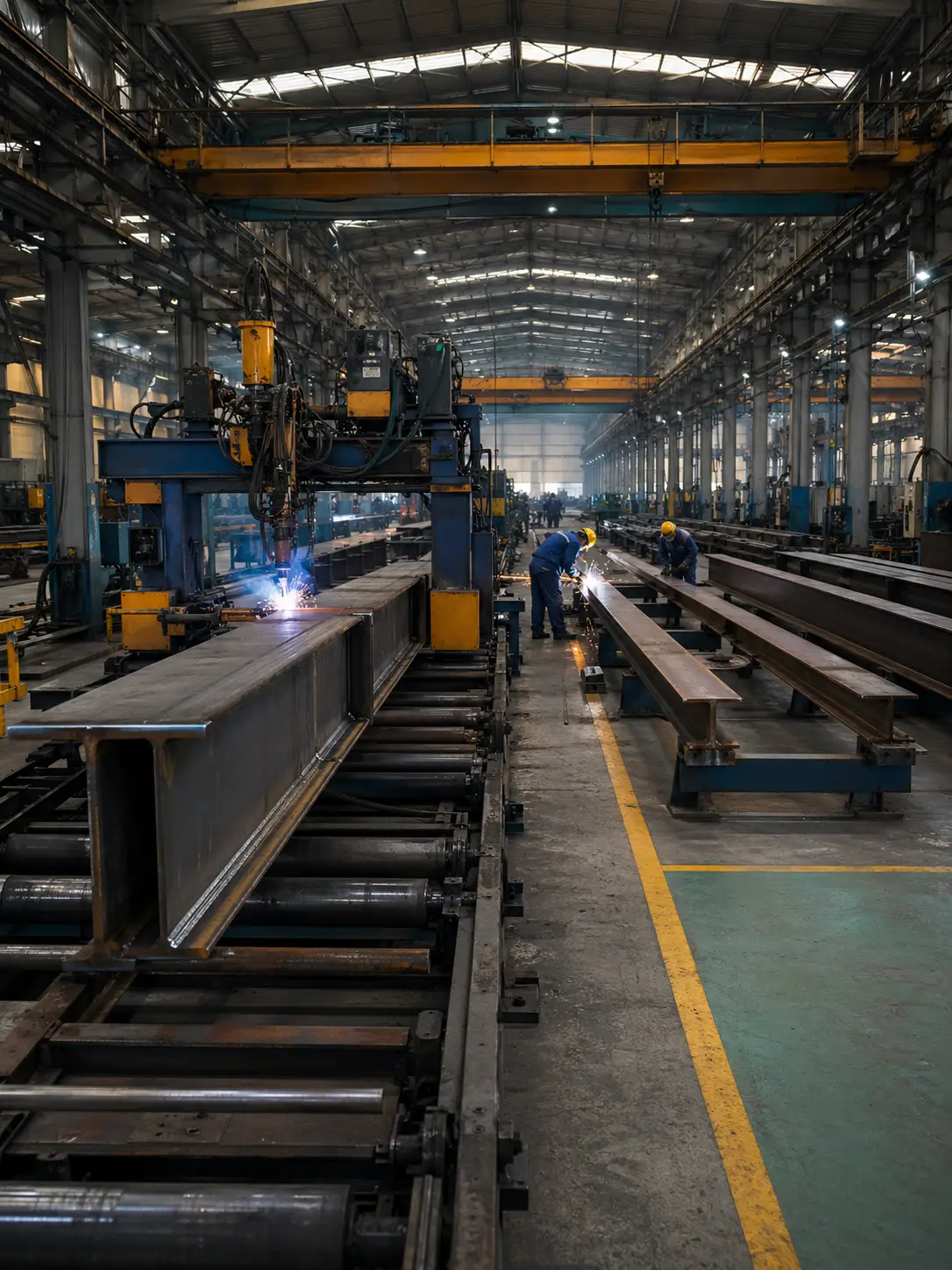
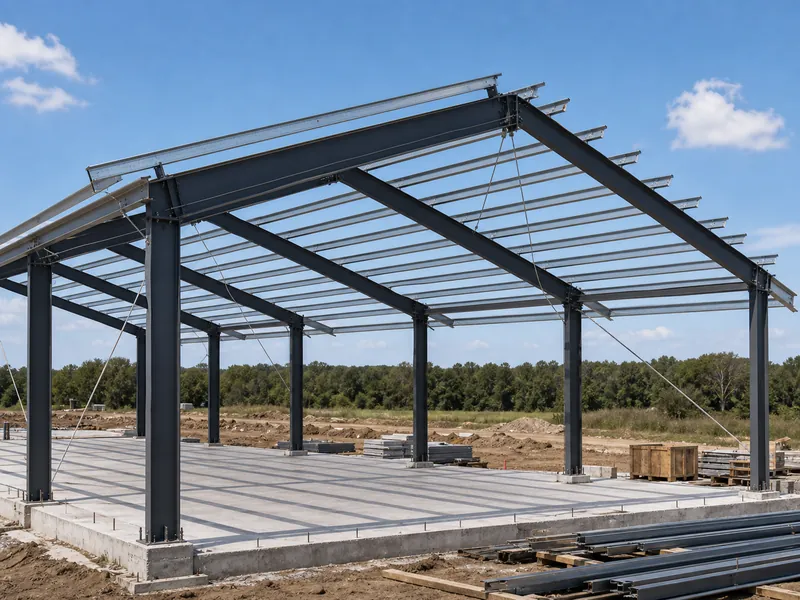
It helps to remember where pitch actually lives. It is built into the geometry of the rigid frame or rafters and then carried across the roof by the C- and Z-section purlins that the panels fasten to. Because the slope is fixed in the primary metal building components at the shop, it is a decision to settle before fabrication, not an afterthought during erection. As a manufacturer running dedicated H-beam, box-section, and C/Z purlin lines, KAFA cuts that slope into the frame and purlins to the specified pitch, so the roof plane arrives true and the panels seat without field-forcing the geometry.
Choosing the Pitch in the Right Order
Set the roof panel first, because it fixes the hard minimum every other choice has to respect. Once the panel’s floor is known, about a quarter-inch in 12 for sealed standing seam or 3:12 for exposed-fastener, layer your climate on top: enough slope to shed the snow and rain your site receives, with steeper pitches earning their cost only where drainage, snow load, or interior clearance demand it. Then place the final pitch inside the standard 1:12 to 4:12 band unless a documented snow, drainage, or architectural reason justifies paying for a custom slope. Settle it before the frame is fabricated, since the pitch is cut into the steel, and the panel-then-climate order keeps a low-slope industrial roof from being quoted on a steep-roof panel it cannot legally carry.
FAQ
What is the standard roof pitch for a steel building?
Standard steel buildings run a 1:12 to 4:12 roof pitch, and 1:12 is the usual factory default because it uses the least roof steel and the shortest rafters. Pitches inside this band need no special engineering, since the pre-engineered frame is designed and priced around it.
What is the minimum slope for a metal roof panel?
The minimum depends entirely on the panel: a mechanically seamed standing seam roof with in-seam sealant can drop to about 0.25:12, snap-lock standing seam wants 2:12 to 3:12, and exposed-fastener panels are held to 3:12 by most warranties and the building code. Running below your panel’s floor voids the warranty and invites seam and fastener leaks.
Does a steeper roof pitch cost more?
Yes. A steeper pitch lengthens rafters and adds roof panel area, and once it passes roughly 4:12 it often triggers purlin bracing or custom engineering. A 1:12 roof is the cheapest to build and to heat or cool, which is why low slopes dominate industrial steel buildings.
Is a 1:12 pitch steep enough for snow country?
A 1:12 low slope sheds slowly, so in heavy-snow regions it leans harder on the roof panel and seam sealant to stay watertight, and the frame must be designed for the larger snow load a near-flat roof retains. Many snow-region buildings step up to 3:12 or steeper so runoff is faster and the design snow load eases.
Further Reading
- International Code Council (IBC and IRC) — Publishes the building and residential codes that set minimum slope requirements for metal roof panels by seam type, the basis for the panel-by-panel floors used in this guide.
- Metal Construction Association — Industry body for metal roofing systems; its low-slope and steep-slope technical resources cover how panel profile and seam type govern the usable roof slope.
- American Society of Civil Engineers (ASCE 7) — Publishes the minimum design load standard whose roof-slope snow factor explains why a steeper pitch carries less design snow load.