




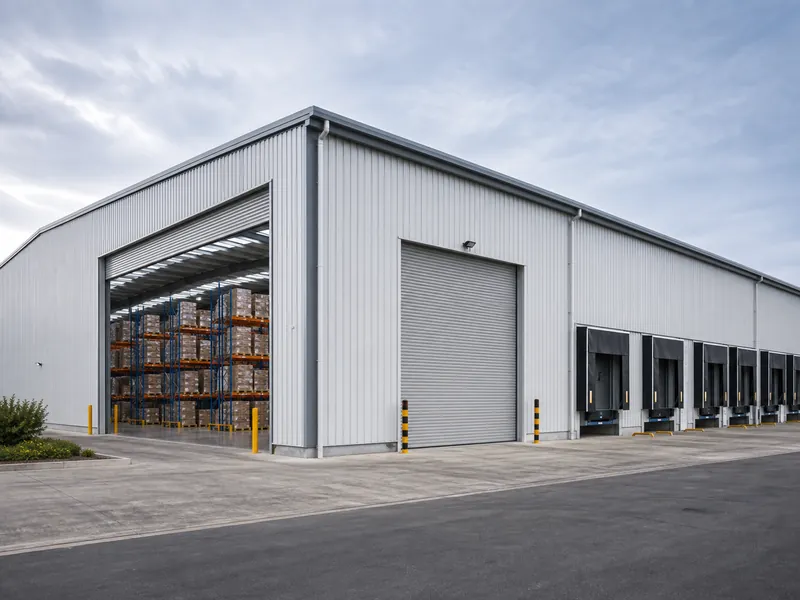
Warehouse building design is a chain of structural decisions—clear height, frame and span, column spacing, dock configuration, and load compliance—that together set how much you can store and how fast goods move through the building. Get the cube and the grid right, and a modest footprint holds far more pallets and runs a cleaner forklift cycle. Get them wrong, and you pay rent on square footage you can never fully use. Most of these choices are fixed at the structural stage, long before any racking arrives, which is why owners planning metal warehouse buildings gain the most by understanding the trade-offs before they brief an engineer.
This guide stays on the shell and structure: the decisions a fabricator and a structural engineer actually make. Internal layout appears only where it pushes back on the building, and adjacent subjects such as the process of building a warehouse, foundation detailing, and full cost estimates are linked at the points where they come up rather than reproduced here.
What Warehouse Building Design Actually Decides
Warehouse design splits into two layers that often get confused: the building envelope and structure, and the internal layout that lives inside it. The structural layer—frame, height, spans, and roof and wall cladding—fixes the volume, the clear floor, and the load paths. Layout, meaning racking lines, pick faces, and staging, gets reorganized many times over a building’s life; the steel almost never does. That asymmetry is the practical reason to spend early effort on the shell: a rack aisle can be moved next quarter, but a column line or an eave height is effectively permanent.
The useful question at this stage is not “where do the racks go” but “what envelope lets the racks change freely for the next twenty years.” Holding that frame of reference, which sits at the heart of steel building design, keeps the early decisions tied to capacity and flexibility instead of a single day-one layout.
Clear Height: Sizing the Vertical Cube
Clear height—the unobstructed distance from the finished floor to the lowest overhead obstruction, whether that is a joist, a sprinkler main, or a brace—usually has the largest single effect on storage capacity. Modern distribution and e-commerce buildings commonly target 32 to 40 ft clear, while light manufacturing and flex space often sit at 18 to 30 ft, and older stock frequently tops out near 24 to 28 ft. As a planning figure, each added foot of clear height buys roughly 7 to 10% more storage capacity, because it adds a usable beam level instead of floor area.
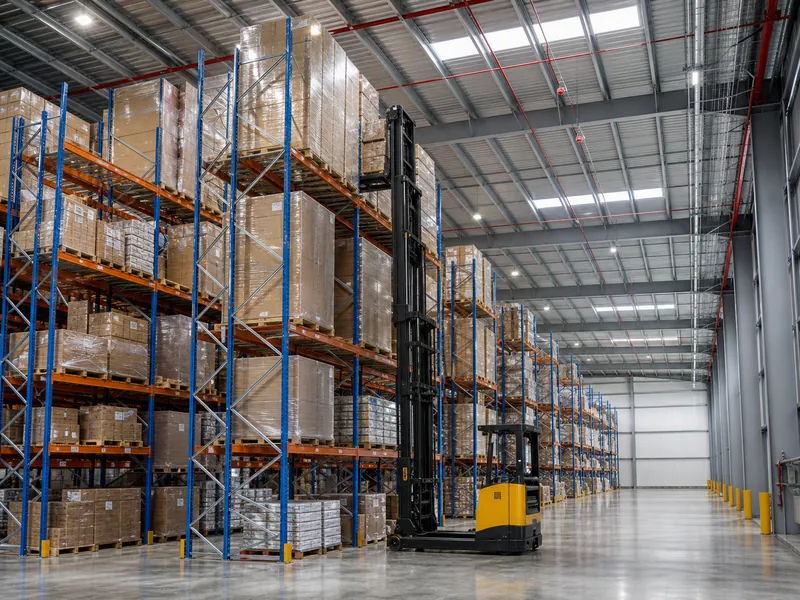
Eave height is a different number, and the gap between the two trips up a lot of buyers. Eave height is measured to the roofline at the wall; clear height subtracts the structural depth and anything hung below it. A building advertised at a tall eave can deliver a disappointing clear dimension once frame depth, bracing, and fire protection are accounted for. The figure to specify and verify is the clear one. Height is not free either, since more of it means heavier columns, larger bracing, and more cladding. Match the cube to the racking and handling equipment you intend to run, not to a theoretical maximum. The same height-driven quantities are part of why cost to build a warehouse tracks the cube as much as the footprint.
Steel Frame and Clear Span: Choosing the Structural System
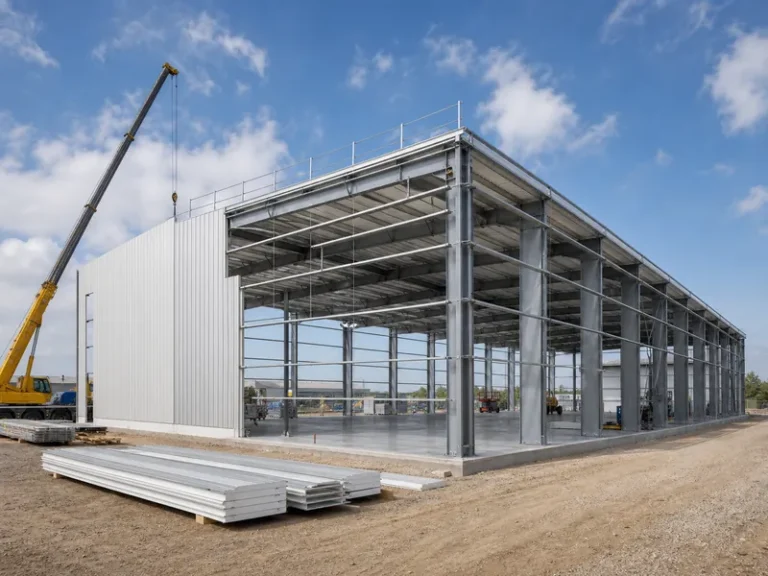
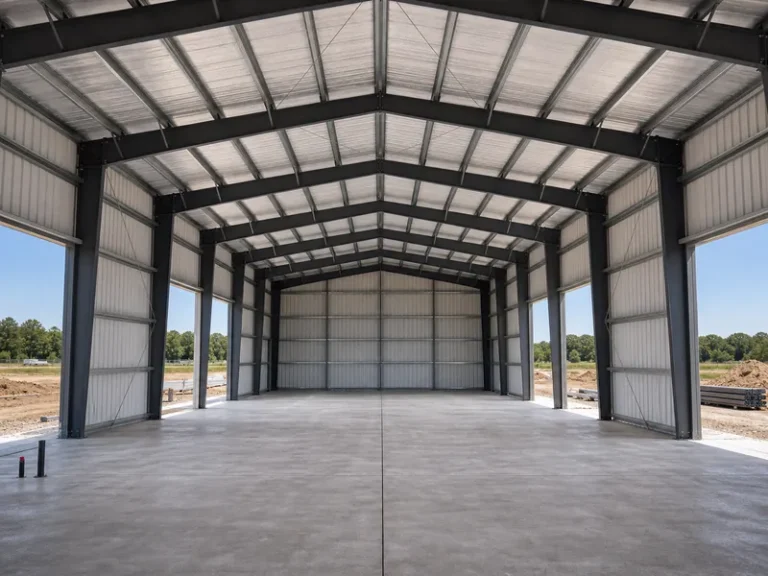
The frame type sets how much column-free floor you get and what it costs to span it. A single-span rigid (portal) frame, usually fabricated from tapered H-section members, is the economical workhorse for clear spans in the rough range of 18 to 36 m, giving a fully column-free bay that suits open storage and free forklift movement. Those figures mark a starting point, not a hard ceiling. Heavy snow or wind, collateral roof loads, a tall clear height, and the bracing scheme all move where a single span stays economical, and the local design code has the final say. To go wider, you have two routes: a multi-span portal that drops one or more interior column lines to keep the members light, or a truss roof that carries very long spans and heavy roof services but adds depth and fabrication. The question behind clear span buildings is how much obstruction-free width the operation needs, because every interior column you delete is paid back in heavier steel overhead.
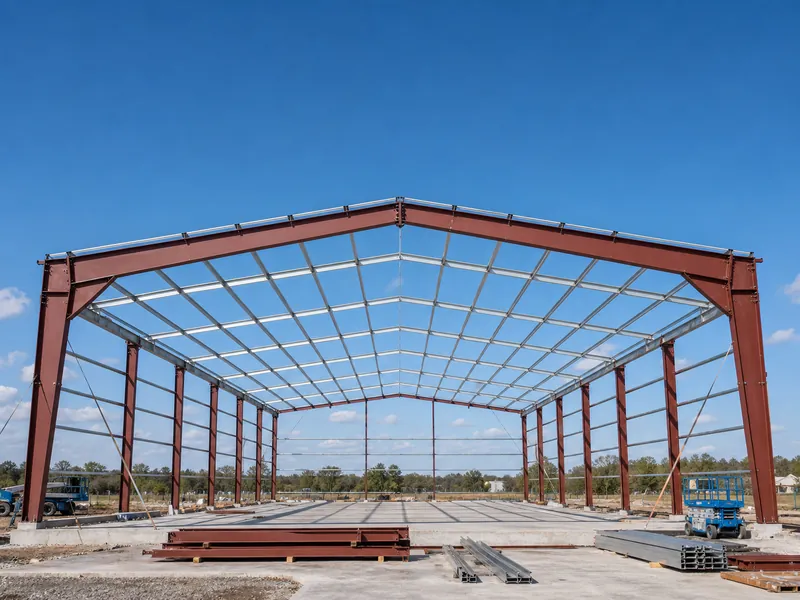
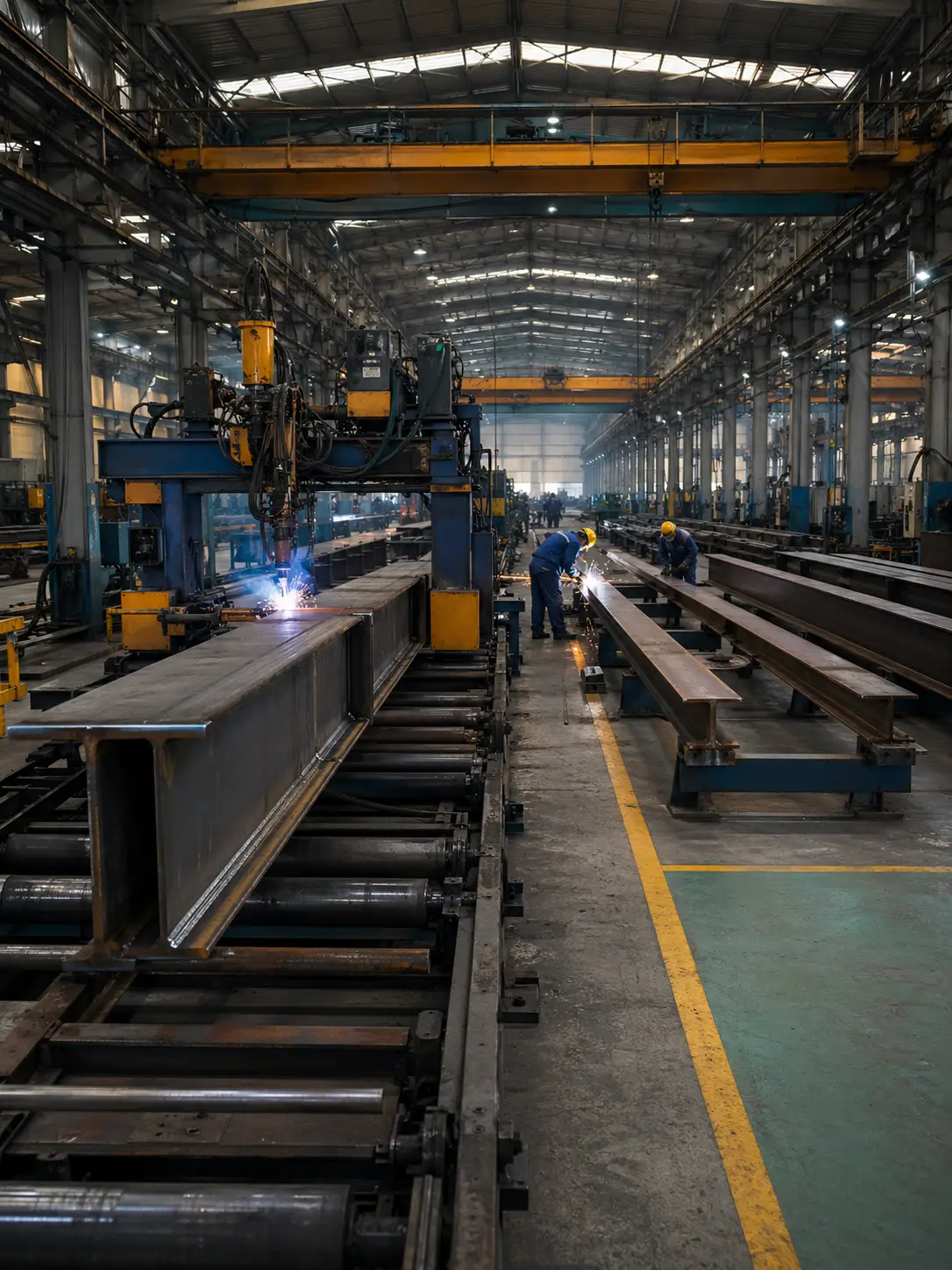
This is where fabrication detail meets design intent. KAFA builds these frames on dedicated H-beam, box-section, and C/Z purlin lines, and the practical reality is that the secondary steel—purlins, girts, and bracing—decides whether a clear-span building is actually clear at working height. Deep purlins or a careless bracing layout eat into the clear height you specified, so the main frame and the secondary steel should be designed as one system, not priced as two separate line items.
Matching Column Spacing to the Racking Grid
Column spacing should follow the racking module and forklift aisles, not a round number chosen for tidiness. When the bay grid does not divide cleanly into back-to-back rack rows plus an aisle, floor is lost to half-used bays and to columns landing in awkward spots. In a tight grid that loss can reach a single-digit to low-double-digit share of floor area, repeated across the whole building. Wider bays, around 12 m for typical pallet work, tend to waste very little floor and let racking sit clear of the columns; heavily automated facilities push wider still.
The verification step is simple and routinely skipped: lay the intended rack layout over the column grid on paper before the frame is finalized. A column sitting in a pick aisle or a flue space cannot be moved later. Designing the grid around the rack, rather than forcing racks around the grid, is the difference between a building that stores its rated pallet count and one that falls short of it.
Loading Docks and Internal Flow
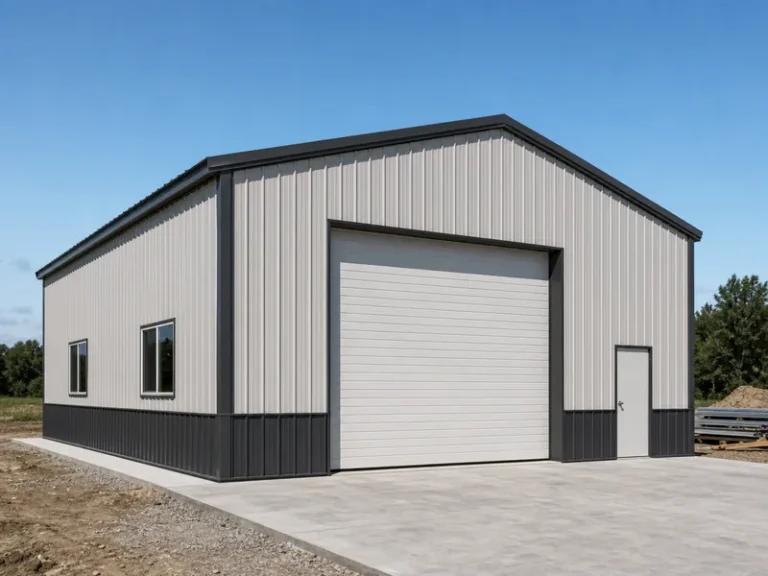
Dock capacity is a structural decision, because doors, levelers, and the truck court all have to be framed and sited while the building is still on paper. A typical planning ratio for general distribution is one dock door per 5,000 to 10,000 sq ft of floor, tightening toward the low end for high-throughput or e-commerce work and easing for manufacturing. The right count follows your peak daily trailer movements, not the length of the wall. Dock-high doors sit roughly 48 to 52 inches above grade to meet a standard semi-trailer bed, while grade-level drive-in doors suit forklifts and containers, and many buildings mix both, each implying different framing and floor transitions.
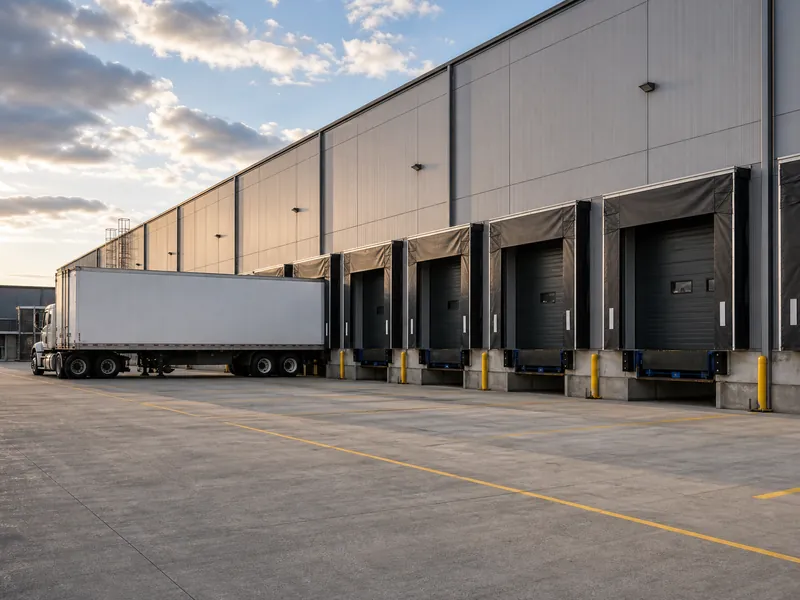
Flow pattern shapes the shell more than people expect. A U-shaped flow keeps receiving and shipping on one elevation and the yard on a single side; an I-shaped through-flow needs docks on opposite walls and a deeper site; an L-shape fits a constrained lot. Each pattern changes where the docks land and how deep the truck court must be—typically 120 to 180 ft to turn and back a 53-ft trailer—and therefore the column lines near the walls. Settle the flow pattern early, since relocating dock positions after the frame is detailed is expensive. How the racking and pick paths are then arranged inside that shell is an operations exercise that sits on top of the structure.
Loads, Codes, and Site Constraints
Every warehouse frame has to carry a full load envelope, and underestimating it is the failure mode that matters most. The design combines dead load, roof live and collateral loads such as sprinklers, services, and future solar, plus wind, snow where it applies, and seismic demand, along with any rack-induced or crane loads transferred into the structure. In the US these follow the building’s adopted code, with structural loads governed by ASCE 7 and steel design by AISC 360; the specific factors belong to the engineer running the steel structure load calculation for your site, not to a rule of thumb.
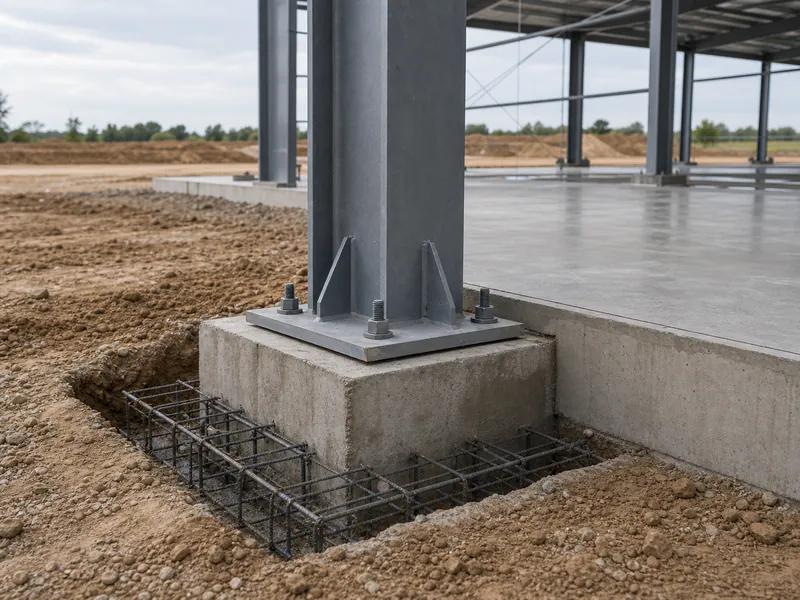
Site and climate reshape the design as well. A coastal or industrial location pushes the corrosion protection up a category toward galvanized secondary steel and tougher coatings, and on an aging coastal building the fasteners and sheet laps are where corrosion shows up first. Roof slope follows drainage and snow, not looks; long buildings need expansion joints; and the foundation has to suit both the ground and the column reactions, which is its own topic under metal building foundation design. All of it becomes fixed once the building is permitted, so it should be designed in from the start rather than discovered at plan review.
Where the Sequence Matters
Warehouse building design rewards making the decisions in the right order. Fix the use case and the clear height first, since the cube drives capacity; choose the frame and span that deliver the column-free floor that use needs; set the column grid to the racking module; size and place the docks to the trailer count and flow pattern; then close the loop by checking the full load envelope against the governing code. Run the order backward, starting from a fixed footprint or a target price, and you tend to inherit a clear height that caps storage or a column that lands in an aisle.
These decisions interlock, which is why they work best as a set: a taller cube changes the frame, the frame changes the bracing, and the bracing comes back to bite the clear height you started with. KAFA designs and fabricates these frames in-house at its 20,000 m² Qingdao facility under ISO 9001:2015 quality management, and the most useful first move on a specific project is to bring the intended use, throughput, and site to the table so the height, span, and grid can be checked against one another. With those three roughly known, you can request a quote that reflects the real building instead of a generic rate.
FAQ
What is the difference between warehouse building design and warehouse layout?
Building design fixes the permanent shell—frame, clear height, spans, column grid, and docks—while layout arranges racking, aisles, and workstations inside it. The shell is set once and rarely altered; the layout is re-planned whenever the operation changes. Treating the two as one leads owners to optimize a day-one rack plan and inherit a structure that cannot adapt to the next one.
What clear height does a warehouse need?
Most modern distribution buildings target 32 to 40 ft clear, while light manufacturing and flex uses often work at 18 to 30 ft. The right figure follows your racking levels and lift equipment rather than a maximum, since each added foot raises capacity by roughly 7 to 10% but also adds steel and cladding cost. Specify clear height to the lowest obstruction, not eave height, so the dimension is not lost to frame depth.
What is the best column spacing for a warehouse?
The best spacing is whatever divides cleanly into your rack rows plus aisles, which for pallet racking often lands near a 12 m bay. Spacing chosen without the rack layout in hand tends to strand floor area against columns and flue spaces. Overlay the rack plan on the proposed grid before the frame is finalized to confirm it.
How many loading docks does a warehouse need?
The number follows your peak daily trailer count, not the building’s wall length, with a typical starting point of one dock per 5,000 to 10,000 sq ft for distribution and fewer for manufacturing. Match the door type to the vehicles: dock-high doors for semi-trailers, grade-level doors for forklifts and containers. Plan the truck court in the same step so trailers can turn and back without fouling the next door.
Can a warehouse be designed for future expansion?
Yes, and providing for it at the design stage costs far less than retrofitting later. A knock-out end wall, a column grid that extends on module, and foundations and load paths sized for the planned bay let the building grow without disturbing the existing frame. The premium is modest when it is decided before fabrication and significant once the steel is already in the ground.
Further Reading
- ASCE 7, Minimum Design Loads and Associated Criteria for Buildings and Other Structures — American Society of Civil Engineers. The governing standard for the wind, snow, seismic, and live loads a warehouse frame must be designed to carry.
- International Building Code (IBC) — International Code Council. Sets the occupancy, fire, and structural provisions, and the permit basis, for warehouse construction in most US jurisdictions.
- MBMA Metal Building Systems design resources — Metal Building Manufacturers Association. Design guides and common industry practices for metal building systems, covering roof framing, loads, and fire protection relevant to steel warehouse shells.