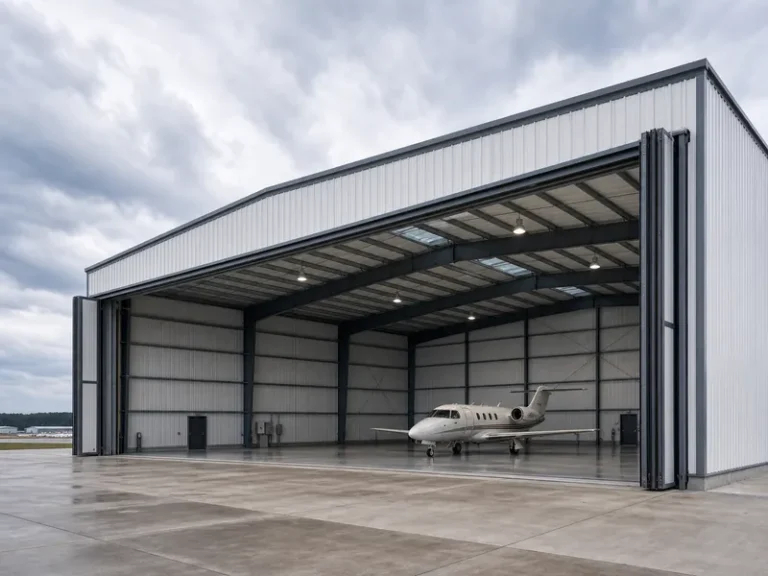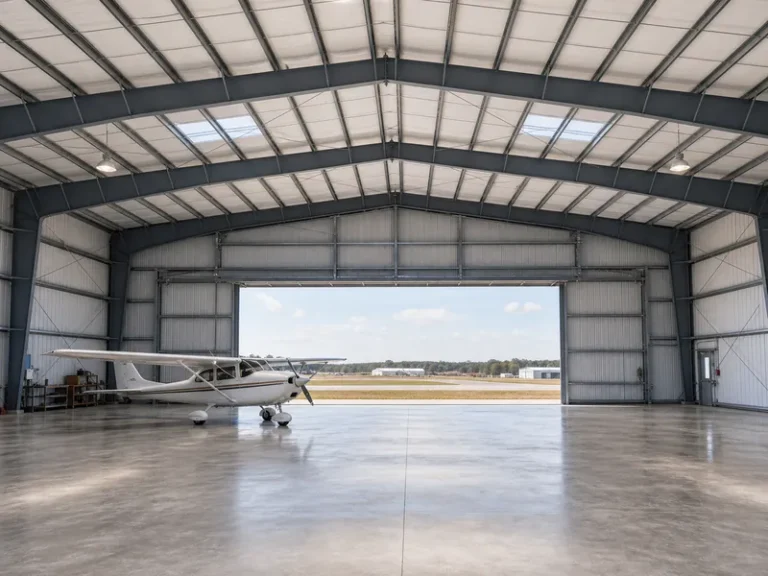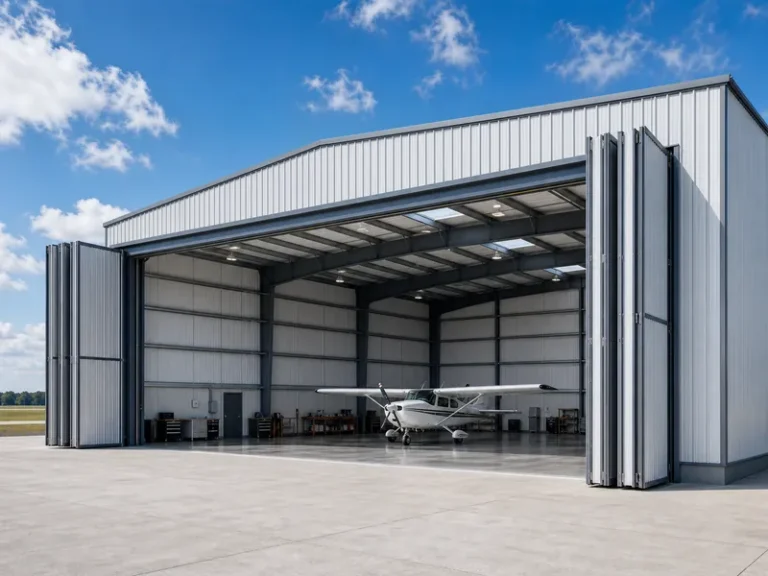





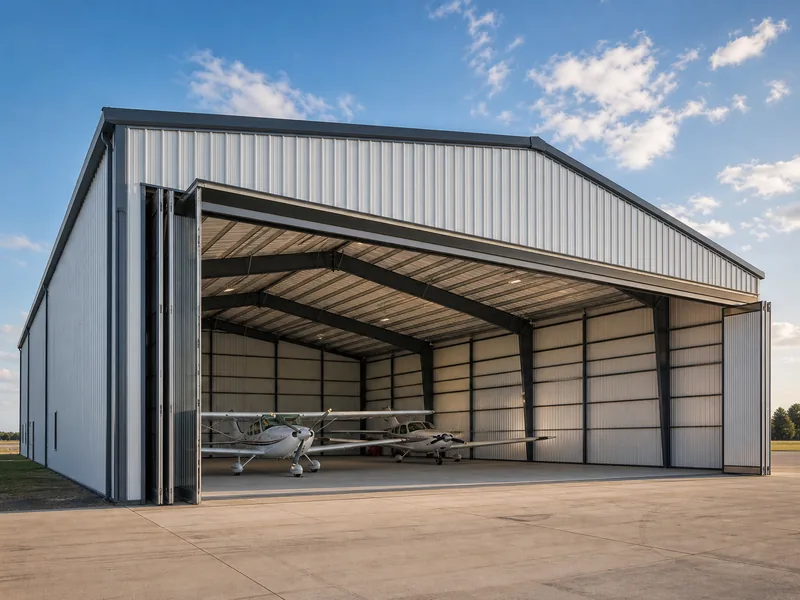
For most aircraft hangars, the best primary structural material is a steel rigid frame, paired with coated-steel or insulated-panel cladding, insulation matched to your climate, a corrosion-protection system suited to the site, and a reinforced concrete slab sized to the aircraft. Steel holds that position because it spans wide, column-free bays, resists fire and pests, and erects faster than site-built construction. Fabric tension membranes, wood, and concrete each have a place, but they fit narrower cases rather than the typical permanent hangar. This guide covers the materials that make up the hangar itself, not the metallurgy of the aircraft inside it, and it breaks the choice down by the variables that actually decide it.
What Makes a Material Right for a Hangar
Material choice for a hangar is governed less by any single selling point and more by five measurable demands: clear span, structural loads, fire classification, corrosion exposure, and whether the building is climate-controlled. A single-aircraft T-hangar, a coastal maintenance facility, and a budget-driven flight-school shelter land on different material sets for sound reasons — private storage, MRO work, cold-climate operation, and a tight budget each pull the answer in a different direction.
Span comes first because aircraft and their doors need uninterrupted floor width. The wider the column-free opening, the more the structure leans toward steel. Loads come next: wind, snow, and seismic forces set how heavy the frame and fasteners must be, while the slab answers to concentrated wheel loads rather than floor area. Fire classification then narrows the field, since hangars are regulated for the fuel and aircraft they hold. Corrosion exposure and climate control finish the picture, because a heated bay near the ocean asks more of its envelope than a dry storage shell inland.
Hangars also span an enormous size range, from roughly 30-by-40-foot single-aircraft units to structures of 240 by 250 feet and larger. That range alone shifts which materials make sense, so treat the five variables as your map before comparing products. One component deserves early attention: the hangar door is among the heaviest and widest single elements in the building. Its type — bi-fold, hydraulic one-piece, or sliding — feeds weight and wind load straight back into the frame, so the door you want partly sets the steel you need.
Steel: The Primary Structural Material for Most Hangars
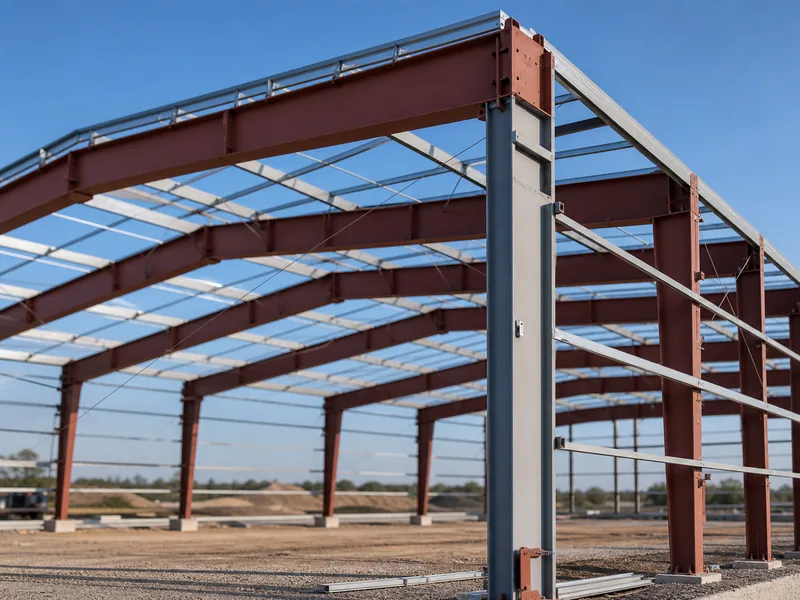
Steel rigid frames dominate hangar construction because they clear the wide, column-free openings that aircraft and large hangar doors demand. A well-detailed steel frame can clear-span well past 200 feet — commonly into the 200-to-300-foot range — without interior columns eating into usable floor, which is exactly what a hangar needs.
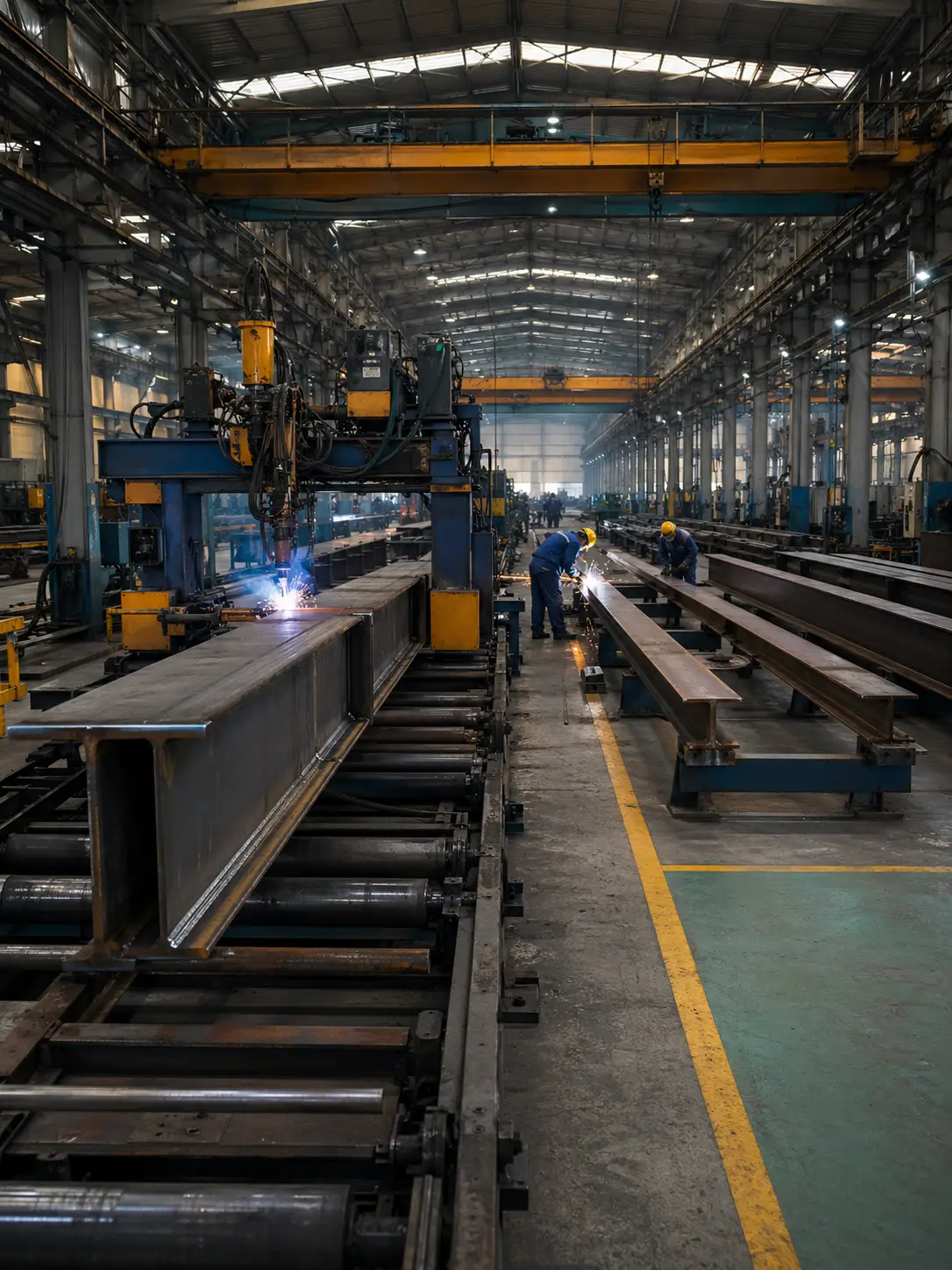
Beyond span, steel is non-combustible, immune to termites and rot, and it will not warp or settle the way framed alternatives can. It also goes up quickly: a pre-engineered frame is fabricated off-site and bolted together, so erection is faster than pouring or stick-building. The same bolt-up approach makes future bays easy to add later. A hangar frame is built from H-beams or welded box sections, tied together with C- and Z-section purlins and girts; those are the same product lines a steel fabricator such as KAFA runs at its Qingdao facility under ISO 9001:2015 quality management. Detailed and coated properly, metal hangar buildings stay in service for decades, with the real lifespan set by the coating system and maintenance rather than the steel itself.
Wood, Fabric, and Concrete: When Alternatives Fit
Non-steel materials make sense for hangars in specific situations rather than as a default, and each trades something measurable for its advantage. Knowing where the line sits keeps you from over-building a temporary structure or under-building a permanent one.
Fabric tension membranes clear-span 300 feet or more, install in roughly a third of the time of steel sheeting, and can be relocated; the National Fire Protection Association rates fabric buildings as Group IV, a lighter classification than steel hangars usually carry. The trade-off is durability: a PVC membrane is easier to tear, offers less physical security, and has a shorter service life than coated steel — factors that can also weigh on insurance and long-term cost — so fabric fits best where speed, relocation, or temporary capacity lead the decision. Wood — typically glue-laminated timber — shows up mostly in smaller private hangars where appearance matters, but it needs active moisture protection and more upkeep; for a closer look at that head-to-head, see steel vs wood airplane hangar construction. Concrete, whether tilt-up or masonry, brings strong fire resistance and coastal durability, yet it limits clear span and adds foundation demand, which is why it usually pairs with a steel roof structure instead of standing alone. None of the three matches a steel rigid frame for the widest column-free door openings, which is why most large commercial and military hangars stay with steel.
Roof and Wall Cladding Materials
Cladding is where a hangar meets the weather, so the panel and its coating matter as much as the frame beneath them. The two decisions that count are whether the assembly is single- or double-skin and how the steel is finished.
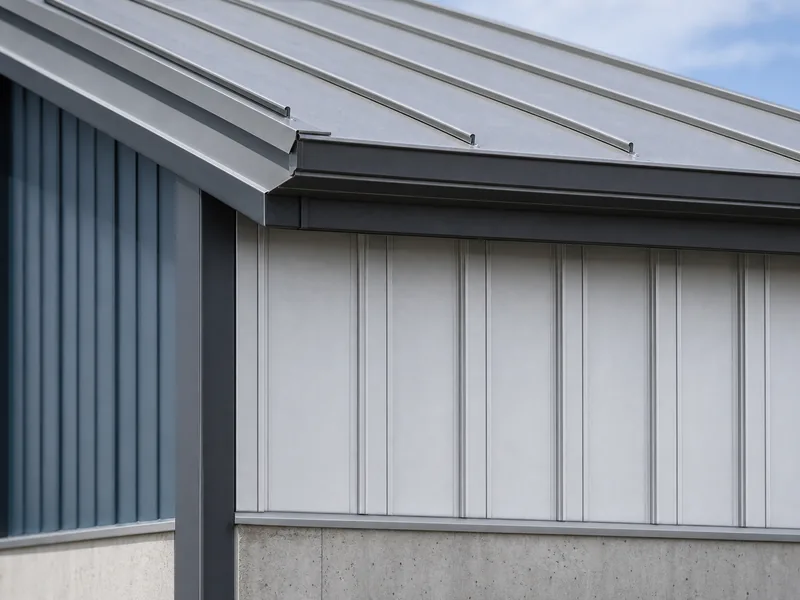
A single-skin panel is the economy option for an unconditioned shell, while a double-skin or insulated panel cuts condensation and reduces leak risk by separating the warm interior surface from the cold outer one. For the steel finish, Galvalume and color-coated panels resist corrosion and come in a wide color range, and a standing-seam roof handles thermal movement with concealed fasteners that give water fewer paths in. Bare, highly reflective finishes such as raw zinc are sometimes restricted near runways, because glare can interfere with pilots. At the wall base, where tugs and ground equipment knock into the skin, a concrete or masonry wainscot is often run under the steel cladding to absorb impact that thin panels cannot. Interior liner panels over the girts then give a clean, washable surface while protecting the insulation behind them. One detail separates a dry hangar from a leaky one: on a steel roof, condensation and corrosion almost always appear first at the panel laps and the fastener penetrations, so seam detailing and a vapor-controlled assembly do more for longevity than panel gauge alone.
Insulation and Condensation Control
Insulation in a hangar does two jobs at once: it controls temperature in conditioned bays and it manages the condensation that forms when warm interior air meets cold metal. Whether you need it depends entirely on use — a heated maintenance bay or one storing sensitive avionics requires it, while a bare storage shell may not.
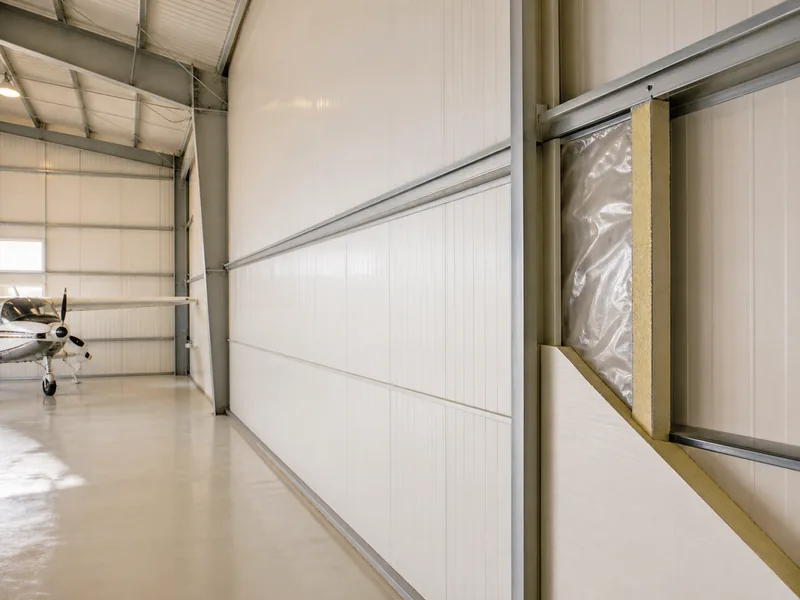
The common options are insulated sandwich panels with EPS or PIR cores and fiberglass batt systems, which are available to roughly R-30 depending on the assembly. The mechanism is what matters: insulation breaks the path between warm interior air and cold exterior metal, which is what stops condensation from dripping onto aircraft and tooling below. Because that moisture problem appears even in unheated buildings, a well-specified metal building insulation package — paired with a proper vapor barrier — is often justified for condensation control alone, before any heating or cooling enters the conversation.
Foundation, Flooring, and Corrosion Protection
Below the frame, two material decisions carry outsized weight: the concrete slab and the corrosion-protection system. Both are easy to under-spec and expensive to fix later.
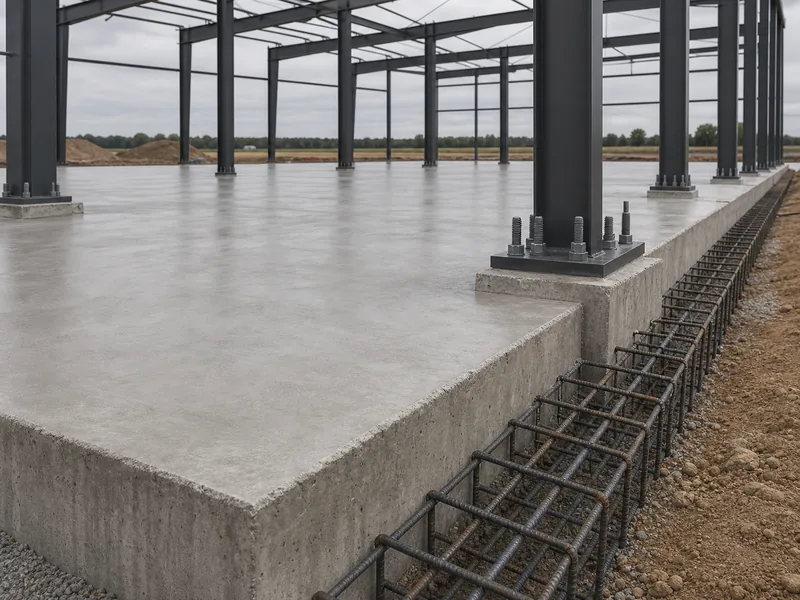
A hangar slab is a reinforced concrete element sized to the aircraft’s concentrated point loads — nose and main gear, plus tugs, jacks, and shop equipment — not simply to its floor area. A properly engineered metal building foundation is designed around those loads and then sealed with a fuel- and oil-resistant finish. Local soil and frost depth feed into that design as well, since footings have to reach below the frost line and bear on ground that can carry the column loads without uneven settlement. Corrosion protection is the other long-game decision: a hot-dip galvanized or Galvalume base combined with a coating system matched to the environment, upgraded for coastal and high-humidity sites. At the coast, fasteners and connections corrode ahead of the main members, so that is where the specification should be raised first; the broader choice of approach is covered in galvanizing versus painting steel. Material and system choices also drive much of a hangar’s final price, so once the specification is set, the cost to build a hangar follows from there.
Choosing the Right Hangar Materials
The cleanest way to choose hangar materials is to work in sequence, starting from the aircraft itself. Begin with the aircraft size and the door clear opening you need, since those set the span. The span, in turn, sets the frame material: a steel rigid frame for almost any permanent, wide-span hangar, with fabric or wood entering only when speed, relocation, or a small private build changes the math. From the frame, work outward — match the cladding and insulation to your climate and to whether the bay is conditioned, then size the slab and flooring for the aircraft’s point loads, and finally set corrosion protection to the site’s exposure, raising the specification at the coast.
If you want those choices priced against a specific aircraft and site, you can request a quote. Get the clear-span, the corrosion class, and the slab loading right, and the rest of the material list falls into place around them.
FAQ
What is the best material for an airplane hangar?
Steel is the best material for most airplane hangars. A rigid steel frame clears the 200-to-300-foot, column-free spans that wood and masonry struggle to match economically, while staying non-combustible and resistant to rot and pests — which is why it is the default for permanent, full-size hangars.
Are steel hangars better than fabric hangars?
Steel suits permanent, high-durability hangars, while fabric suits fast, relocatable, or budget-driven ones. Fabric buildings carry a lighter NFPA 409 Group IV fire classification and install quickly, but steel hangars offer more security and a longer service life, which usually decides it for owners building to keep.
Do aircraft hangars need insulation?
Insulation is required when a hangar is heated, cooled, or used to store temperature-sensitive avionics, and it is optional for a bare storage shell. Even unheated hangars often add a double-skin roof or batt system purely to stop condensation from dripping onto aircraft and equipment.
What foundation does an airplane hangar need?
A reinforced concrete slab sized to the aircraft’s gear loads is the standard hangar foundation. The slab is designed for concentrated point loads from nose and main gear, tugs, and jacks rather than floor area alone, and it is typically sealed with a fuel- and oil-resistant finish.
How do you protect a steel hangar from corrosion?
Corrosion protection combines a galvanized or Galvalume base with a coating system matched to the site. At coastal and high-humidity locations, fasteners and connection points corrode before the main steel members, so those details should be upgraded first to extend the frame’s life.
Further Reading
- NFPA 409, Standard on Aircraft Hangars — National Fire Protection Association. Defines hangar construction groups and fire-protection requirements that shape material and fire-suppression decisions.
- ASCE/SEI 7, Minimum Design Loads and Associated Criteria — American Society of Civil Engineers. The load standard for wind, snow, and seismic forces that governs how the frame and cladding are sized.
- Metal Building Manufacturers Association (MBMA) — Industry association for metal building systems, the dominant structural approach used for steel aircraft hangars.