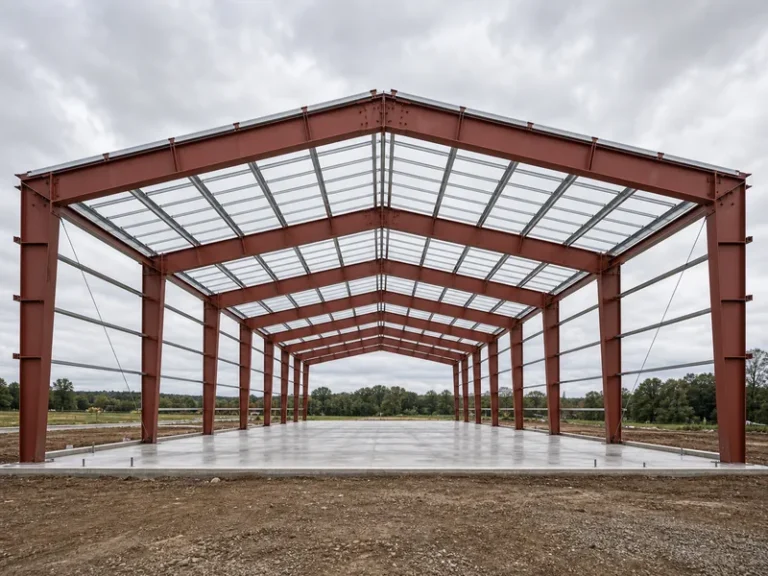






A maintenance hangar is built to work on aircraft, not just shelter them, and that single purpose drives a stricter set of requirements than a storage hangar ever needs. Those requirements include more clear height above the tail, a floor slab that can take jacks and lifts, fire protection matched to the work, real ventilation and power, overhead lifting, and the support space and drainage that active work demands. A storage hangar succeeds if the aircraft fits and the door closes. A maintenance hangar has to let technicians open panels, raise the aircraft off its gear, run engines, and move stands and ground support equipment around it for days at a time. The sections below walk through the requirements that separate the two, in the order they tend to constrain a design.
What Sets a Maintenance Hangar Apart from a Storage Hangar
The difference is function: a storage hangar parks an aircraft, while a maintenance hangar gives a crew the room and the services to repair one. That changes almost every dimension of the building. Storage bays can sit close to the aircraft’s profile, but base- and heavy-maintenance work needs clear floor around the airframe for stands, scaffolding, jacks, and test equipment, plus paths to roll the aircraft and tugs in and out without contact. It is the reason a maintenance bay for a given aircraft is usually wider, taller, and deeper than the storage bay would be. So much of the planning starts from the work envelope, not the parked footprint. If you are still deciding which category you are building, the broader types of aircraft hangars set storage, line, and maintenance roles against one another.
Clear Height and Column-Free Span
Clear height is set by the tallest tail you expect to service, plus working room above it. Maintenance lifts the aircraft and puts people on platforms over it, so the usable height under the structure, not the eave height on a drawing, has to clear the raised tail with margin for docking and overhead access. For a mixed fleet, the rule that holds up is to size the bay to the tallest tail plus a buffer, then confirm that lifts and platforms reach without touching steel. A hangar also outlives the fleet inside it, so allow headroom for a taller aircraft you might take on later; clear height is the one dimension you cannot add once the frame is up.
Width matters just as much. Internal columns block the movement a maintenance bay depends on, so the roof load has to travel through a clear-span rigid frame to the sidewalls and leave the floor open from wall to wall. That column-free width is one reason steel aircraft hangars dominate the building type: a welded or bolted steel frame spans the full bay economically at the widths wide-body work demands. Fabricators running dedicated H-beam and box-section lines can match that frame to the bay width, the crane runway loads, and the eave height the operation needs. The structural choices behind the span are covered in more depth under aircraft hangar design.

A Floor Slab Rated for Jacks and Lifts
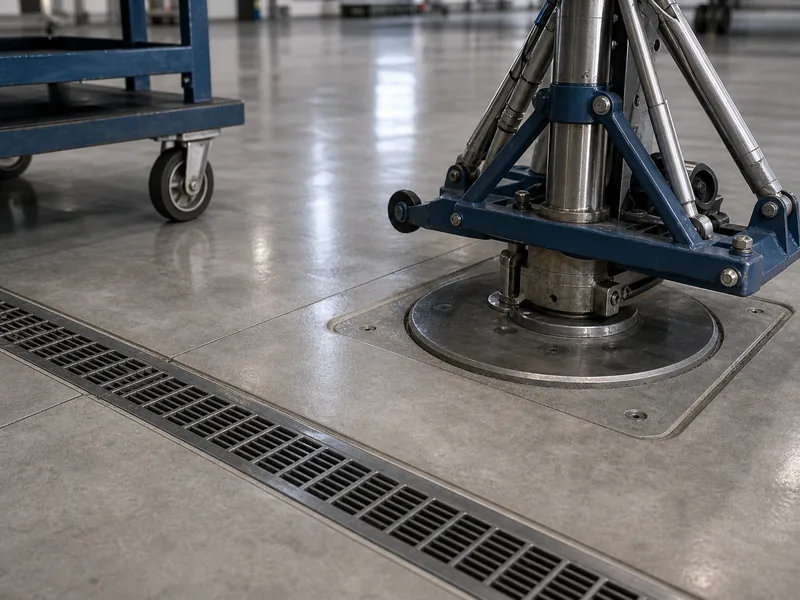
The slab under a maintenance hangar carries loads a storage floor never sees. Aircraft are routinely jacked completely off their gear for gear swings, weight-and-balance, and operational checks, which concentrates the full aircraft weight onto a few jack points instead of spreading it across the tires. Add mobile lifts, work stands, tugs, and maintenance equipment, and the floor has to resist point loads and surface wear that ordinary slab-on-grade detailing would not survive. Rather than a single thickness rule, the design follows the load cases: the slab and its jack-point areas are sized to the specific aircraft and the equipment that will stand on them. Flatness has to be tight enough that lifts and stands stay stable. Drainage and a fuel- and solvent-resistant surface belong in the same conversation, because fluids will reach the floor. Slab and jack-point detailing are part of the wider metal building foundation design, and they should be fixed early, because changing a slab after it is poured is the most expensive correction on the project.
Hangar Doors That Clear the Full Opening
The door sets the usable width of the whole hangar, so it is sized to the aircraft’s wingspan or tail span plus clearance, not to the building. A maintenance bay needs the full opening clear, in both width and height, when the aircraft moves through, which rules out designs that leave columns or low headers in the path. Door height has to clear the same tail the roof does, with room for a taller aircraft if the fleet may change. The door in its open position also cannot foul the platforms or overhead equipment working near it. The main options—sliding, bi-fold, vertical-lift, and hydraulic one-piece doors—trade off opening speed, headroom, weather sealing, and maintenance differently, and the right pick depends on how often aircraft move and the wind and snow the door has to take. Because the door is one of the most expensive and failure-prone systems in the building, the selection deserves the same scrutiny as the frame; the trade-offs are compared side by side in hangar door types.

Fire Protection and NFPA 409 Hangar Groups
Fire protection for hangars is governed by NFPA 409, the Standard on Aircraft Hangars, which classifies hangars into groups and ties the required suppression to that classification. The group depends mainly on the aircraft access door height and the single fire area, because both scale the fuel-fire hazard a maintenance operation can present. As a rough orientation, NFPA 409 uses criteria along these lines:
| Group | General criteria NFPA 409 uses (illustrative, not a project determination) | Relative requirement |
|---|---|---|
| Group I | Door height over 28 ft, a single fire area over 40,000 sq ft, or housing an aircraft with a tail height over 28 ft | Most stringent |
| Group II | Door height 28 ft or less and a single fire area of 40,000 sq ft or less | High |
| Group III | Door height 28 ft or less and a single fire area of 12,000 sq ft or less | Moderate |
| Group IV | Membrane-covered rigid steel-frame structure | Least stringent |
Where a specific project lands, and what suppression it may require (foam, water, or a performance-based alternative), drives ceiling space, water supply, drainage, and cost, and recent editions have revised where foam is required. Use the table as background only: the actual classification and the systems a given hangar must have should be set by a qualified fire protection engineer and confirmed with the authority having jurisdiction (AHJ) against the edition in force, because thresholds and accepted methods change between editions.
Ventilation, Climate, and Power for Active Work
A maintenance hangar has to move air, hold temperature, and deliver power at a level a storage shed never does. Running engines, fuel-system work, painting, and solvents put fumes in the air, so ventilation is sized to the work and any flammable vapors it produces, not just to comfort. Heating keeps crews working and adhesives and sealants curing through cold months, and in humid or coastal sites, controlling condensation protects both the airframe and the building steel. That is where the envelope does real work: proper metal building insulation and a vapor barrier keep the dew point off the underside of the roof, where dripping condensation would otherwise fall onto open panels and avionics. Power and compressed air round it out: maintenance pulls far more electrical load and shop air than storage, and both are easier to size generously up front than to retrofit.
Overhead Lifting and Support Space
With the span and slab settled, lifting capacity and support rooms decide how well the hangar actually works. Overhead bridge cranes or monorails handle engines, landing gear, and heavy components, and the crane has to be planned with the structure because its loads and clearances feed back into the frame and the clear height. Around the bay, a maintenance operation needs support space the aircraft never touches: a parts hold, a tool crib, a receiving dock, shops, and office and locker rooms. These are positioned so parts and equipment reach the aircraft without crossing the main work paths. Most of that layout is a workflow problem, keeping people, parts, and ground support equipment moving without bottlenecks around the airframe.

Conclusion
The two constraints that are hardest to undo are the clear height over a raised tail and the slab under the jack points. Together they fix the frame and the foundation, and the door, fire-protection group, ventilation, and crane all have to fit inside them. That makes the fleet you intend to service the real starting decision, because it sets the clear height and slab, which in turn shape the fire-protection group and the door. A manufacturer that fabricates clear-span steel hangar frames can coordinate the span, crane runway loads, and eave height together, which is where these constraints either reconcile on paper or surface as expensive field changes. The same big-ticket items (frame, slab, door, and suppression) drive the cost to build a hangar, so settling them early also steadies the budget. When you are ready to scope one, request a quote with your target aircraft and any known site and code constraints.
FAQ
Is a maintenance hangar different from an MRO hangar?
In practice the terms overlap: an MRO (maintenance, repair, and overhaul) hangar is a maintenance hangar equipped for heavier, base-level work. Both are built around working on aircraft rather than storing them, so they share the same core requirements of clear height, a load-rated slab, fire protection, and lifting. “MRO” usually signals a larger facility running deeper checks for multiple operators.
How much clear height does a maintenance hangar need?
A maintenance hangar needs enough height to clear the tallest aircraft tail it will service plus working room above it for platforms and docking. Because maintenance raises the aircraft on jacks, the usable height is measured to the raised position, not the parked one, and a mixed fleet is sized to the tallest tail plus a buffer instead of an average.
Does a maintenance hangar require a special floor slab?
A maintenance hangar floor is designed around load cases a storage slab never sees. Jacking an aircraft off its gear concentrates its full weight onto a few jack points, and lifts, stands, and tugs add more. So the slab and its jack-point areas are sized to the specific aircraft and equipment, with a fluid-resistant, well-drained surface.
What fire protection does a maintenance hangar need?
A maintenance hangar’s fire protection follows its NFPA 409 classification, which is driven mainly by door height and single fire area. Larger Group I hangars face the most stringent suppression requirements and smaller or membrane-frame hangars face less, but the actual classification and required systems should be confirmed with a qualified fire protection engineer and your AHJ.
Can a steel building be used for a maintenance hangar?
Yes, and clear-span steel framing is the common choice because it spans the full bay without interior columns and carries crane and door loads predictably. The frame, eave height, and crane support are designed together so the column-free width and clearances match the aircraft and the maintenance tasks.
Further Reading
- UFC 4-211-01, Aircraft Maintenance Hangars — U.S. Department of Defense Unified Facilities Criteria. Detailed design criteria for maintenance hangar structures, clearances, and support spaces, useful when sizing clear height, bays, and layout.
- NFPA 409, Standard on Aircraft Hangars — National Fire Protection Association. The governing standard for hangar fire-protection groups and suppression, and the reference behind the group criteria in this article.
- OSHA 1910.179, Overhead and Gantry Cranes — U.S. Occupational Safety and Health Administration. Safety and inspection requirements for the overhead cranes a maintenance hangar relies on for engine and component lifts.