





Aircraft hangars fall into a short list of recognizable types, and they are easiest to tell apart along three lines: how the building is framed (clear-span versus conventional), what it is used for (storage, maintenance, corporate, or military), and the size of aircraft it has to hold. Most owners meet the same core set first — T-hangars, box or conventional hangars, clear-span hangars, corporate hangars, maintenance hangars, and fabric structures — before deciding which one matches their aircraft and budget.
The labels overlap because they describe different things at once. “T-hangar” names a layout, “clear-span” names the framing, and “maintenance hangar” names the use. Because the terms sit on separate axes, the sections below sort the types by use first, then return to the structural, sizing, and fire-code distinctions that actually drive a build.
The Main Types of Aircraft Hangars and Their Uses
The hangar types below cover almost every general-aviation and commercial need, from single-aircraft storage to wide-body maintenance. They are not mutually exclusive: a corporate hangar, for instance, is usually a clear-span box used a particular way. So each type below is described the same way — by the aircraft it serves, whether it needs a clear span, what its door implies, and the tradeoff it carries.
T-Hangars
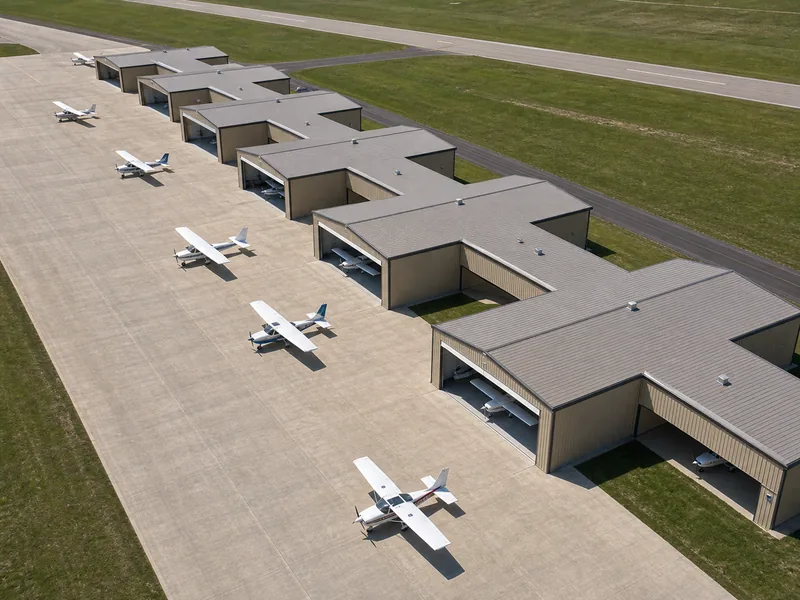
T-hangars store individual light aircraft in interlocking bays shaped like the letter T, which lets many planes share walls and a single roofline at a low cost per aircraft. Each bay runs about 40 to 50 feet wide with one modest door, sized for single-engine and light twin-engine airplanes inside FAA Airplane Design Group I (wingspan under 49 feet). The tradeoff is rigidity: a bay fits one size of aircraft, so moving up to a larger plane usually means moving out.
Box Hangars (Conventional Hangars)
Box hangars are rectangular buildings with a single wide door, trading the T-hangar’s shared-wall economy for an open, flexible floor. Footprints commonly run from about 60 by 60 feet up to 80 by 100 feet, enough for a midsize twin, a turboprop, or a couple of smaller aircraft parked together. The label “conventional hangar” points to the same building, usually when interior columns carry part of the roof instead of a single clear span; that saves money but plants posts on the floor.
Clear-Span Hangars
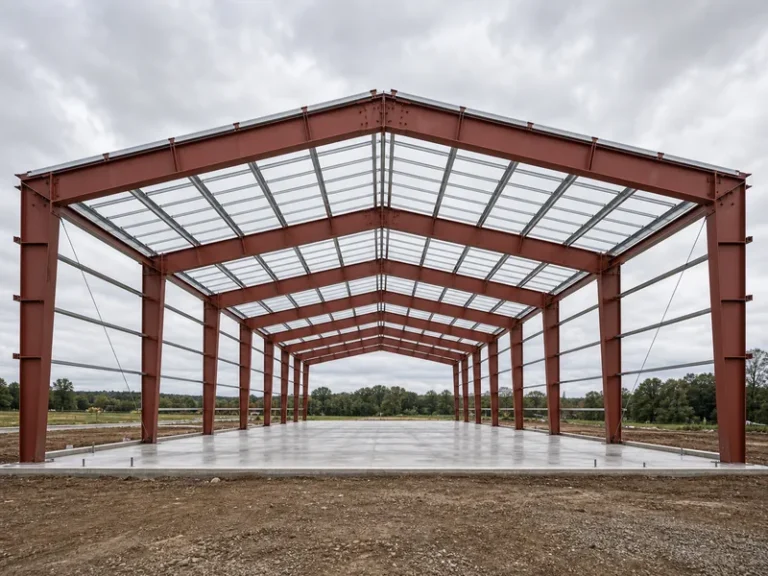
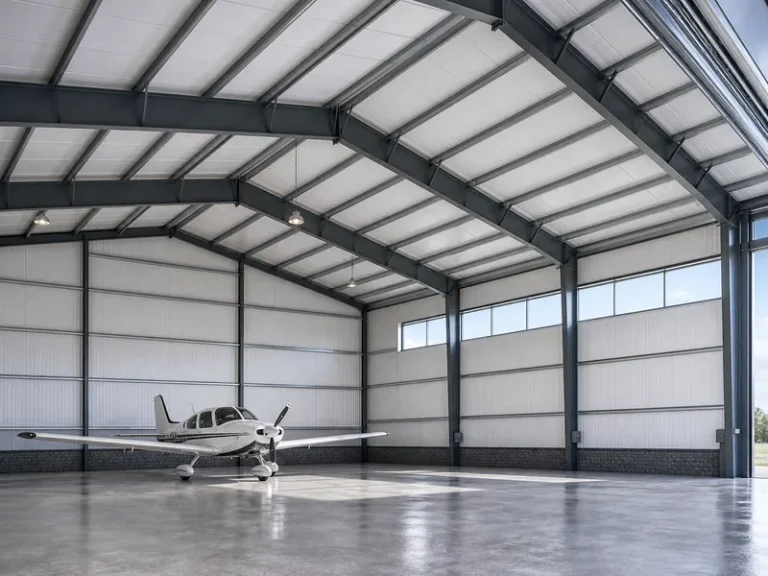
Clear-span hangars remove every interior column so the full width stays usable, which matters most when wingtips, propellers, and tails need room that posts would block. A rigid or portal frame carries the roof across the entire span, commonly 15 to 50 meters in steel, and lets the door open across most of the wall. The tradeoff is heavier framing and higher cost, yet larger aircraft and shared bays rarely work without it, and many owners start from prefabricated aircraft hangar kits for sale that ship as a clear-span steel package ready to erect.
Corporate and Executive Hangars
Corporate hangars house business aircraft alongside the offices, lounges, and flight-planning space a flight department uses daily. They are usually clear-span boxes finished to a higher standard, with insulation, climate control, and sometimes a mezzanine for staff. The governing requirement is a door tall and wide enough for a business jet’s tail and wingspan, and the higher finish makes them among the most expensive types per square foot.

Maintenance (MRO) Hangars
Maintenance hangars are built around the work rather than the parking, with the lighting, power, overhead clearance, and fire protection that inspections and repairs demand. Width grows fastest here: a shop servicing wide-body aircraft can exceed 1,000 feet across, while a regional maintenance bay stays far smaller. The door has to clear the tallest tail in the fleet, and the fire protection is the heaviest of any type, which gives these buildings the highest code burden.
Fabric and Membrane Hangars
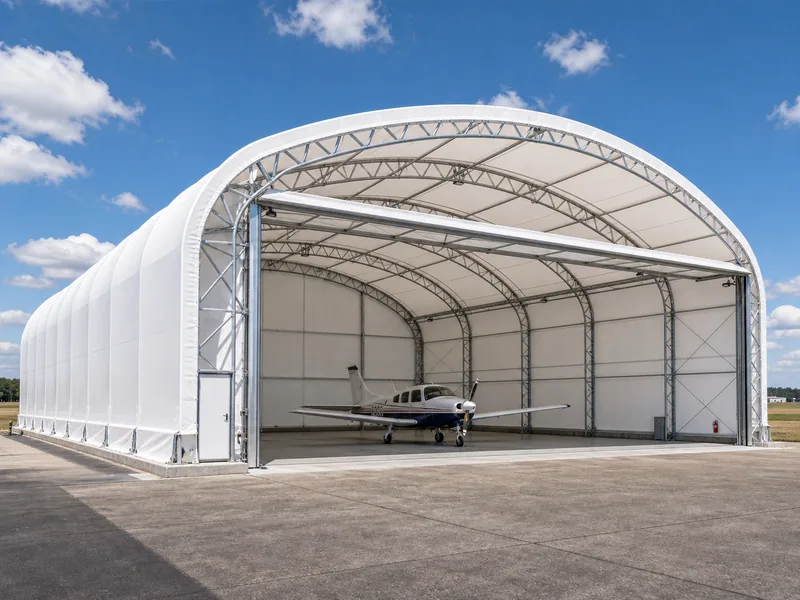
Fabric hangars stretch a tensioned membrane over a steel or aluminum frame, producing a fast, relocatable building that is bright inside and quick to permit. Portable versions can be built up to roughly 215 feet wide and 100 feet high in any length, covering everything from a single warbird to a temporary maintenance line. The tradeoff is the membrane itself. It is replaced on a service cycle rather than lasting like a steel roof, and its fire and insurance treatment differs from a solid-clad building. That makes fabric a better fit for movable and temporary roles than for a permanent lifetime asset.
Military and Specialized Hangars
Military and specialized hangars cover the outliers, from fighter shelters and helicopter hangars to hardened, blast-resistant structures built to mission rules instead of general-aviation norms. Helicopter hangars trade wingspan width for rotor clearance and tail-boom length, and many are designed to deploy rapidly. Because they are purpose-built, they rarely follow standard aircraft-design sizing at all.
Clear-Span vs. Conventional Framing
The biggest structural split among hangars is whether the roof rides on interior columns or on a single clear span, and that choice changes what aircraft can actually fit. A conventional frame sets columns through the floor to support the roof, which is cheaper to build but plants obstacles exactly where wingtips and propellers swing.
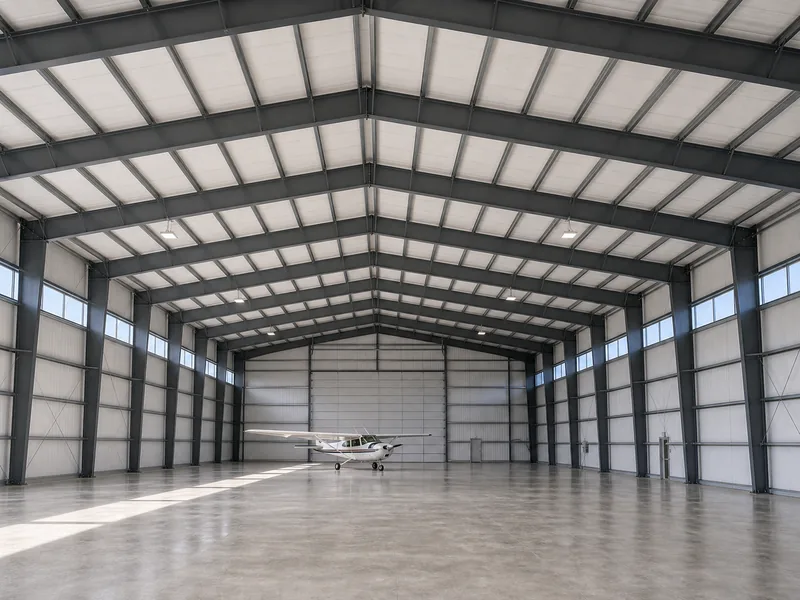
A clear-span frame moves that load out to rigid or portal frames at the walls, leaving the interior open from sidewall to sidewall. That is the layout most people picture as a hangar, but you only get it by paying for heavier framing. For anything wider than a light single, or for a bay shared by several aircraft, going column-free stops being a luxury and becomes the only workable plan. Steel is the usual material because rigid frames span far without intermediate support; manufacturers such as KAFA fabricate the H-beam and box-section frames behind the same column-free approach used in clear span buildings across other industries. Span, eave height, and clear door width are the numbers to settle before steel building design begins, because they set the frame depth and the foundation.
Matching Hangar Size to Your Aircraft
Hangar size starts from the aircraft, not the building. Wingspan sets the width and the door opening, while tail height sets the vertical clearance. The FAA sorts airplanes into Airplane Design Groups by wingspan, and those groups map cleanly onto hangar widths.
| FAA design group | Wingspan | Typical aircraft | Hangar that fits |
|---|---|---|---|
| Group I | Under 49 ft | Single-engine, light twin | T-hangar bay or small box, ~40–50 ft wide |
| Group II | 49 to under 79 ft | Light and midsize business jets | Box or clear-span, ~60–80 ft wide |
| Group III | 79 to under 118 ft | Regional jets, large business jets | Clear-span with an 80 ft-plus door |
| Group IV–VI | 118 ft and up | Narrow-body to wide-body airliners | Large clear-span or maintenance hangar |
Add clearance beyond the bare wingspan and tail height so the aircraft passes the door header and side walls on the way in, then size the structure to the next standard frame up. Cost tracks size and finish far more than the type name. A bare steel shell commonly falls in the rough range of $15 to $25 per square foot, which covers the frame and cladding only. Foundation, doors, insulation, permits, and site work sit on top of that, and they are where a turnkey number climbs, especially on poor soil or a tight site. This overview matches type to mission; exact pricing, door engineering, and insulation specs each have their own guide, so the cost to build a hangar breakdown is the better place to price a specific build.
Fire-Code Hangar Groups (NFPA 409)
NFPA 409, the U.S. standard for aircraft hangars, sorts buildings into Groups I through IV that set how much fire protection each one must carry. The dividing line for the largest category is an aircraft door or tail height above 28 feet, or a very large single fire area, which places a building in Group I and triggers the heaviest suppression systems.
Groups II and III step down from there as the door height drops to 28 feet or less and the fire area shrinks, easing the suppression requirements at each step. Group IV is the special case: it covers membrane-covered, rigid steel-frame hangars specifically (the fabric structures from earlier), and sets its own rules by bay size and whether fueled aircraft are inside. Identifying the group early matters, because it shapes the door height, the structure, and the fire system long before construction starts.
Hangar Doors and Materials That Set Types Apart
Two choices finish a hangar’s type: the door across the front and the material the building is built from. Door style drives both the clear opening and a large slice of the budget: bi-fold and hydraulic one-piece doors give the tallest unobstructed openings, while sliding and bottom-rolling doors cost less but eat into opening height. The hangar door types comparison lays out those trade-offs side by side.
Material sets durability and build speed. Steel dominates permanent hangars for its span and corrosion options, fabric wins on portability, and wood or aluminum show up only in niche cases. For a permanent build, the best materials for airplane hangar construction depend on span, climate, and how the building will be heated.
Choosing the Right Hangar Type
Choosing a hangar type works best as an elimination in order. Start with the aircraft’s wingspan and tail height, because they decide whether a T-hangar bay is enough or a clear span is mandatory, and they set the door’s clear opening.
Settle the framing next: column-free for anything that shares a bay or carries wide wings, conventional only where columns will not block the aircraft. Then layer in the operating use and the NFPA 409 fire group, since a maintenance or corporate building carries heavier systems than plain storage. Check the site loads on the structural side, where snow and wind decide frame weight as much as the span does, and leave room in the footprint if a larger aircraft is anywhere in the plan. Get that order right and the type almost names itself; skip a step and the constraint shows up after the frame is already standing.
FAQ
What is the most common type of aircraft hangar?
T-hangars are the most widespread hangar at general-aviation airports, because their interlocking bays store the largest number of light aircraft per acre of apron. A single T-hangar row can hold a dozen or more single-engine planes, each in its own bay behind its own door. The economy fades as aircraft grow, which is why business jets move to box or clear-span buildings.
What is the difference between a clear-span and a conventional hangar?
A clear-span hangar has no interior columns, while a conventional hangar uses internal posts to help carry the roof. The clear span keeps the entire floor usable for wide wings and shared bays, but it needs heavier rigid framing and costs more. Conventional framing saves money and suits narrow buildings where a column line will not sit in the path of an aircraft.
How big does a hangar need to be for a single-engine airplane?
A single-engine airplane usually fits a hangar bay about 40 to 50 feet wide, matching its sub-49-foot wingspan in FAA Design Group I. Add a few feet past the wingspan and tail height so the aircraft clears the door and side walls on the way in. Owners who expect to move up to a larger plane often size up one bracket now to avoid rebuilding later.
What is a Group IV hangar under NFPA 409?
A Group IV hangar is a membrane-covered, rigid steel-frame structure — the fabric-and-steel buildings used for storage and light servicing. NFPA 409 gives Group IV its own fire rules based on the bay size and whether fueled aircraft are inside, with larger fueled bays requiring active systems. The category exists because a fabric roof behaves differently in a fire than a steel or concrete one.
Are fabric hangars as durable as steel hangars?
Fabric hangars are durable for their purpose but trade long-term permanence for speed and portability. A tensioned membrane resists weather and lets daylight through, yet the cover is replaced on a cycle that a steel or standing-seam roof would outlast. For a movable or temporary building the trade makes sense; for a fixed lifetime asset, steel framing with a metal roof lasts longer.
Further Reading
- NFPA 409, Standard on Aircraft Hangars — white paper — National Air Transportation Association. Explains the Group I–IV hangar classification and the fire-protection logic behind the 28-foot door-height threshold used above.
- Guidebook on General Aviation Facility Planning (ACRP Report 113) — Transportation Research Board / National Academies, FAA-sponsored. Covers how conventional and T-hangars fit into airport facility planning and layout.
- Portal frames — Steel Construction Institute (SCI) and BCSA. Background on the rigid, column-free steel framing that makes clear-span hangars possible, including typical span ranges.