




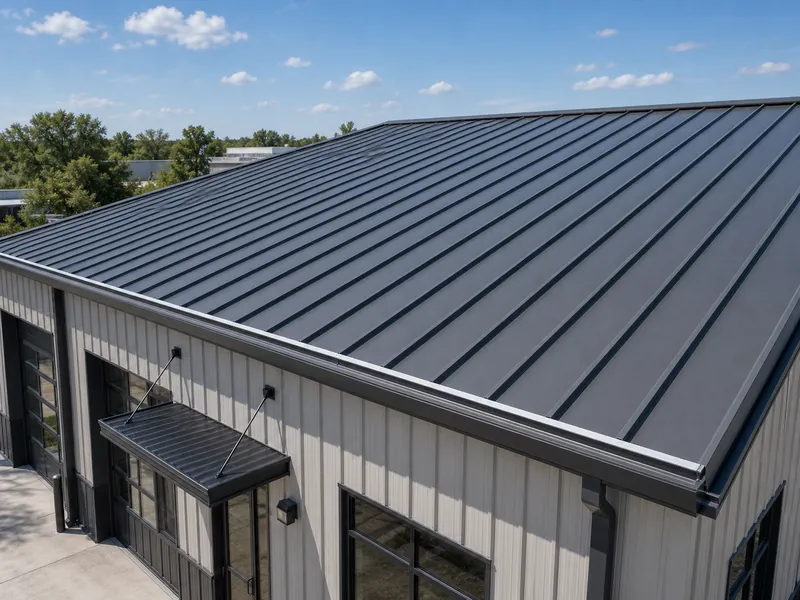
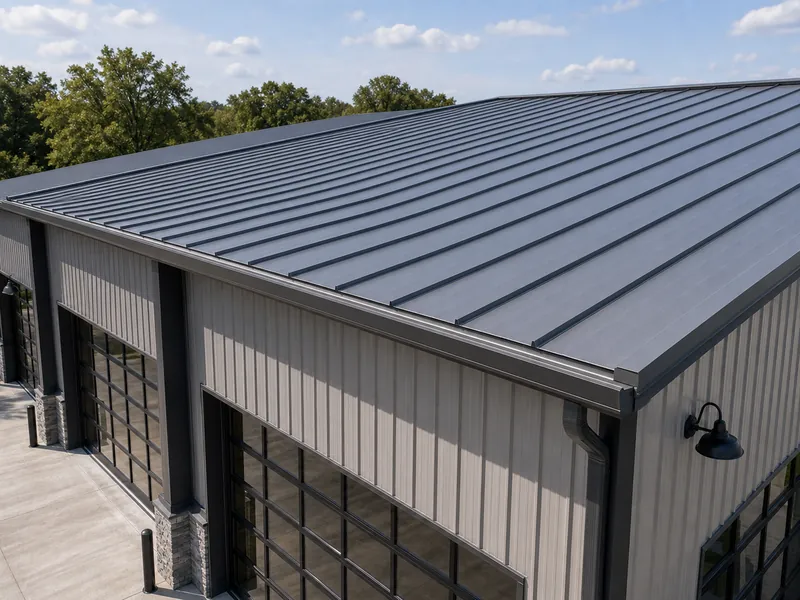
A standing seam metal roof is a concealed-fastener panel system: wide, flat metal pans run from ridge to eave, and the raised vertical seams that join them also hide the clips or flanges holding the roof down. Because nothing is screwed through the face of the panel, there are no exposed fasteners on the weather surface. That one feature sets standing seam apart from the screw-down panels most people picture when they think of a metal roof. This guide walks through how the system works, the main seam profiles, the specs that matter, how it compares with exposed-fastener panels, and where the premium actually pays off. It is one of several types of metal roofs, but it behaves differently enough to deserve its own explanation.
How a Standing Seam Metal Roof Works
A standing seam metal roof hides every fastener under the raised seams that join one panel to the next. Each panel has a broad flat area in the middle and a turned-up leg on either edge. When two panels meet, their legs lock together — either snapped over a hidden clip or folded shut with a seaming machine. That locked joint stands up above the water plane, which is where the name comes from.
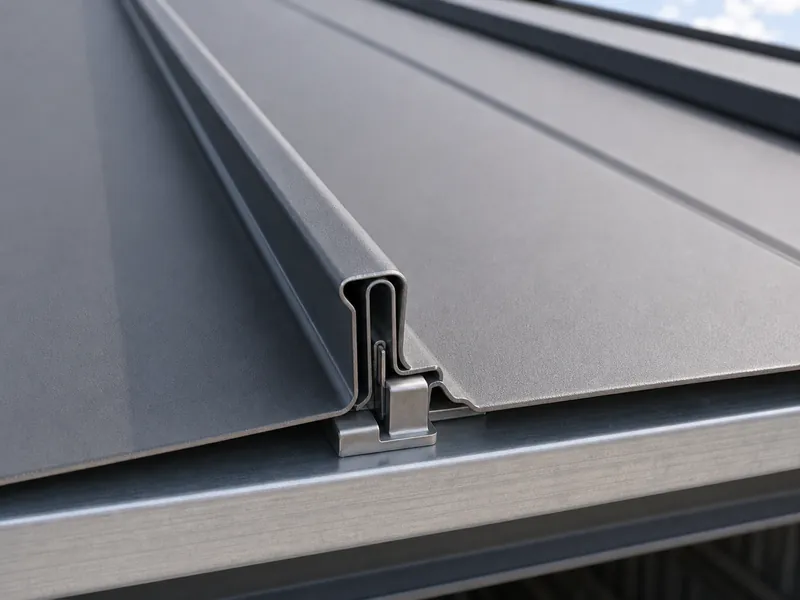
The clip underneath does more than hold the panel down. On longer runs, a floating clip lets the panel slide as it heats up in the sun and cools at night, so a 40-foot pan can expand and contract without buckling or tearing at the fastener. A through-fastened panel cannot do this; its screws pin the metal in place and fight every thermal cycle. There is an easy way to tell the two apart on a finished roof: if you can see screw heads marching across the panels, it is not standing seam.
Hiding the fasteners also changes where water can get in. With no holes punched through the flat of the panel, a leak can only start in three places: the seams, the eave, and the penetrations. Each of those is detailed above the water plane or sealed inside the seam. The clip height that allows this also leaves room for thicker metal building insulation to sit over the purlins without crushing, which is one reason the system shows up so often on conditioned commercial buildings.
The Main Standing Seam Profiles
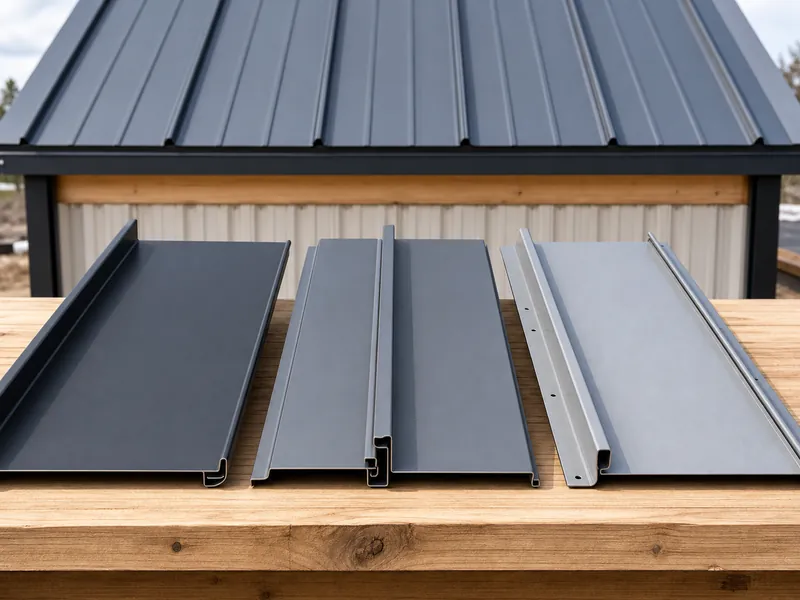
Standing seam panels are grouped by how their seams lock together, and that one detail drives slope limits, installation method, and cost. Four families cover almost everything on the market.
| Profile | How the panels join | Typical minimum slope | Where it fits |
|---|---|---|---|
| Snap-lock | Legs snap together over a concealed clip; no seaming machine needed | About 3:12 and steeper | Residential and steeper architectural roofs |
| Mechanical lock (single 90° / double 180°) | A powered seamer folds the seam over the clip in the field | Double-lock can run down to roughly ½:12–1:12 with in-seam sealant | Low-slope commercial and industrial roofs |
| Nail / fastener flange | The panel has an integral flange fastened to the deck; no separate clip | About 3:12 and steeper | Shorter runs and budget-sensitive jobs |
| Batten / tee seam | A separate cap snaps or seams over the panel legs | Varies by profile | Architectural roofs and traditional looks |
Snap-lock profiles are the easiest to install because a crew can press the seam closed by hand, but the trade-off is a higher slope requirement. Mechanically seamed profiles are the workhorses on flat-ish commercial roofs. Folded 180 degrees over the clip with sealant rolled into the joint, the double-lock seam sheds water at pitches where a snapped seam would weep. That binding of seam type to slope is why the profile decision usually starts with the building’s roof pitch rather than with looks. Nail-flange panels are the budget option, but the fixed flange limits panel length because the metal has nowhere to move as it expands. The slope minimums above are starting points, not guarantees — the panel manufacturer’s installation manual and the local building code set the final number for any given profile.
Panel Widths, Gauges, Metals, and Finishes
Beyond the seam, a standing seam roof is defined by four specs: panel width, metal thickness, the metal itself, and the coating on top. None of them is exotic, but each one shifts cost and appearance.
Panels are commonly rolled between 12 and 18 inches wide, with roughly 16 inches being a frequent choice; seam heights usually fall between 1 and 3 inches, and 1½ to 2 inches covers most jobs. Steel panels are typically 24 gauge — heavier than the 26- to 29-gauge metal common on screw-down roofs — and aluminum versions run around .032 to .040 inch. The metal is usually Galvalume (an aluminum-zinc-coated steel), with aluminum, zinc, and copper available when budget or coastal exposure justifies them.
Finish is its own decision. A bare Galvalume panel is the economical route, while architectural projects lean on a PVDF coating (often sold as Kynar 500) for long-term color hold, with SMP polyester sitting in between on price and performance. How that protective layer is applied matters as much as its color, which is the difference between galvanized and painted steel and something to verify against your environment before you commit. One cosmetic point catches buyers off guard: oil canning, the gentle waviness visible across wide flat pans in raking light, is an inherent characteristic of light-gauge metal, not a defect or a leak risk. Striations or stiffening ribs rolled into the pan reduce it, which is why many specifiers choose ribbed pans on large, sun-facing roofs. The roof is ultimately one of the metal building components that has to match the wall panels, trim, and framing it lands on.
Standing Seam vs. Exposed-Fastener Metal Roofing
The clearest way to understand standing seam is to set it beside the exposed-fastener panels it competes with. Exposed-fastener roofs — also called through-fastened — are screwed straight through the panel into the structure, with a rubber washer under each screw head doing the sealing.
| Decision factor | Standing seam | Exposed-fastener (through-fastened) |
|---|---|---|
| Fasteners | Concealed under the seam; no face penetrations | Screws driven through the panel face, sealed by washers |
| Minimum slope | Some profiles down to ~½:12 (double-lock) | Generally 3:12 and steeper |
| Service life | Often around 40–70 years, depending on metal, coating, and maintenance | Often around 20–30 years; washers age first |
| Maintenance | Periodic seam and penetration checks | Fastener and washer checks, sometimes twice a year |
| Up-front cost | Higher — frequently on the order of 30–50% more for the same roof | Lower |
| Installation | Skilled; mechanical seams need a seaming machine | Simpler and faster; more contractors available |
| Appearance | Clean vertical lines, no visible screws | Visible screw rows, more utilitarian |
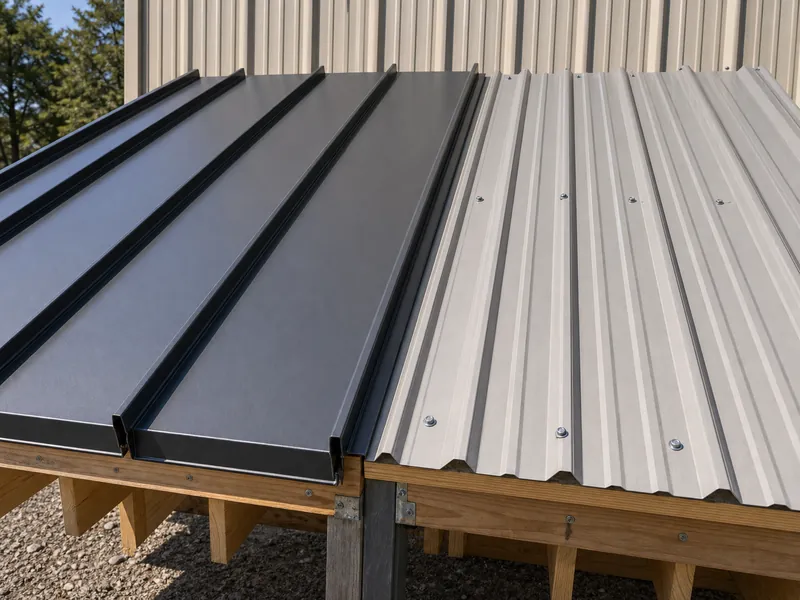
The wear story is the heart of the comparison. On a through-fastened roof, the first part to wear out is rarely the steel itself — it is the hundreds of rubber washers under the screw heads. Each sits in the open sun, expanding and shrinking until it hardens and the screw needs re-torquing to stay watertight. A standing seam roof removes those wear points from the equation, which is most of why it lasts longer and asks for less attention. The cost premium and the need for a competent seaming crew are real, and on a steep, simple, budget-driven roof an exposed-fastener panel is the sensible choice. But for a low-slope roof, a long ownership horizon, or a building where you would rather not re-fasten the roof every few years, standing seam is the system that pays back the difference. (The actual price gap swings with the metal, gauge, coating, slope, and local labor, so any single percentage is a rough guide rather than a quote.)
Where a Standing Seam Roof Is Worth It
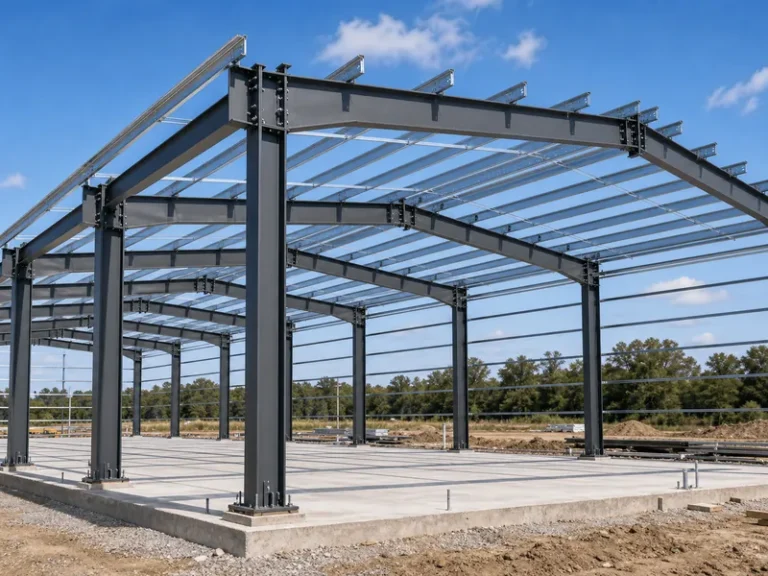
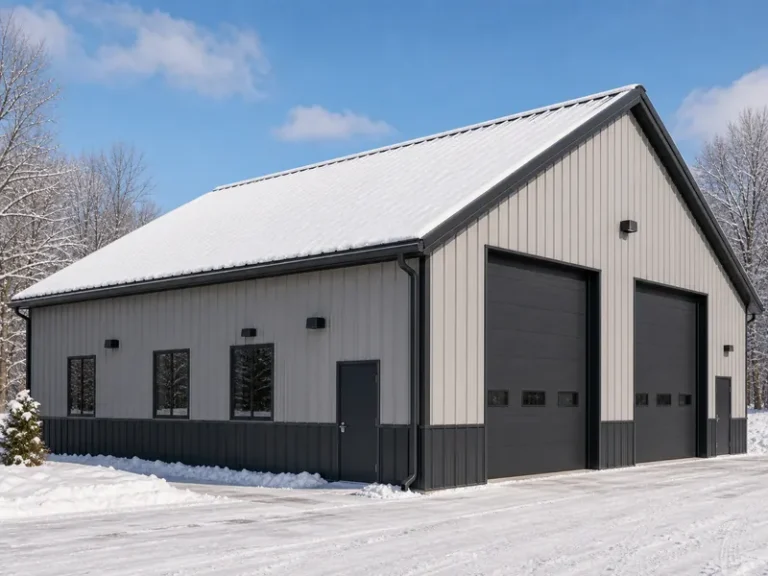
A standing seam roof justifies its higher price on low-slope, long-service, and architecturally visible buildings. On a prefab commercial building, the roof spans wide bays at a shallow pitch and the owner plans to hold the asset for decades — and the concealed-fastener system matches both the geometry and the timeline. The double-lock seam handles the low slope, while the floating clips absorb the thermal movement of long pans. Warehouses, workshops, hangars, and retail boxes fall into the same logic.
The boundary matters as much as the use case. A steep residential roof on a tight budget, a short equipment shelter, or an agricultural building where a 20- to 30-year service life is acceptable rarely needs the premium — an exposed-fastener panel does the job for less. Standing seam makes sense when slope is shallow, the run is long, or the fastener-maintenance cycle of a screw-down roof is something the owner would rather not sign up for.
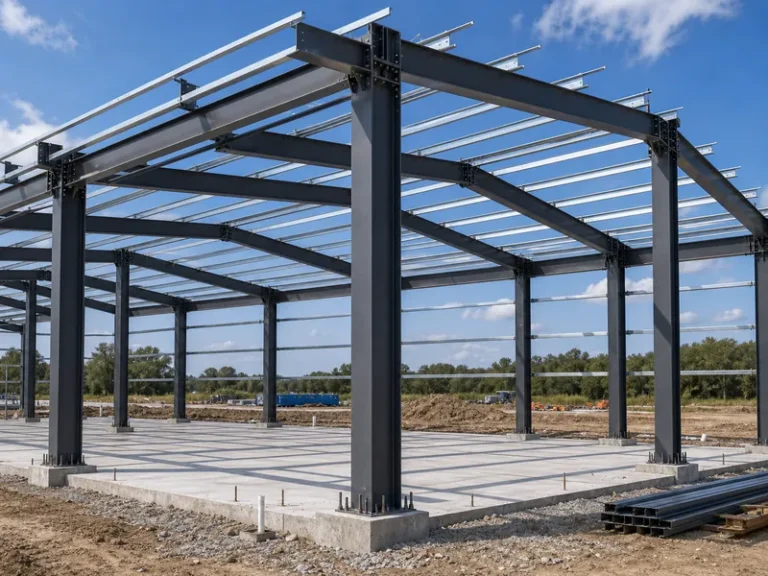
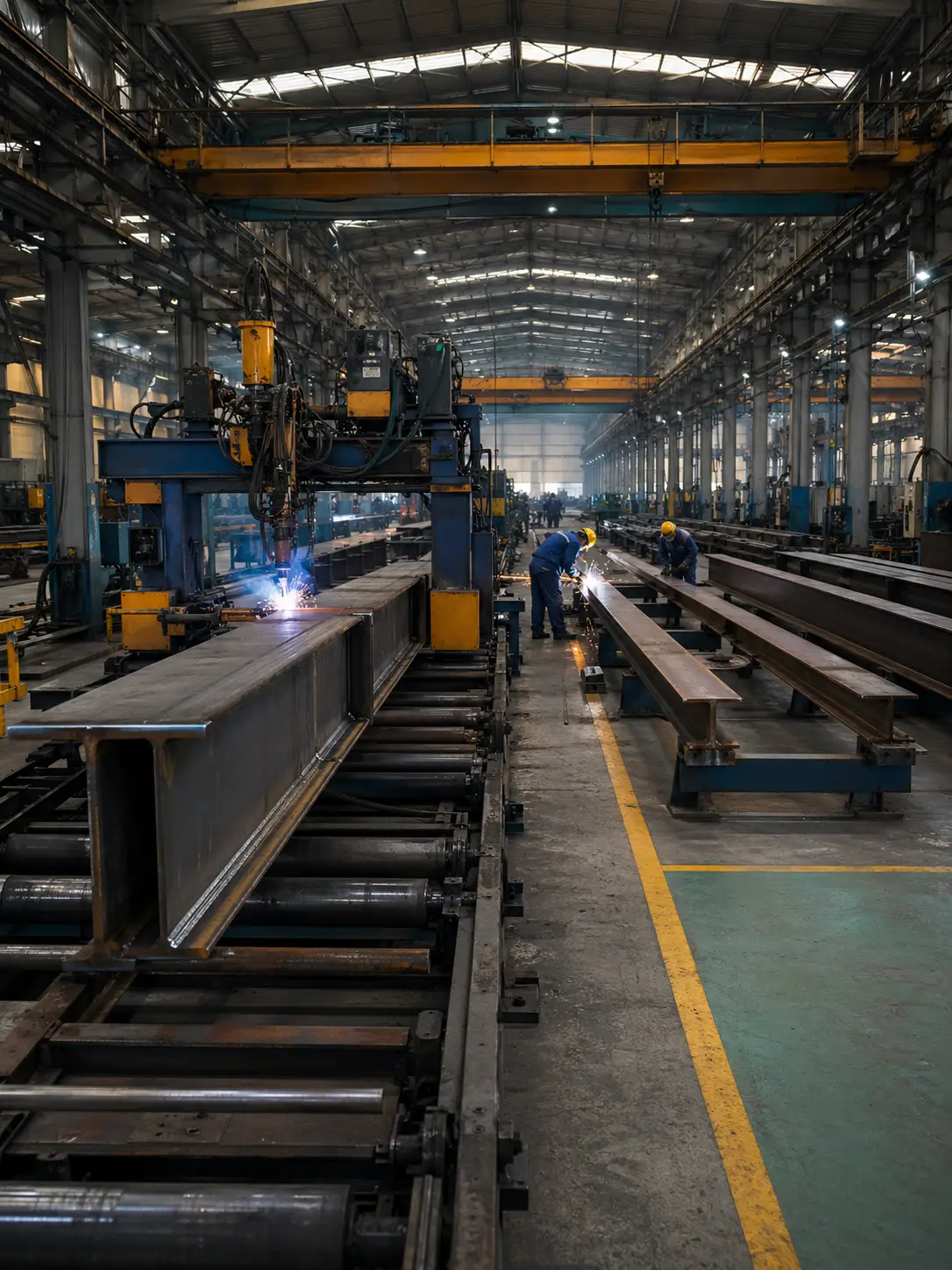
This is the angle a steel-building manufacturer sees from the fabrication side. KAFA (Qingdao KAFA Fabrication Co., Ltd.) builds light and heavy steel structures and processes its own profile steel plate, so the roof is specified together with the frame, purlins, and wall cladding rather than chosen in isolation. In practice that means matching seam profile to slope, panel gauge to span and wind, and coating to environment. Treating the roof as part of the building envelope, rather than a finish picked at the end, keeps the seam type, the insulation, and the structure pulling in the same direction.
Conclusion
Choosing a standing seam roof is a sequence, not a single decision. Start with the building’s slope and how long you intend to own it, because those two facts decide whether the concealed-fastener premium is justified at all. Next, match the seam profile to that slope — double-lock for the flattest roofs, snap-lock where the pitch allows — and only then settle the metal, gauge, and coating against your span and your climate. Get the order right and the roof is a 40-plus-year envelope; get it backward, and you risk specifying a snap-lock seam on a pitch it was never meant to drain.
FAQ
How long does a standing seam metal roof last?
A standing seam metal roof commonly lasts around 40 to 70 years, with the exact figure set by the metal, coating, and maintenance rather than the seam itself. Galvalume and aluminum panels with a PVDF finish sit at the long end; the limiting factor is usually the coating’s color hold and the building’s environment, not structural failure of the steel. Coastal salt air shortens the range, so the metal choice should follow the site, not a brochure number.
What roof slope do you need for a standing seam roof?
Slope is the first thing that rules profiles in or out for a standing seam roof. Snap-lock profiles generally need about 3:12 or steeper, while a mechanically double-locked seam with in-seam sealant can run down to roughly ½:12 to 1:12. Below about ½:12, even a sealed seam is outside its comfort zone, and a membrane roof is usually the better call.
Is a standing seam roof more expensive than exposed-fastener panels?
Yes — a standing seam roof typically costs more up front than an exposed-fastener roof, frequently on the order of 30 to 50 percent more for the same building, though that gap moves with metal, gauge, coating, and labor. The offset is on the back end: fewer wear points and a longer service life mean the lifetime cost can land closer together than the install price suggests, especially on a roof you plan to keep.
What is oil canning, and is it a defect?
Oil canning is the visible waviness that can appear across the flat areas of metal panels, and it is an inherent trait of light-gauge metal rather than a defect. It does not affect whether the roof keeps water out. Striations, stiffening ribs, or a tensioned coil reduce how noticeable it is, which is why ribbed pans are common on wide, sun-facing roofs.
Can you walk on a standing seam metal roof?
You can walk on a standing seam roof, but only with care and by stepping near the seams and clips where the panel is supported. Walking in the center of an unsupported pan can dent it, and a wet or dusty panel is slick. For routine inspections, most owners stay on the seams or use roof-access planning rather than treating the field of the panel as a walkway.
Further Reading
- Metal Construction Association — Steep-Slope Metal Roofing Resources — Industry-association technical page describing vertical standing seam systems fastened with hidden clips or fastening flanges and the 3:12 steep-slope threshold; supports the seam-and-slope details above.
- Metal Roofing Alliance — Metal Roofing Styles — Consumer-education page covering standing seam / vertical-panel profiles and color options; useful background on profile and finish selection.
- U.S. DOE — Energy Saver: Cool Roofs — Government guidance on roof reflectivity and energy savings, relevant to cool-colored coatings on metal roofs.