




A metal workshop rewards planning at exactly the points that are hardest to change once the steel is standing. Clear span, eave height, door openings, and the slab under your equipment all get fixed early in the design, and reworking any of them later means cutting steel, repouring concrete, or both. The fit-out that comes later, shelving, benches, and paint, can be adjusted for years. Well-planned Metal Workshop Buildings come from settling the structural and dimensional calls first, in the order they constrain each other, then filling in the rest. These design tips follow that order.
Start With How the Shop Will Be Used
How you plan to use the shop sets every dimension that follows, which is why it belongs above size, style, or price in the design sequence. A two-post lift needs roof clearance a parts-storage shed never will. A welding and fabrication bay needs make-up air and a heavier electrical service that a woodworking shop of the same footprint does not. An agricultural shop that swallows a combine needs a drive-through door and a column-free path that a home hobby shop can skip.
Buyers often reverse this and pick a size first, usually a round number that sounds generous, then discover the lift mast hits a purlin or the slab cracks under a press. Write down the heaviest machine, the tallest thing that has to drive or be raised inside, the widest material you handle, and the services each station needs. That short list, not a square-foot target, drives the span, the eave height, the doors, and the floor.
Size the Footprint Around Equipment and Aisles
Workshop size should be driven by equipment, clear aisle widths, and how people and material move, not by a round number of square feet. A shop that looks roomy on paper turns cramped once benches, racks, and a work vehicle are in it. You still need roughly three feet of working clearance around the machines you use standing up.
Typical footprints cluster by use, and they make a useful starting point before you adjust for your own equipment list. The ranges below are common in the industry and shift with the machinery, aisle widths, and whether you want a mezzanine. For a fuller breakdown of dimensions, see our guide to metal building sizes.
| Typical use | Common footprint | Suits | Design to watch |
|---|---|---|---|
| Home or hobby shop | ~30×40 (≈1,200 sq ft) | hand and benchtop tools, one work bay | eave height for vertical storage |
| Auto, wood, or fabrication shop | ~40×60 | machinery with clear aisles, a lift | door width and slab thickness |
| Agricultural or industrial, drive-through | 50×100 and larger | equipment pass-through, multiple bays | clear span and bay spacing |
Size for the work you will grow into within a few years, but resist padding the floor blindly. Extra width adds steel weight and foundation; extra eave height is cheaper to buy now than to add later, so spend the margin on height before you spend it on area.
Choose Clear-Span or Multi-Span Framing
Clear-span framing keeps the floor column-free across the full width, while multi-span framing adds interior columns to cover wider buildings at lower steel weight. For a shop where vehicles, forklifts, or long material cross the floor, the column-free interior of a clear-span rigid frame usually justifies the extra steel. An interior column landing in a drive lane or under a lift is a regret you cannot move. On a larger shop where interior columns can sit along a wall or between work zones without crossing a work path, multi-span framing is the more economical structure. There is little reason to pay for a column-free floor where nothing has to cross it.
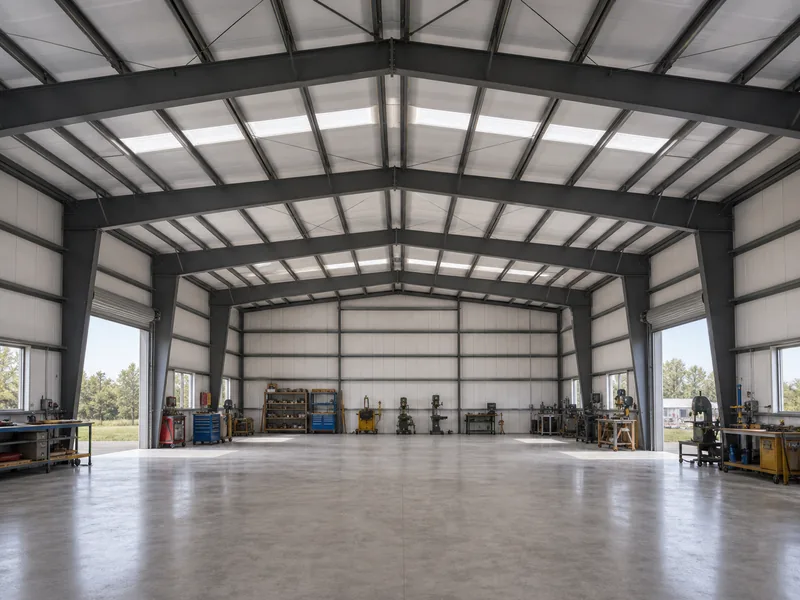
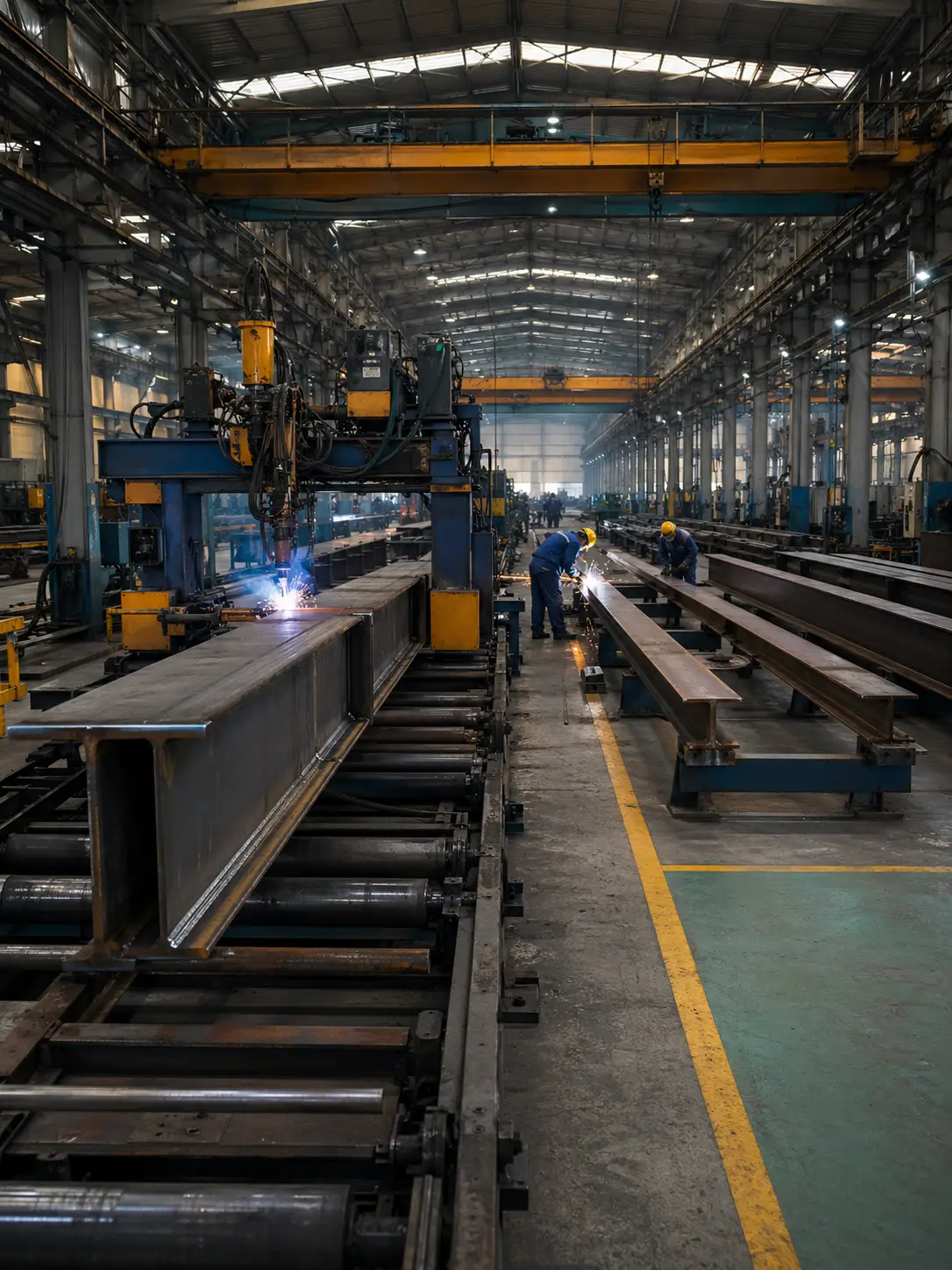
Wide clear span buildings are achievable with rigid frames, though steel weight and cost climb as the span grows, which is the trade against a multi-span layout. As a manufacturer running dedicated H-beam, box-section, and C/Z-section purlin lines, we design rigid frames around the actual column grid a workshop needs, so the bays line up with doors and equipment rather than fighting them. Bay spacing around 25 feet is a common, efficient choice, and it does double duty: it sets how many foundation footings you pour and where your wall openings can land between frames.
Map your equipment positions and door locations against the proposed column grid and bay lines before the frame is fixed. If the shop will run an overhead crane, the runway and the frame are engineered together from the start. Our notes on steel building crane beam design cover how crane loads change the columns and eave height.
Set Eave Height and Door Openings Before the Frame Is Fixed
Eave height and door sizes are among the hardest dimensions to change after fabrication, since raising the wall line or widening an opening means re-engineering the frame. A 12 to 14 foot eave height suits many workshops, while lifts, overhead cranes, tall service vehicles, or vertical racking push the practical wall line to 16 feet or more. Derive the number from the tallest real demand: a vehicle on a raised lift, a crane hook at working height, or a loaded rack, plus clearance, rather than from a default.
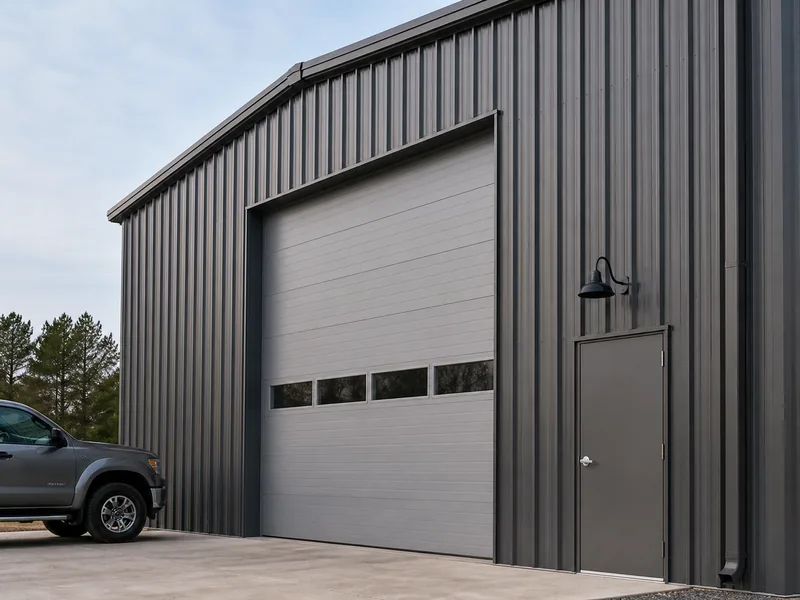
Doors deserve the same backward math. Common overhead door sizes run 10×10, 12×12 for heavier equipment, and 12×14 for tall trailers and trucks, with a separate walk door for daily traffic. Size the opening to the tallest and widest thing that drives through plus working clearance, not to the bare vehicle, because roof racks, raised beds, and trailer jacks eat the margin. Keep doors and windows back from the corners and the eave, generally a couple of feet, so the framing and bracing around the opening stay sound.
Match the Slab and Foundation to Real Loads
The slab is a structural element sized to your equipment loads, not simply a floor to stand on. Light and hobby shops are commonly poured around four inches. Shops handling vehicles or heavy equipment usually move to five or six inches, with added thickness and reinforcement under a lift, a press, or any concentrated point load. Anchor bolts and base plates are set by the frame, and isolated footings carry the rigid-frame columns, so the bay spacing you chose earlier decides how many footings get poured.
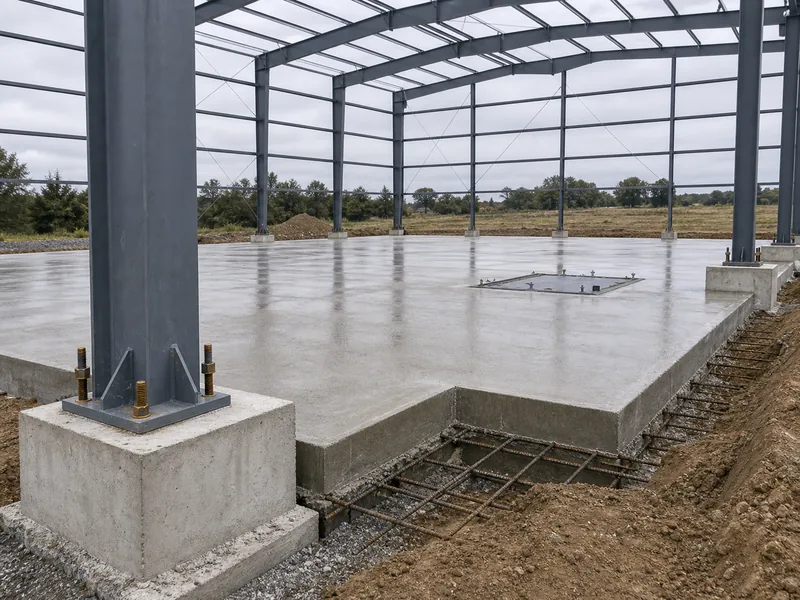
These are planning ranges rather than a final specification. The slab thickness, reinforcement, and footing design follow from your equipment loads, the soil report, and a local engineer working to the applicable concrete and building codes. That engineering review is also where a lift pit or trench drain has to be planned in before the pour. For the detail behind the floor and footings, see metal building foundation. This guide covers the design decisions, not the structural calculations your engineer signs.
Plan Insulation, Ventilation, and Lighting as One System
Insulation, ventilation, and lighting interact, so a workshop performs best when they are designed together rather than bolted on after the building is up. In an uninsulated metal shop, condensation rather than rain is what rusts tools and warps stored material, because warm moist air meets cold steel panels and sweats. A continuous metal building insulation layer with a proper vapor barrier, paired with a path for that moist air to leave, controls it more reliably than insulation thickness alone.
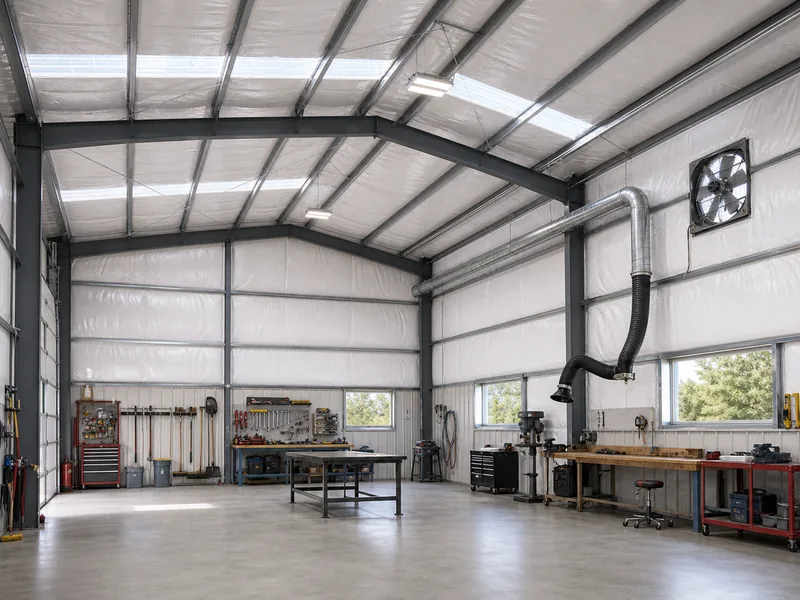
Ventilation then follows the work. A welding, painting, or woodworking shop needs deliberate fume and dust removal, and OSHA treats welding fume control as a real exposure issue rather than a comfort upgrade. Plan make-up air, exhaust fans, or a paint booth around the actual process. Size the electrical service for welders, a compressor, and dust collection running together so you are not back-feeding circuits a year in. Natural light from wall windows or translucent roof panels cuts daytime lighting load, though it adds heat gain, so balance the glazing against the climate instead of maximizing it.
Settle the Frame-Defining Decisions First
The cheapest workshop to live with is the one whose irreversible dimensions were settled before the reversible ones. Lock the intended use, then the clear span and eave height that the frame is built around, then the door openings, then the slab and footings, and only then the climate and electrical systems that can be tuned during construction. Plan one endwall as the expansion face from the start, because adding length to a metal building later is far less disruptive than widening it or raising the roof.
Budget tracks those same decisions, and a realistic figure starts from the frame, the slab, and the openings rather than from finishes; our breakdown of the cost to build a shop follows that logic. If you want the structure engineered around your equipment, have the clear-span frame, eave height, and any crane loads worked out before you pour. Then request a quote with your equipment list, tallest required clearance, and door schedule. We fabricate light and heavy steel rigid frames, purlins, and girts under ISO 9001:2015 quality management, so the workshop is detailed to the column grid and loads you actually use. Settle the column-free width and eave height first; nearly everything else in a workshop can be changed later, and those two cannot.
FAQ
What size metal workshop do I need?
Workshop size follows the equipment and clear aisles you need rather than a round number. Hobby shops are commonly around 30×40, professional auto or fabrication shops near 40×60, and drive-through industrial shops at 50×100 and larger. Add working clearance around standing machines and any aisle a vehicle must pass before settling the footprint.
How tall should a metal workshop be?
A 12 to 14 foot eave height suits most workshops, while lifts, overhead cranes, tall vehicles, or vertical racking push the practical wall line to 16 feet or more. Derive the height from the tallest real demand plus clearance, since raising the eave after fabrication means re-engineering the frame.
Is clear span or a column layout better for a workshop?
Clear-span framing is the stronger choice when you move vehicles or long material across the floor, because it leaves the interior column-free. Multi-span framing with interior columns saves steel on very wide buildings where the columns will not block how the shop is used.
How thick should a metal workshop slab be?
A workshop slab is commonly four inches for light use and five to six inches where vehicles or heavy equipment run, with added thickness and reinforcement beneath lifts and other point loads. The final thickness is set by your loads, the soil, and an engineer’s design rather than by a single standard number.
Can I add a mezzanine or office later?
A mezzanine or office is easiest to add when the frame and eave height are planned for it from the start. The extra floor load and the headroom above it have to be in the original frame design. Retrofitting one into a frame that was not sized for the load usually means reinforcing or replacing members.
Do I need a permit to build a metal workshop?
Most metal workshops require a building permit, and the structure has to meet local building codes and design loads for wind, snow, and seismic conditions. Your jurisdiction sets the permit path, and an engineer confirms the loads the frame and foundation are designed to.
Further Reading
- Metal Building Manufacturers Association (MBMA) — industry association for metal building systems, with background on the engineering, fabrication, and performance behind steel workshop structures.
- International Code Council (ICC) — publisher of the International Building Code that governs permits, structural loads, and safety requirements for workshop construction.
- OSHA: Welding, Cutting, and Brazing — federal guidance on ventilation and fume control for welding and fabrication work, relevant to workshop air design.