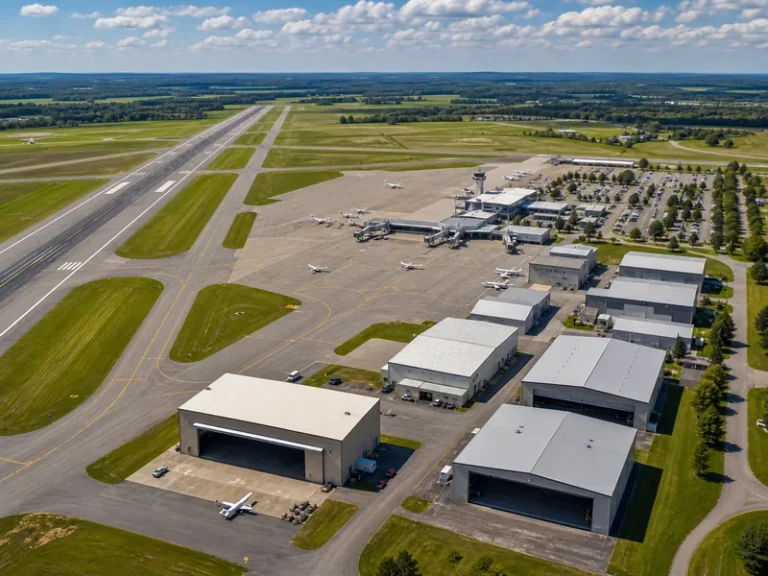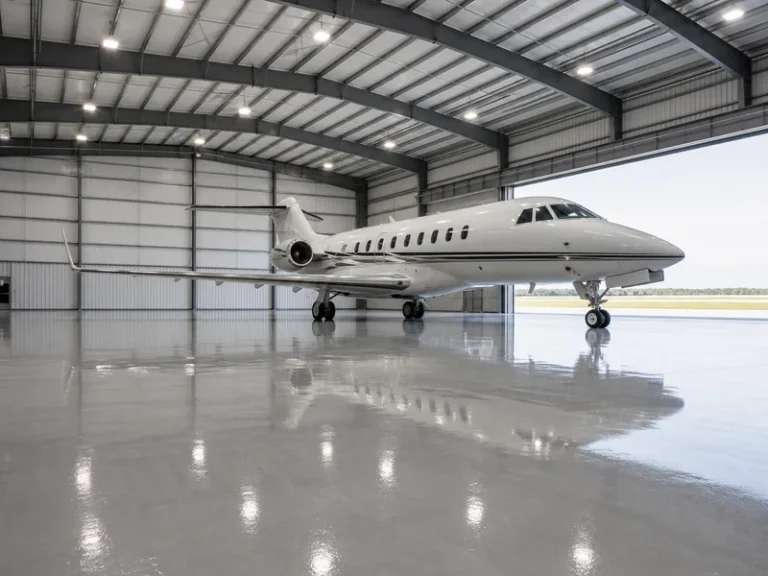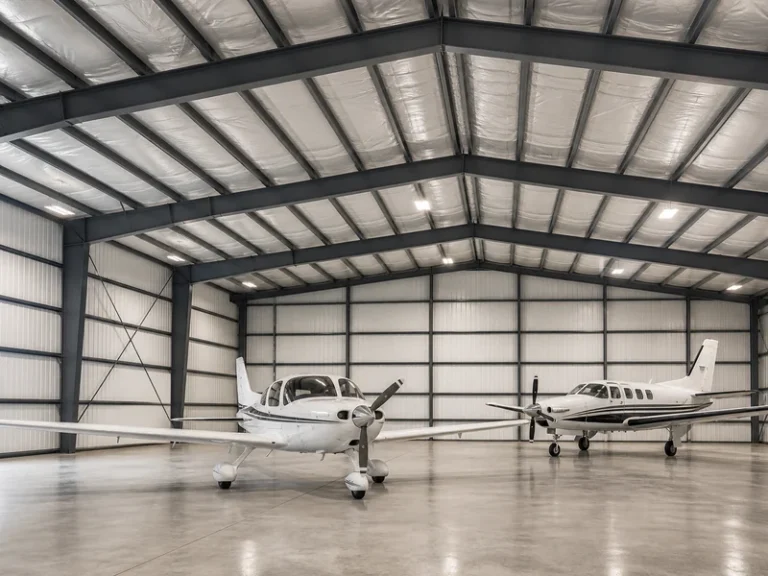





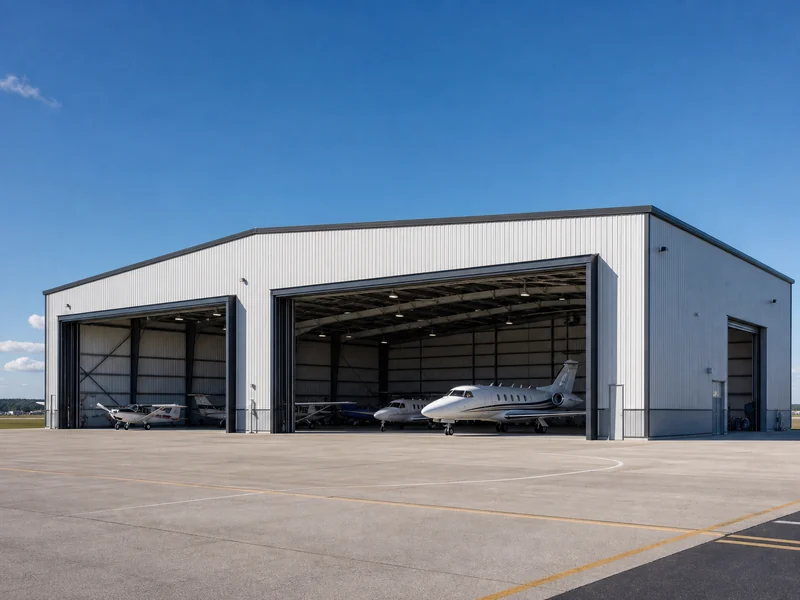
Airplane hangar insurance covers the hangar structure, the tools and property stored inside it, and your liability for what happens on the premises. Those are risks an aircraft policy on its own was never built to handle. The building, its contents, and the people who walk through it are all exposures that follow the hangar, not the airplane.
Premiums on that coverage are driven by a short list of factors, and the building itself is one of the few you can shape before you ever ask for a quote. Construction, fire protection, and location all move the rate an underwriter offers, which makes a hangar policy as much a building decision as an insurance one.
Why a Hangar Needs Its Own Coverage
An aircraft policy and a hangar policy protect two different assets, and assuming one automatically extends to the other is the most expensive guess an owner can make on the ground. Ground-risk hull coverage on your aviation policy responds to the airplane while it sits parked. It does nothing for the roof over it, the equipment beside it, or a visitor who trips inside it.
Leasing a hangar does not close that gap either. The city or fixed-base operator that owns the building usually insures its own structure, but that policy rarely reaches a tenant’s tools, ground support equipment, or stored parts. Most hangar leases push this back onto the tenant in writing, requiring premises liability, a minimum limit, and the landlord named as an additional insured before the keys change hands. Reading the insurance clause of a hangar lease before signing it is the cheapest risk-management step in the whole process. It tells you exactly which coverages you must carry, instead of the ones you assume are already there.
Core Coverage Types in a Hangar Policy
A hangar policy is usually assembled from several distinct coverages rather than sold as a single product, and each one answers a different question about what could go wrong. Buying the right combination matters more than buying the most expensive version of any one part.
- Building / property coverage protects the physical hangar against fire, wind, hail, and similar perils, sized to the cost of rebuilding the structure.
- Business personal property (contents) covers what you keep inside: tools, jacks, tugs, ground support equipment, avionics, and spare parts.
- Premises liability pays for injury to a guest, customer, or contractor, or for damage to their property, while they are on your premises.
- Products liability applies if you service, sell, or supply parts and products used on aircraft and one of them later causes a loss.
- Pollution liability responds when fuel, solvents, or other stored chemicals leak into soil or groundwater and trigger cleanup costs.
Contents are easy to underinsure because their value adds up out of sight. Ground support equipment plus a single spare engine can run from tens of thousands of dollars to well over $100,000, so the contents limit deserves a real inventory rather than a round-number guess.
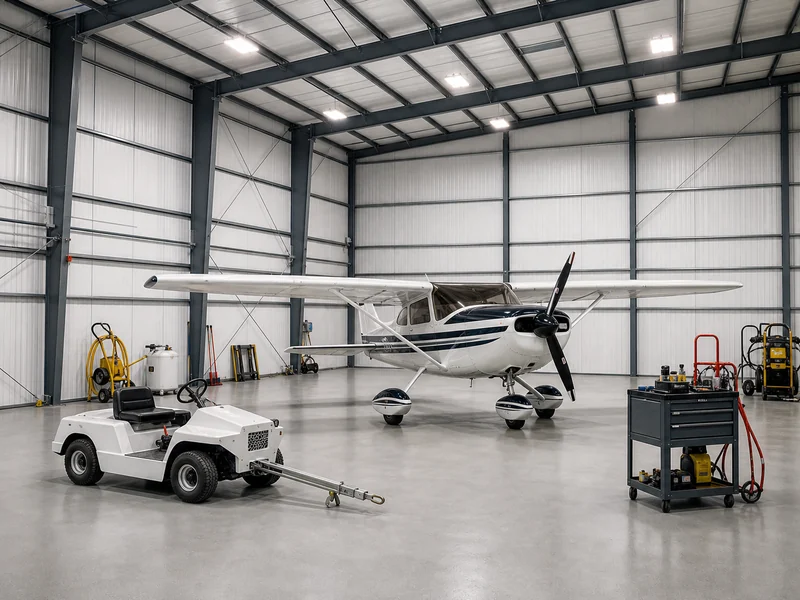
Hangarkeepers Liability: When You Store Others’ Aircraft
Hangarkeepers liability covers damage to aircraft you do not own while they sit in your care, custody, or control. That single coverage separates a private shelter from a business exposure. The moment another owner’s airplane is in your hangar for storage, maintenance, or a favor, your general liability policy is no longer enough.
What hangarkeepers liability covers
Coverage under a hangarkeepers policy generally responds to physical damage to a non-owned aircraft caused while it is in your hands. Depending on how the policy is written, that can include:
- Damage from moving or towing, the classic wingtip or door strike known as hangar rash.
- Falling objects, roof leaks, or equipment damage while the aircraft is parked in your bay.
- Loss of use while the aircraft is repaired, and the reduction in market value afterward.
- Legal fees and court costs tied to defending the claim.
What it typically excludes
Most hangarkeepers policies carve out losses that belong to other coverages or fall outside care and custody. Acts of God such as floods, earthquakes, or hail are commonly excluded, along with theft, vandalism, mechanical breakdown, and intentional damage. The exact wording varies by insurer, so the exclusions page deserves as much attention as the coverage page.
Who actually needs it
Anyone who takes money or responsibility for another owner’s aircraft is the natural buyer of hangarkeepers coverage. Fixed-base operators, maintenance and repair shops, flight schools, and private owners who sublet a corner of their hangar all hold other people’s aircraft in their care. All of them inherit the liability that comes with it.
How the Building Itself Affects Your Premium
Underwriters rate a hangar partly on how it is built, which makes construction one of the few premium levers you control at the design stage instead of at renewal. A risk that is easy to describe, slow to burn, and built to survive local weather is one an insurer can price with confidence. That confidence usually shows up as a lower rate.
Construction class is the starting point. Insurers group buildings by what they are made of, and a non-combustible steel frame generally lands in a more favorable fire-rating tier than older wood-frame construction. A metal hangar building does not feed a fire the way timber does, and that difference between steel and wood airplane hangar construction is one an underwriter reads directly off the application.
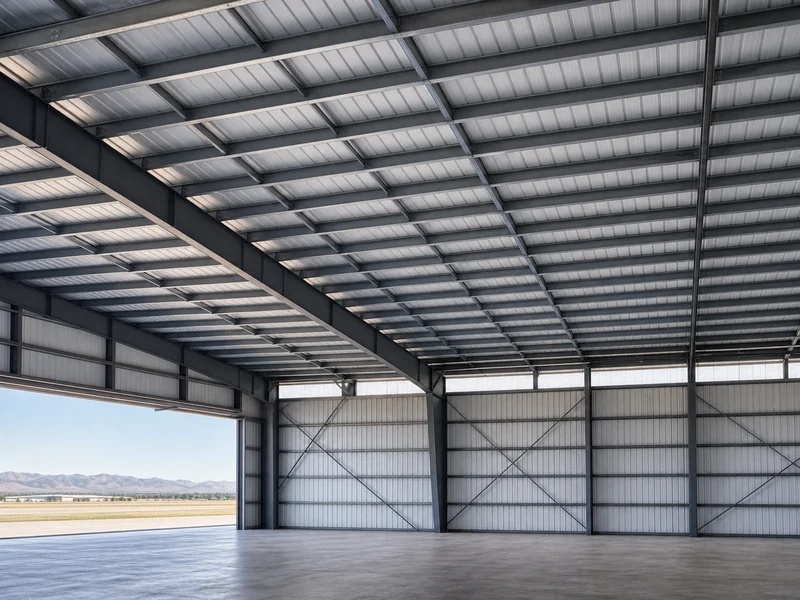
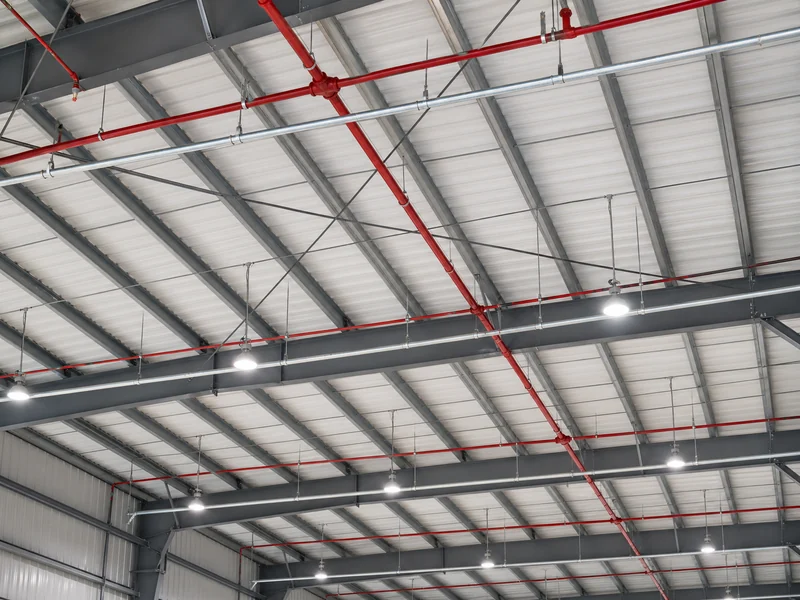
Fire protection is the next factor an underwriter weighs. Sprinklers, alarms, and a suppression system reduce the chance that a small ignition becomes a total loss, and they tend to pull premiums down with them. Hangars also fall under NFPA 409, the standard that sorts them into groups by size. The largest, Group I, covers structures with door heights above 28 feet or a single fire area over 40,000 square feet. The standard’s 2022 edition moved away from a blanket foam-suppression mandate toward risk-based and performance-based options, so the approach that satisfies both code and an insurer now depends on the specific hangar rather than a one-size rule.
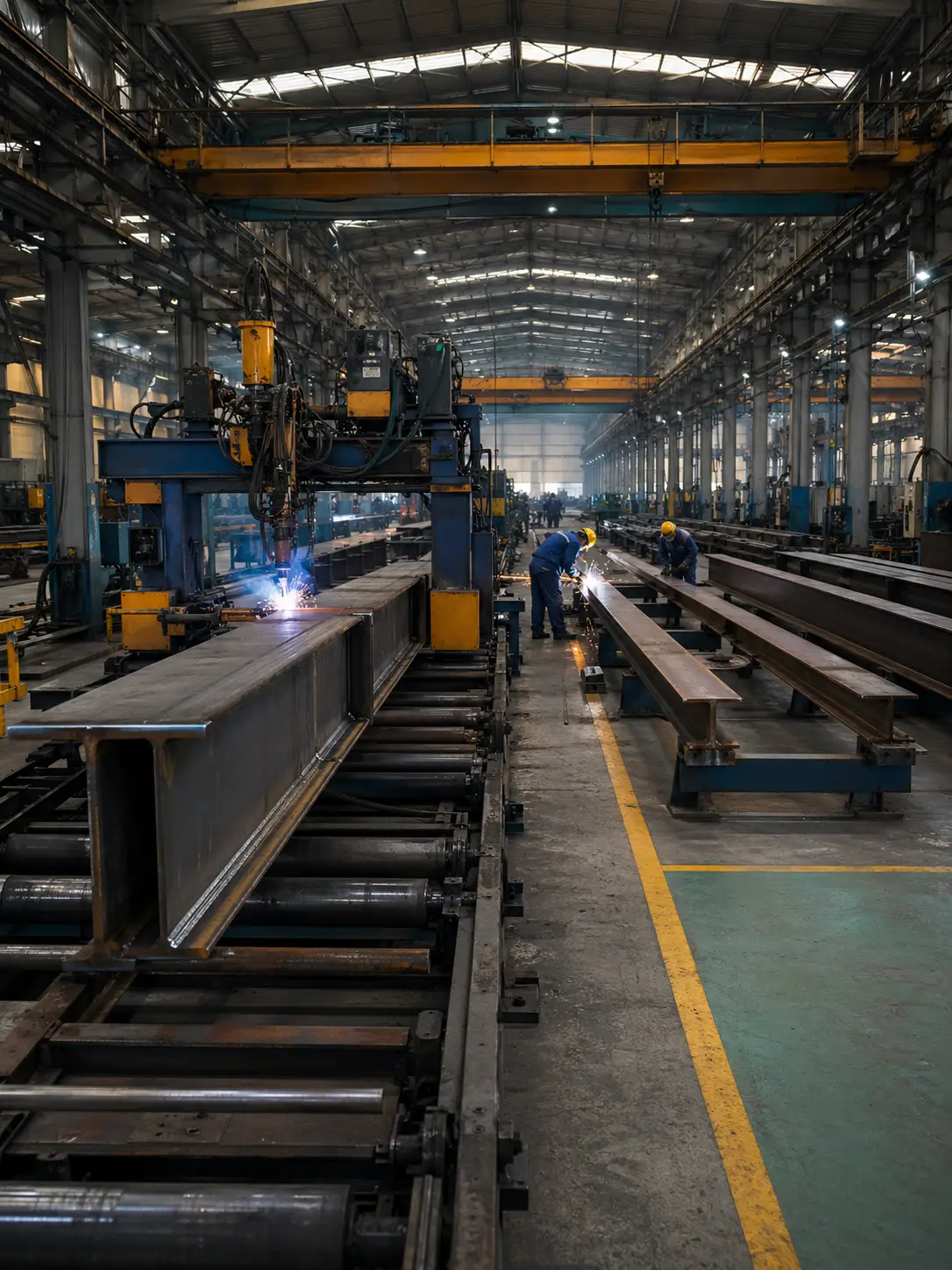
Resilience to wind, snow, and seismic load is the third building factor. A structure engineered to the design loads in ASCE 7 and built to local aircraft hangar construction requirements holds up better in the storms that drive property claims. That matters most in coastal and high-wind regions, where insurers watch exposure closely. A fabricator that builds the frame to a specified wind and snow load hands the underwriter a documented risk rather than an unknown one. KAFA, for example, produces hangar structures from H-beam and box-section steel to the loads an engineer specifies, and engineered drawings plus steel building certifications are the paperwork underwriting tends to request.
The last building-side lever is insuring the structure to its real value. The building limit should track replacement cost: what it would take to rebuild the hangar today. That figure is usually closer to current construction pricing than to the number on your original invoice. When steel and labor costs move, an older limit falls behind without anyone noticing, and the gap only surfaces after a loss. Pulling the building limit at each renewal and comparing it to today’s rebuild cost is a five-minute check that prevents a six-figure surprise.
Other Factors That Move Your Premium
Beyond the structure, a handful of operational and location variables push a hangar premium up or down. None of them are fully in your control, but knowing them tells you why two similar hangars can be quoted very differently.
- Value of aircraft stored: housing high-value jets or large aircraft raises the stakes, and the premium, compared with small piston singles.
- Location: proximity to flood zones, hail and hurricane corridors, or higher-crime airports increases exposure and cost.
- Claims history: a clean record earns better rates, while a string of past losses follows you into every renewal.
- Limits and deductibles: higher coverage limits cost more, and storm-exposed regions often carry a separate named-storm deductible you should read before assuming you are covered to the dollar.
- Operations on site: fueling, maintenance, and refinishing add products and pollution exposure that a pure storage hangar never carries.

Common Hangar Claims to Plan For
The most frequent hangar claim is not a fire or a storm but hangar rash: the dings, scrapes, and tail strikes that happen while moving aircraft in and out of tight bays. It is rarely catastrophic, but it is constant, and it is the reason hangarkeepers and ground-handling procedures matter as much as the policy itself.
Fire, storm, and theft are the losses that turn into large claims. Fire is the rarest of the three but the most severe, which is why non-combustible construction and a working suppression system do double duty as loss prevention and as a premium argument. The same logic makes steel building fire protection a structural decision rather than an afterthought. Storm losses track location and build quality, and theft or vandalism track security: lighting, locks, alarms, and access control all reduce both the odds of a claim and the rate that follows one.
The Bottom Line on Insuring Your Hangar
Insuring a hangar well starts with the levers you control and ends with the ones you can only document. Before you compare quotes, settle the building itself: non-combustible construction, fire suppression, and a building limit set to current replacement cost. Those are the factors that lower risk rather than just shift it onto a deductible.
From there, decide whether you store anyone else’s aircraft. If you do, hangarkeepers liability moves from optional to essential, and its limit should reflect the value of the aircraft that pass through your bays. Everything left, from your location to the jets parked next door to the named-storm deductible, belongs in a conversation with an aviation insurance broker who can read your lease and your exposure together. Build the hangar to be easy to insure, carry hangarkeepers liability if others’ aircraft sit under your roof, and the policy that protects a non-combustible structure becomes far simpler, and usually cheaper, to place.
FAQ
Does aircraft insurance cover hangar damage?
Aircraft insurance does not cover the hangar structure. Ground-risk hull coverage on an aviation policy protects the airplane while it is parked, but the building, its contents, and premises liability require a separate hangar policy.
Is hangar insurance required?
Hangar insurance is often required by a lease rather than by law. Airports and fixed-base operators commonly require tenants to carry premises liability, set a minimum limit, and name the landlord as an additional insured, so the lease, not a statute, is usually what makes coverage mandatory.
Who needs hangarkeepers liability insurance?
Anyone storing or servicing aircraft they do not own needs hangarkeepers liability. Fixed-base operators, maintenance shops, flight schools, and private owners who rent out hangar space all take other aircraft into their care, custody, or control, which is exactly the exposure hangarkeepers coverage answers.
How much does airplane hangar insurance cost?
Airplane hangar insurance cost varies too widely to quote as a single number, because it depends on the building, the aircraft value, the location, and the coverages chosen. As a reference point, AOPA’s hangar insurance program advertises premises liability starting around $42 a month with limits of $1 million to $5 million, but a multi-aircraft or commercial hangar with maintenance operations sits well above that. A broker quote against your specific building and contents is the only reliable figure.
Does building construction lower hangar insurance premiums?
Building construction can lower hangar insurance premiums. Non-combustible steel framing, a fire-suppression system, and a structure engineered to local wind and snow loads all reduce the risk an underwriter prices, which generally translates into a more favorable rate than an older or combustible building of the same size.
Further Reading
- Understanding Aircraft Hangar Fire Suppression Standards — AviationPros. Explains how NFPA 409 classifies hangars and how its 2022 fire-suppression changes affect the systems that influence insurability.
- Insurance Information Institute — Nonprofit insurance education resource for the commercial property and liability coverage concepts behind a hangar policy.
- Metal Building Manufacturers Association — Industry authority on metal building systems, including the fire, wind, and snow-load considerations that shape a steel hangar’s risk profile.